By: Monday Danladi, Bauchi
A Bauchi base Civil Society Organisation, We Aid Initiative has called on media practitioners, social media influencers and other stakeholders to embrace responsible journalism, voter education and peaceful political engagement ahead of the 2027 general elections.
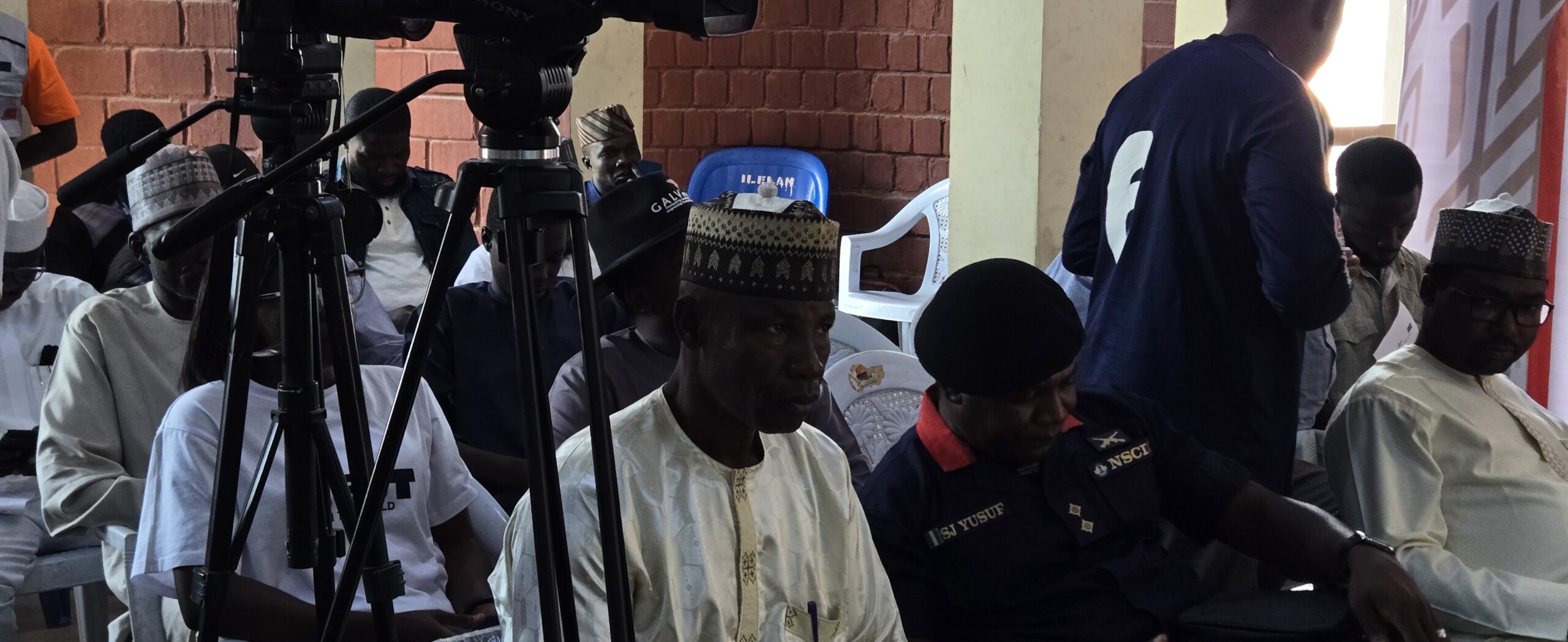
The call was made by the Executive Director of the Organisation, Gambo Yakubu Wakili Esq, during a media engagement organised by the initiative held at the Sir Abubakar Tafawa Balewa Tomb Bauchi, on Wednesday aimed at strengthening the capacity of media professionals and promoting their active participation in voter education, mobilisation and advocacy.
Speaking at the event, ED, said the engagement was organised to remind media practitioners of their responsibility in promoting democratic values, providing credible information and ensuring that public communication does not undermine peace and security, particularly during election periods.
She noted that although freedom of expression remains a fundamental pillar of democracy, media practitioners must exercise their rights responsibly and demonstrate a strong sense of duty towards the communities they serve.
According to her, the increasing circulation of information, particularly on social media, makes it necessary for journalists, media organisations and online content creators to uphold professional standards and avoid spreading information capable of creating tension or threatening peaceful coexistence.
Gambo Yakubu Wakili also stressed that the responsibility of ensuring peaceful elections should not be left to electoral institutions and security agencies alone, but requires the collective efforts of young people, lawyers, journalists, media organisations and other relevant stakeholders.
She added that the engagement was also designed to reinforce the strategic importance of the 2027 elections and equip media practitioners with the knowledge and capacity to contribute meaningfully to the democratic process.
According to her, the gathering had three major objectives: promoting voter awareness and mobilisation, launching the Initiative’s 360 App, and celebrating the historical significance of the venue, the Sir Abubakar Tafawa Balewa Tomb.
She said that the 360 App was part of the initiative’s efforts to advance its engagement objectives, while the guided tour of the historic premises would provide participants with an opportunity to appreciate Bauchi’s rich political and democratic heritage.
Highlighting the importance of the venue, ED said Nigeria’s democratic history would be incomplete without acknowledging the contributions of the late Prime Minister, Sir Abubakar Tafawa Balewa, whose legacy remains significant in the political history of Bauchi State and the country.
Gambo Yakubu Wakili urged participants to draw inspiration from the nation’s democratic history as preparations gradually build towards the 2027 general elections.
The programme also featured cultural activities, spoken-word performances and presentations by experienced media practitioners, providing an opportunity for knowledge-sharing, networking and reflection on the role of the media in strengthening democracy.
The organisers expressed hope that the engagement would encourage more responsible media participation, strengthen voter awareness and contribute to peaceful, credible and inclusive elections in 2027.
Also speaking, the immediate past Managing Director of the Bauchi Television Authority (BATV), Fibi Kafi, charged the media to help citizens understand the truth, scrutinise power and participate meaningfully in the democratic process.
Represented by Elizabeth Kah, Fibi Kafi gave the charge in a goodwill message delivered on her behalf by Elizabeth Kah, saying the media exists to bridge the gap between the authorities, political parties and the people, most of whom cannot come close to INEC or to any political party to know what is happening.
“The media is there to take the message and to mobilise people to participate. It helps citizens to understand the truth, scrutinise power, and participate meaningfully,” she said.
Fibi Kafi also said Journalists should go beyond routine reporting of events such as campaign launches, and explain what such events mean for the ordinary citizen.
“So you don’t just report that, ‘today, so-and-so carried out a campaign launch.’ What does that mean? The voter may not understand what that means for him,” she said.
She noted that citizens need reliable information to make informed choices and to hold leaders accountable, adding that it is only the media that gives them that opportunity and platform.
On elections, Fibi Kafi said political competition heightens anxiety, while misinformation, hostility and the risk of violence also increase.
She cited recent political violence in other states, including an incident in Delta State two days before the event, and asked how the media should report such incidents ethically without promoting violence.
Fibi Kafi stressed that the media is also an instrument for peacebuilding, noting that responsible reporting can reduce tension, encourage dialogue and protect democratic participation.
She also spoke on the cultural context of reporting in a diverse society, where political participation takes place across different ethnic, religious, cultural and economic communities.
According to her, campaigns often produce strong emotions, and the media must be careful not to bring a different narrative to its work.
She concluded that journalists, editors, media owners and digital influencers all share responsibility for shaping the information environment.