
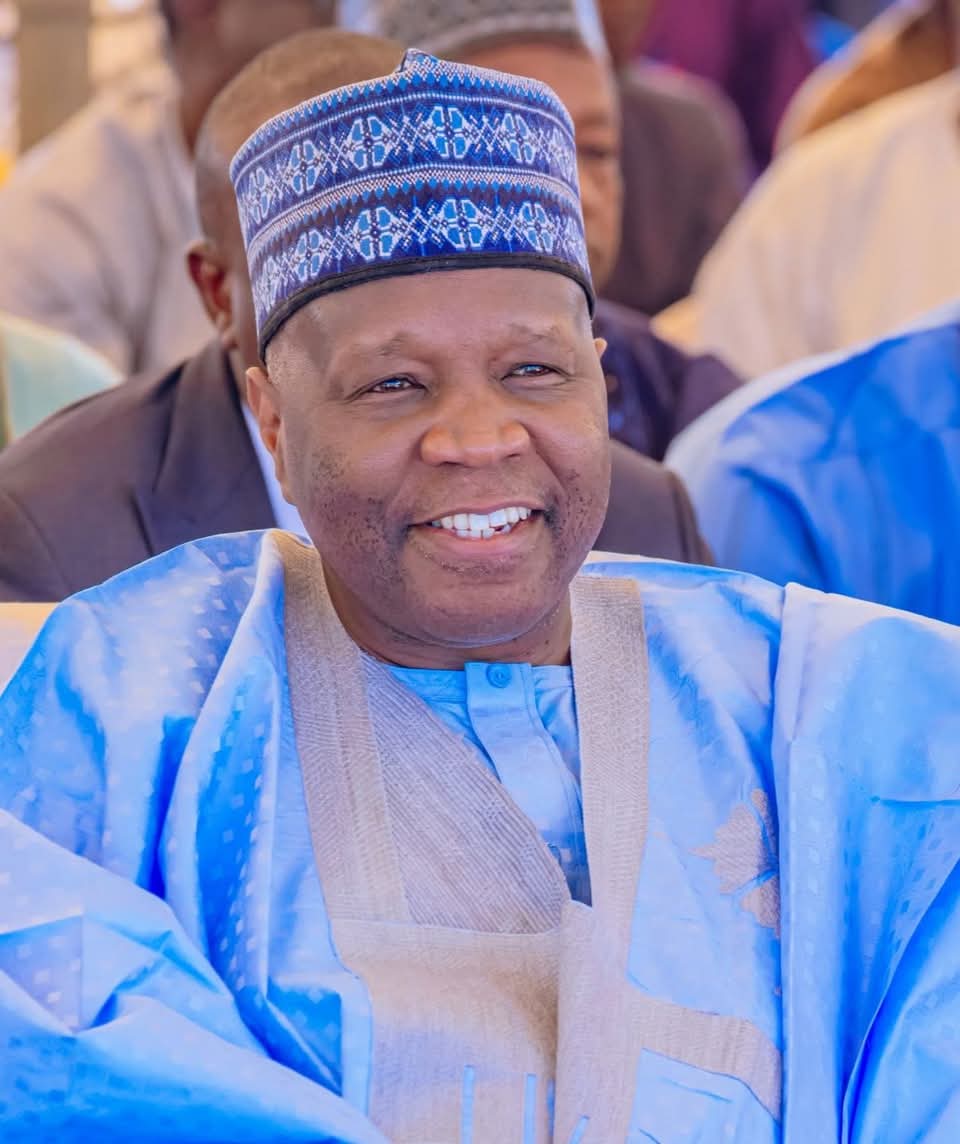

This write-up is not intended as a rejoinder, an attempt to join issues with anyone, or a response to any individual or commentary. It is simply an effort to place the facts before the public and provide a clearer understanding of the scale of the water challenge in Gombe State, the investments made so far, and the comprehensive measures being undertaken by the administration of Governor Muhammadu Inuwa Yahaya, CON, to address it.
Water supply is a longstanding challenge in Gombe. It has been compounded over the years by rapid population growth, urban expansion, ageing infrastructure, inadequate storage capacity, rising energy costs and a distribution network originally designed for a much smaller city.
It is against this background that the Inuwa Yahaya administration, since assuming office in 2019, has pursued a deliberate, phased and system-wide response, covering production, treatment, storage, transmission, distribution, energy, metering, maintenance and institutional capacity.
Upon assuming office, Governor Inuwa Yahaya made the Gombe State Water Board and the Dadin Kowa Water Treatment Plant among his earliest points of inspection. He personally engaged engineers and operators and inspected the facilities to understand why existing infrastructure and investments were not delivering the level of water supply expected by residents.
The assessment revealed multiple challenges, including inadequate production and storage capacity, ageing facilities, unreliable electricity, limitations in the transmission and distribution network, and operational and maintenance constraints.
The Governor consequently constituted a Water Supply Task Force, led by Engineer Abubakar Bappa, to undertake a broader assessment and recommend sustainable interventions.
That exercise laid the foundation for the strategy that has guided government action ever since: rehabilitate what can be restored, expand what is inadequate, modernise the system and address the underlying causes of recurrent disruption.
PUTTING THE FIGURES IN THEIR PROPER CONTEXT
For the benefit of the public, it is important to distinguish between recurrent expenditure, inherited liabilities, capital allocations, development-partner programmes, budgetary provisions and actual contract awards.
These are distinct categories and cannot properly be aggregated and presented as though they represent one project or one expenditure.
The circulated figures suggesting that the state government has spent N133 billion or N138 billion on water supply are incorrect and do not provide an accurate representation of government expenditure on the sector.
It should be noted that at the onset, the Inuwa Yahaya administration inherited an outstanding contractual obligation of approximately N5 billion to CGC, the company responsible for the operation and maintenance of the Dadin Kowa facility.
The government had to make provision to settle the inherited obligation and sustain the operation of the plant. Additional recurrent and subvention-related commitments were subsequently made between 2019 and 2025 to keep the existing water infrastructure functioning. Together, these commitments amounted to approximately N9.5 billion-plus. These are operational expenditures and should not be presented as capital expenditure on new water infrastructure.
CAPITAL INVESTMENTS AND DEVELOPMENT PARTNERSHIPS
Between 2020 and 2025, substantial capital provisions were made for water infrastructure, including piped-water expansion, borehole development and interventions implemented through RUWASSA and development-partner programmes.
Gombe is among the seven states benefiting from World Bank-supported interventions, including Programme for Reward (P4R) under SURWASH. Participation in such programmes requires states to meet specified institutional, planning and budgeting requirements, including the provision of appropriate budget lines.
Gombe State’s compliance with these requirements has helped position the state to attract and implement development-supported interventions. The result is visible in the hundreds of boreholes drilled or rehabilitated across communities, alongside other water infrastructure delivered through these programmes.
This is precisely why figures associated with such interventions must be understood within their respective funding and implementation frameworks.
THE N88.4 BILLION 2026 PROVISION
The same principle applies to the much-referenced N88.4 billion provision in the 2026 budget. It is important to state clearly that there is nothing like an N88.4 billion expenditure on urban water supply.
The budgetary provision covers the broader responsibilities of the Ministry of Water Resources, Environment and Forest Resources and agencies under its supervision, including the Gombe State Water Board, RUWASSA, SURWASH, GOSEPA and related programmes. It encompasses multiple interventions in water, energy and environmental infrastructure, including: Conversion of water facilities to solar and hybrid power; Rehabilitation and expansion of the Malam Inna Water Scheme;
Rehabilitation of industrial boreholes serving the northern axis; Water infrastructure for the Agro-Livestock Development Zone; and
Other programmes under the ministry and its agencies.This distinction is fundamental.
It must be emphasized,.a budgetary provision is not the same as expenditure already incurred, just as a multi-sector allocation cannot be presented as money spent on one project.
THE N11.4 BILLION REGIONAL WATER EXPANSION PROJECT
One of the Inuwa Yahaya-led administration’s major interventions is the N11.4 billion Gombe State Regional Water Expansion Project, implemented in collaboration with the Federal Government on a 70:30 funding arrangement.
The project, executed by Jidadu Ventures Nigeria Limited, has been completed and is currently undergoing test-running ahead of the formal transition to the appointed operator for full operation and maintenance.
The project addressed critical deficiencies across several strategic locations in Gombe.
The Wuro Juli Project
The intervention provided: 14 new boreholes; Conversion of 14 existing pumps to hybrid systems;
A packaged water treatment plant with 200m³/hour capacity;
Hybrid pumping systems; and
Solar, generator and grid power arrangements.
Special Development Zone
The project expanded storage capacity through: 1,000m³ surface storage; 500m³ overhead storage; New pumping infrastructure; and
Hybrid power systems.
The significant improvement in water infrastructure has made it necessary for the State Government to develop a more sustainable alternative power source.
Under the previous arrangement, the government would have had to spend over N500 million monthly on water treatment, production and pumping from Dadinkowa to Gombe, an expenditure that is difficult to sustain given competing demands on public resources.
The new independent hybrid power supply at Dadinkowa is therefore designed to permanently address the power challenge and ensure more reliable water production and distribution, much like the solar-powered streetlights in Gombe that replaced the former diesel-dependent system.
Tunfure
The intervention provided: Additional storage; Hybrid pumping infrastructure; A five-kilometre pipeline connection to the NTA Booster Station; and
Supporting infrastructure.
NTA Booster Station
The project included:
Rehabilitation of existing facilities;
Additional storage; Hybrid pumping and power infrastructure; and A six-kilometre pipeline extension towards the International Conference Centre to improve distribution pressure. It also incorporated network expansion, pressure-control infrastructure, smart metering, water-data management, maintenance equipment, staff training, network mapping and digitisation.
In other words, this was not a single-facility intervention. It was designed to strengthen the entire water supply chain.
On reticulation, the need for rehabilitation and expansion has largely been necessitated by the rapid expansion of the town. Over the years, some existing water pipelines, particularly those under the Malam Inna Water Scheme, have been encroached upon, with buildings constructed over sections of the network.
The ongoing intervention is therefore aimed at extending, replacing and realigning the reticulation network to accommodate the growth of the city and ensure efficient and reliable water distribution.
2026 SCALE-UP
Building on the gains recorded so far, the government has moved into an even more ambitious phase.
Recently, contracts valued at approximately N54.66 billion were approved for major water and power infrastructure.
The investment targets three fundamental challenges: expanding water infrastructure, improving power reliability and transitioning towards sustainable energy.
MALAM INNA, GOMBE METROPOLIS AND AGRO-LIVESTOCK ZONE
A N24.26 billion contract awarded to cover the rehabilitation, upgrade and expansion of water supply infrastructure in Malam Inna, Gombe metropolis and the Agro-Livestock Development Zone.
The project includes:
Rehabilitation of 9 existing boreholes;
Drilling of 11 new boreholes;
Solar-powered hybrid pumping systems; Upgraded treatment and pumping facilities; A new 4,000m³ ground storage tank; Additional distribution reservoirs; Approximately 3km of transmission pipelines;
More than 50km of new distribution pipelines; and Additional community water facilities.
The objective is to increase production, strengthen storage and extend the distribution network to underserved areas.
DADIN KOWA AND TABRA POWER INFRASTRUCTURE
A further N7.07 billion contract awarded to Ceylon Construction Services Limited focuses on strengthening dedicated power infrastructure at Dadin Kowa and Tabra. This is directly to address one of the persistent constraints to water production: unreliable and increasingly expensive power supply.
SOLAR POWER INFRASTRUCTURE
The administration has also committed N23.33 billion this year to solar power infrastructure through a contract awarded to Off-grid Electric Nigeria Limited.
The objective is to establish a more resilient hybrid energy system for critical water facilities, reduce dependence on conventional energy sources, lower operating costs and minimise disruptions associated with instability in the national grid.
WHY THIS APPROACH IS DIFFERENT
The water challenge cannot be solved simply by producing more water. Water must be produced, treated, pumped, stored, transmitted and distributed. Each stage requires functioning infrastructure and reliable energy.
That is why the current intervention covers the complete chain, including Production, Treatment, Power, Pumping, Storage, Transmission, Distribution, Metering and Maintenance.
This is the essence of the administration’s strategy. It is a shift from isolated interventions to a coordinated, system-wide water transformation programme.
And importantly, the administration is not merely expanding infrastructure; it is also addressing the sustainability of the system through renewable energy, improve, data management, network digitisation and stronger operation and maintenance arrangements.
A GOVERNMENT THAT HAS CHOSEN TRANSPARENCY
Another important aspect of Gombe State’s water intervention is the manner in which the government has communicated its projects. The administration has consistently provided information on major projects through post- council briefings, official statements, project inspections, budget presentations and public engagements.
Project locations, contract values, implementing companies, funding arrangements, scope of works and expected deliverables have repeatedly been made available to the public.
Indeed, the extent of this transparency is such that today, a simple Google search can lead citizens, researchers, journalists, development partners and other stakeholders to publicly available information about many of the state’s major projects, including their scope, costs and implementation details.
This culture of openness is the reason Gombe continues to enjoy the confidence and partnership of reputable development institutions. Development partners do not commit substantial resources to states merely on the basis of rhetoric. They look for systems, compliance, transparency, accountability and credible implementation structures.
Gombe State’s ability to attract and participate in major development-supported programmes is therefore also a reflection of the institutional credibility built by the administration.
Rather than vilifying government with figures that do not withstand basic scrutiny, activists, commentators and members of the public should make use of the wealth of information already available and engage government constructively where clarification is required.
Accountability is important. Scrutiny is welcome. But accountability is best served by facts, not conjecture; by verification, not speculation; and by evidence, not figures presented without context.
A WATER SOLUTION WITHIN SIGHT
Perhaps the most important message for the people of Gombe is that there is reason for renewed optimism. The administration of Governor Muhammadu Inuwa Yahaya fully recognises that the people have endured the consequences of inadequate water supply for too long.
But the scale and nature of the current investments demonstrate that government is no longer approaching the challenge as a temporary inconvenience requiring periodic repairs.
The objective is to create a larger, more reliable, energy-efficient and sustainable water supply system capable of responding to the needs of a rapidly growing Gombe.
The combination of the completed N11.4 billion regional water expansion project and the additional water and power investments for the Malam Inna Water Scheme and rehabilitation of the 44 industrial boreholes represent one of the most comprehensive interventions in the history of Gombe State’s water sector.
When the projects are completed, commissioned and fully operational, residents should expect to see a significant improvement in production, storage, pressure, coverage and reliability.
The day is therefore not far when the people of Gombe will look back at the present water challenge as a problem that the administration of Governor Muhammadu Inuwa Yahaya confronted decisively and ultimately helped to resolve.
Indeed, there is hardly any previous administration in Gombe State that has undertaken a more deliberate, coordinated and sustained investment specifically aimed at addressing the structural causes of the state’s water challenge than the administration of Governor Inuwa Yahaya.
The investments are substantial. The strategy is deliberate. The infrastructure is taking shape.
The water challenge is real. The response is equally real. And for the people of Gombe, a lasting solution is now firmly in sight.
Ismaila Uba Misilli, Director-General, (Press Affairs), Government House,
Gombe.






Leave a Comment