By: Monday Danladi, Bauchi
Bauchi State Government has declared that it is doing everything possible to ensure that all children, especially Girls who are out of Schools across the State returned in order to give them the opportunity to be formally educated.
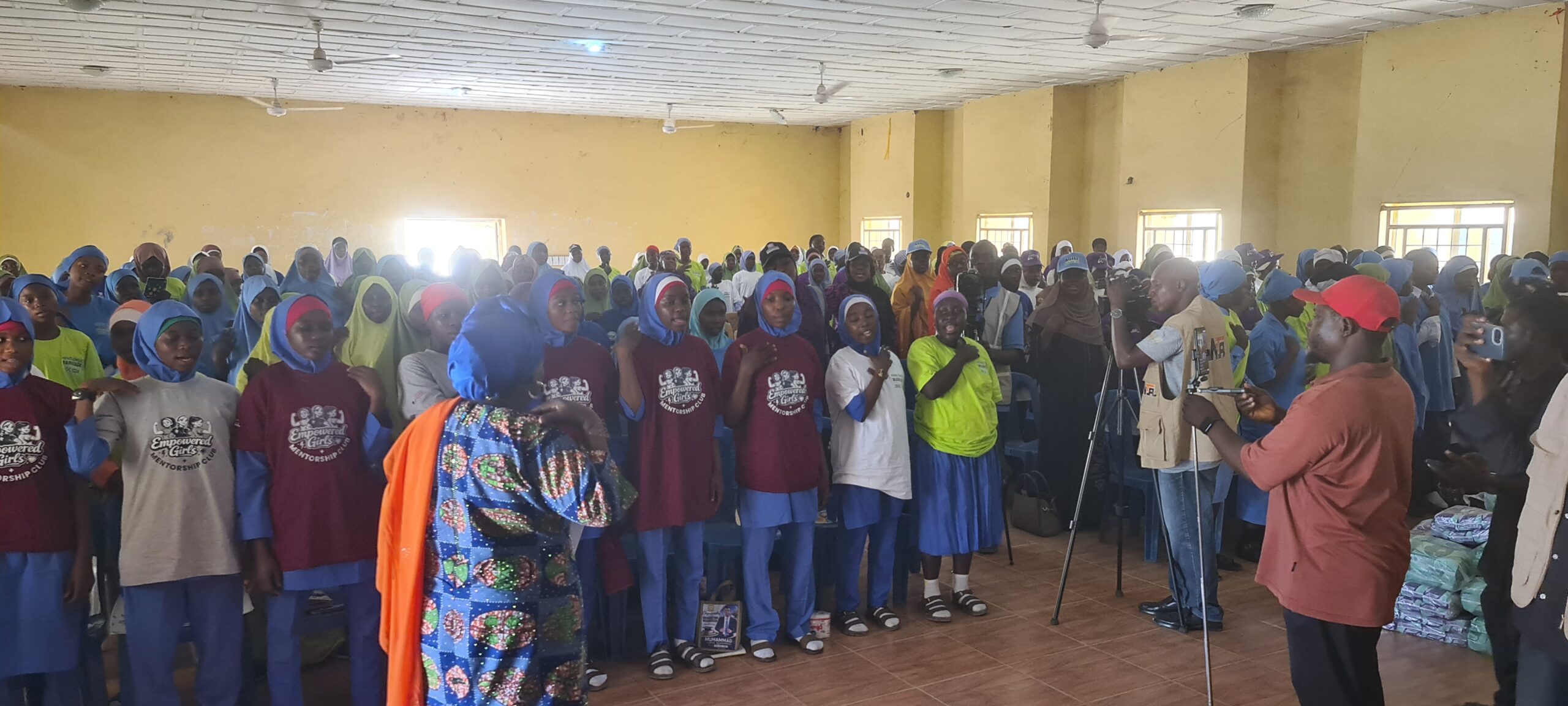
The declaration was made by the State Commissioner of Education, Abdulkadir Ibrahim, while speaking at the commemoration of the 2026 International Day of the Girl – Child, with the theme: “End Child Marriage and Invest in Girls’ Rights” held on Thursday at the Hall of Government Girls College (GGC), Bauchi organized by the Bauchi State Ministry of Education, Adolescent Girls Initiative for Learning and Empowerment (AGILE) in collaboration with Young Leaders Network,, SISWACHI, IKRA Foundation, WCY,, Wuntin Alkhairi and Eagles Impact.
According to him, “This celebration reminds us that investing in the education, protection, and empowerment of Girls is not only a moral responsibility but also a strategic investment in the future of our society. Education remains one of the most powerful tools for empowering the girl child.”
The Commissioner added,”When a girl is educated, she acquires the knowledge, confidence, and skills necessary to make informed decisions, contribute meaningfully to society, and participate in the development of her community and the nation at large. However, we must acknowledge that many girls continue to face significant challenges, including poverty, gender-based discrimination, insecurity, early and child marriage, and limited access to quality education.”
He stressed, “These challenges require the collective commitment of government, parents, traditional rulers, religious leaders, development partners, civil society organizations, and communities at large. As a ministry, we remain committed to promoting inclusive and equitable access to quality education for all children, with particular attention to the needs of the girl child.”
He assured that, “We will continue to support initiatives that encourage girls to enrol in school, remain in school, complete their education, and pursue opportunities that will enable them to achieve their full potential. We also recognize the importance of creating safe, supportive, and conducive learning environments where girls can learn without fear of discrimination, harassment, or violence.”
“Equally important is the need to support girls who have dropped out of school to return and complete their education. Every girl deserves a second chance to learn, develop her talents, and build a better future. I therefore call on parents and guardians to prioritize the education of their daughters, encourage them to pursue their dreams, and provide them with the necessary support to succeed,” he added.
Abdulkadir Ibrahim stressed that Teachers and school administrators must also ensure that every girl is treated with dignity, encouraged to participate actively in learning, and given equal opportunities to excel.
He said,”Let us remember that educating a girl is educating a generation. When we empower the girl child today, we strengthen families, build resilient communities, and secure a brighter future for our state and our dear nation, Nigeria.”
According to him, “As we celebrate this important day, let us renew our commitment to ensuring that every girl has the opportunity to access quality education, develop her talents, realize her ambitions, and contribute meaningfully to the development of our dear fatherland, Nigeria.”
He then commended the organizers and development partners for their commitment to advancing the rights and opportunities of the girl child just as he urged all stakeholders to sustain the advocacy beyond today’s celebration and translate our commitments into practical actions that will make a lasting difference in the lives of our girls.
Earlier in her speech, the Project Coordinator (PC) of Adolescent Girls Initiative for Learning and Empowerment (AGILE), Ladi Hamma Mohammed, said that empowering Adolescent Girls through Education, Life Skills and Safe Spaces to End Child Marriage in Nigeria cannot be overemphasized stressing that, “This year’s international theme, “End Child Marriage and Invest in Girls’ Rights,” calls on all of us to take concrete action to protect girls from child marriage, safeguard their rights, and invest in their education, well-being, and future.”
She added that,”Similarly, the agenda theme, “Empowering Adolescent Girls Through Education, Life Skills and Safe Spaces to End Child Marriage in Nigeria,” emphasizes the importance of equipping girls with the knowledge, skills, confidence, and supportive environments they need to make informed decisions, resist harmful pressures, and build brighter futures.”
According to her, “These themes remind us that ending child marriage requires more than public awareness. It demands sustained investment in girls’ education, practical life skills, safe learning environments, and the collective commitment of families, communities, governments, and development partners.”
She asked,”Why Do We Celebrate Girls? This is an important question: Why do we celebrate our girls? We celebrate girls because every girl matters. Every girl possesses inherent dignity, rights, talents, dreams, and the potential to contribute meaningfully to society. We celebrate girls because they are not merely the leaders of tomorrow; they are also active contributors to the development of our families, communities, and nation today.”
Ladi Hamma added, “We celebrate girls because educating and empowering a girl can transform not only her own life but also the lives of her family and future generations. We celebrate girls because, despite the numerous challenges they face—including poverty, child marriage, teenage pregnancy, gender-based violence, harmful social norms, and limited access to quality education—they continue to demonstrate courage, resilience, intelligence, and determination.”
The AGILE PC further said,”We celebrate girls because their voices deserve to be heard, their opinions deserve respect, and their rights deserve protection. Above all, we celebrate girls because no girl should be denied her childhood, education, dignity, or future because of her gender or circumstances.”
“Our celebration must therefore go beyond ceremonies and speeches. It must translate into practical actions that enable girls to remain in school, acquire essential life skills, access safe spaces, and participate meaningfully in decisions affecting their lives,” She added.
She also stressed that,”Child marriage remains a significant barrier to girls’ education, health, protection, and overall development. When a girl is married before the age of 18, she is more likely to face challenges such as dropping out of school, early pregnancy, increased health risks, limited economic opportunities, and reduced participation in decisions affecting her future.”
She however said that,,”Education is one of the most powerful tools for preventing child marriage. When girls have access to quality education, they are better equipped to understand their rights, make informed decisions, develop essential life skills, and pursue opportunities that enable them to achieve their full potentials.”
According to her, “However, keeping girls in school requires a supportive environment. Families must encourage their daughters to pursue education, communities must challenge harmful traditional practices, governments must strengthen policies and their enforcement, and development partners must continue supporting programmes that protect and empower adolescent girls.”
She stressed that,”We must also provide safe spaces where girls can speak freely, access accurate information, receive mentorship, build confidence, and seek assistance when their rights are threatened.”
Ladi Hamma also stressed, “Ending child marriage is not the responsibility of government alone. It requires a united effort involving parents, traditional and religious leaders, teachers, civil society organizations, community-based groups, and development partners.”
According to her, “Every stakeholder has a role to play in ensuring that girls are protected, educated, empowered, and given the opportunity to determine their own futures.
She called, “As we commemorate this important day, let us move beyond words and make meaningful commitments to the protection and development of every girl. Let us invest in girls’ education, strengthen child protection systems, promote life skills, expand access to safe spaces, and support families and communities to reject child marriage and other harmful practices.”
She then appealed, “Let us ensure that every girl, regardless of her background or circumstances, has access to quality education, adequate protection, and opportunities to develop her talents and leadership potential. When we invest in girls, we invest in stronger families, healthier communities, a more productive workforce, and a brighter future for our nation.”
She concluded that, “The future of Nigeria depends, in part, on the opportunities we create for our girls today. We must therefore work together to build a society where every girl is valued, every right is protected, every voice is heard, and every aspiration has the opportunity to become a reality.”