By: Monday Danladi, Bauchi
The Director of Primary Health, Dambam LGA of Bauchi State, Mustafa Abubaka, has commended the intervention of development partners, particularly UNICEF which got funding from the Republic of Korea (ROK), for strengthening immunisation services and improving access to essential healthcare in underserved communities.
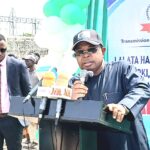
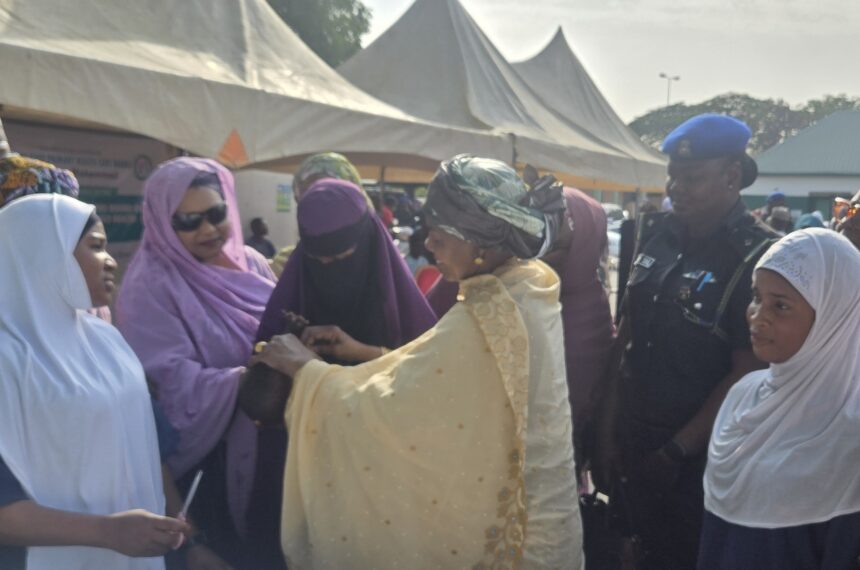
Mustapha Abubakar made the assertion while speaking to Journalists during a field visit to the area to monitor the implementation of the project.
The Director said the initiative had significantly increased immunisation coverage through regular outreach programmes, mobile health services and active community participation.
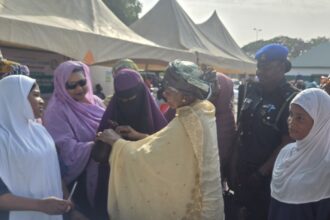
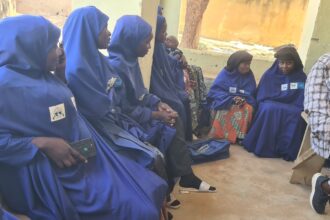
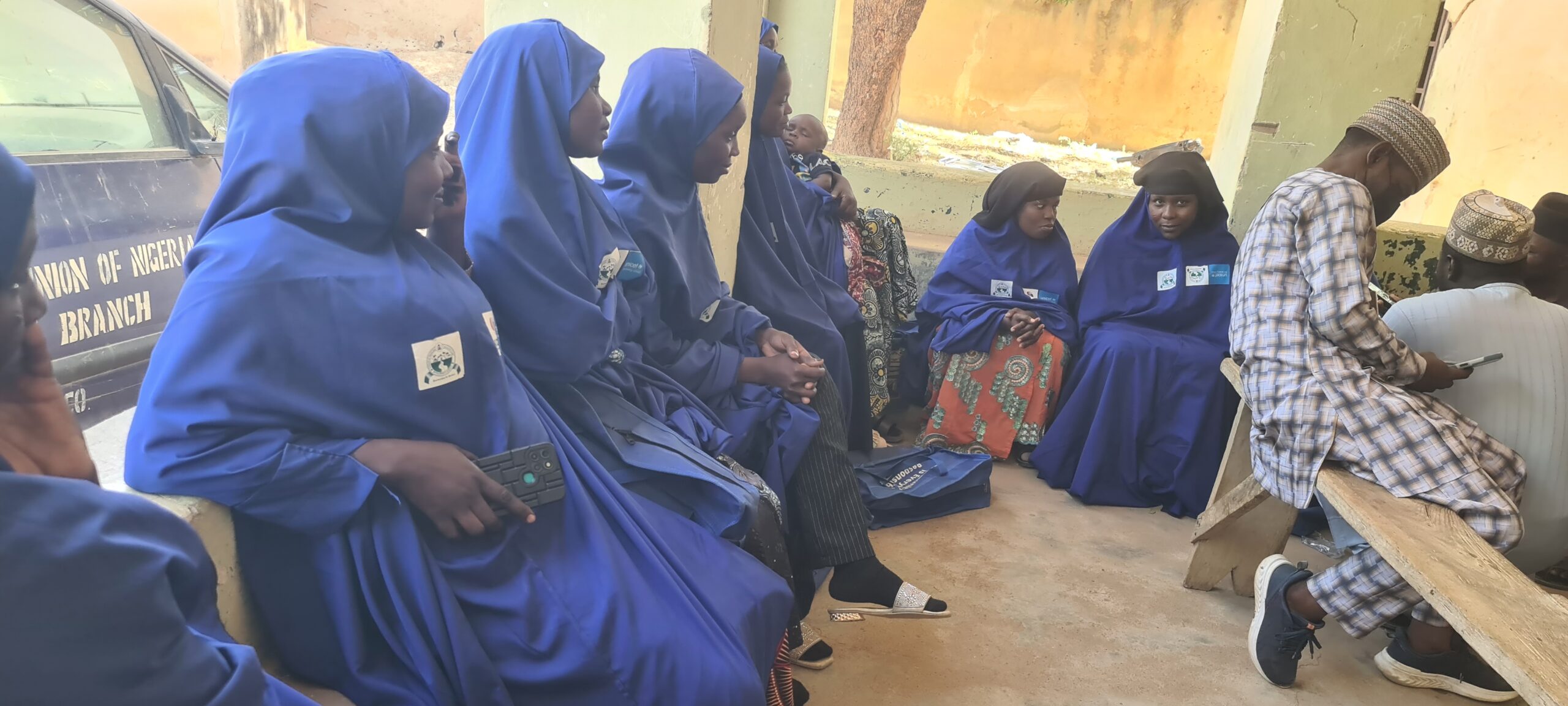
He explained that the intervention had strengthened collaboration with Ward Development Committees (WDCs), community resource groups, Mama-to-Mama and Father-to-Father groups, as well as house-to-house mobilisers, who play important roles in sensitising and mobilising families to access healthcare services, particularly, immunization for children U-5 thereby reducing Zero dose situation .
According to him, the Local Government Area team also provides strong support for the outreach activities, ensuring that more eligible children are reached, particularly in previously underserved communities.
On sustainability, the Director said the health authority was already putting measures in place to ensure that the gains recorded would continue beyond the withdrawal of external support.
He disclosed that ward supervisors, facility in-charges and other frontline health workers were being mentored to sustain supportive supervision and service delivery in collaboration with the local government team.
He added that the authority would continue engaging community resource groups, Mama-to-Mama and Father-to-Father groups, house-to-house mobilisers and WDCs to maintain community participation.
Mustapha Abubakar also revealed that the local government leadership had been approached to sustain support for community-based structures, while traditional and community leaders were being encouraged to take greater responsibility for mobilising residents.
On maternal healthcare, the Director said antenatal care attendance was encouraging, but institutional delivery remained an area requiring further improvement.
He put the current institutional delivery rate at between 47 and 48 per cent, compared with less than 30 per cent before the intervention.
He attributed the improvement to increased community mobilisation, awareness campaigns and support from development partners led by the UNICEF, which has been supporting wards and health facilities.
Reflecting on the situation before the ROK intervention, Mustapha Abubakar described the area as one of the worst-performing in terms of immunisation and maternal and child healthcare, with low outreach coverage and a high number of vaccine-preventable diseases.
He said the introduction of regular weekly outreach and strengthened mobile services had enabled health workers to reach more eligible children, especially those in hard-to-reach communities where zero-dose children were previously being missed.
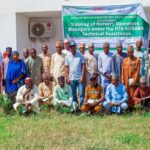
The Director said the intervention had also improved the capacity and knowledge of healthcare providers, enabling them to extend services to communities that were previously difficult to access.
He expressed appreciation to ROK and UNICEF for their investment in the health sector but appealed for continued support to allow the local health authority to consolidate the achievements and gradually assume full ownership of the programme.
Abubakar further urged the development partners to extend similar support to maternal healthcare, particularly antenatal care and institutional delivery.
He noted that integrating antenatal care services into outreach and mobile health activities would help improve access for pregnant women, just as the intervention had improved childhood immunisation.
Mustapha Abubakar further urged the development partners to extend similar support to maternal healthcare, particularly antenatal care and institutional delivery.
He noted that integrating antenatal care services into outreach and mobile health activities would help improve access for pregnant women, just as the intervention had improved childhood immunisation.
He said: “We appreciate the ROK/UNICEF intervention because it has built our capacity, increased the knowledge of our service providers and enabled us to reach communities we could not reach before. We want the support to continue while we take ownership of the programme to ensure its sustainability.”
He emphasised that sustaining the intervention would be critical to preventing a reversal of the progress made in immunisation and maternal and child healthcare.
In his reaction, Dr Patrick Akor, Health Officer, UNICEF Bauchi Field Office, said that,”Three local LGAs were selected in Bauchi state for the ROK immunization project through UNICEF, which comprises of 42 wards and the key aspect why those LGAs were selected was to look into zero dose children and under immunised communities.”
According to him,”We have a lot of Zero dose children in the 3 LGAs that were selected in Jama’re, Dambam and Warji. We also have record of under immunised children who have not completed their immunization and for that, ROK initiative has for problematic areas where it supports them in terms of immunization vaccine delivery, strengthening of routine immunization using the fixed outreach sessions, where we have the house to house mobilizers to see to it that we get more of the children who have not been vaccinated.”
Patrick Akor added, “The Second aspect of the problematic support for the ROK-UNICEF is for us to see how we can actually strengthen the scope in the area of disease outbreak in the 3 LGAs, we can actually come in to support and ensure that we don’t have any record of vaccine preventable diseases occuring in the LGAs.”
He added that,”UNICEF have supported in the supply of immunization supply and cold chain equipments to the 3 LGAs where we need to strengthen the capacity of vaccine storage and transportation of vaccines to the communities and to the outreach areas.”
“And the fourth aspect has to do with the social behavioural determinant where we need to ensure the behaviour of the community, the behaviour of everyone in the society aligns with immunization activities, the health status of each and every one within the eligible age of children that needs to be vaccinated,” he added.
The Health Officer, said,”So by and large, it has been a great success in these 3 LGAs and the community mobilizers were trained, they had to go house to house to mobilise the community, especially the under-served areas, where they actually needed to mobilise the caregivers to ensure that children are vaccinated and that no child is left behind.”
According to him,”We also have to conduct what we call the periodic immunization intensification in these LGAs to see that the far to reach communities are reached, not only through outreaches, but through intensification activities and that the children are well protected, vaccinated and documented because after vaccination, they have to document all the details of children that were actually vaccinated.”
On sustainability, he said,”You know the activity did not just start without the government involvement.It involved the state government which is the Bauchi Primary Healthcare Development Agency. So the state government is fully involved in these activities and you can see if you look at the statistics there now, not only mobilizing the caregivers to bring their children, but also for antenatal services, they also come in for delivery aspect and services.”
He further said,”The government has seen the improvement in this aspect and we are ensuring that the government takes over where the project stop and see how they can strengthen and continue sustaining the system.”
He added, “The local government authorities and the state government are all involved in these activities and we are going to round it up with them, to follow up with them and ensure that they sustain the programme to see how the mobilizers will definitely not just stop, but continue and improve more better than what has been achieved.”
On data of the intervention, he said, “Yes, if you look at the data , it will definitely show us that as soon as we started between February till date, if you look at the statistics as regards children vaccinated, I mean the zero dose children who have not received the first dose of Penta and they are above 12 months, compared to last year, the difference is very very clear.”
He said,”It is showing that a lot of children has been reached who have not been vaccinated and that is why you can hardly see cases of diphtheria outbreak in those three areas compared to the previous years where we had cases in Jama’re, but today you can look at it that we don’t have cases of diphtheria in Jama’re compared to previous years.”
“So, the data is actually telling us that there has been an improvement in the activities that has been conducted. By the end of December, I think we will be able to share more light concerning the statistics of children that has been reached and vaccinated, mothers that have gone for antenatal services that have not been coming before.So even if you check the data compared to similar period last year, you will see that there has been a lot of improvement in this very project compared to what we saw last year.”
He also said that,” So Jama’re, Warji and Danbam, the three LGAs, you cannot hear about any cases of diphtheria outbreak .Most of the cases you hear of are in Toro, Bauchi and some neighbouring LGAs, but you cannot get that in Jama’re or Danbam, but previously as you know, last year, there were cases of diphtheria in these 3 LGAs.So UNICEF worked with with the federal government and ensured that these 3 LGAs were selected because of these issues and UNICEF has taken the bold step to see that children are vaccinated against vaccine preventable diseases and today we can testify that we have no case of diphtheria from those LGAs.
He explained that the three LGAs were statistically selected based, looking at the outbreak of cases, looking at the Routine Immunization performance before the selection of the LGAs was actually given, because they have to use data to actually select these LGAs and having indicators that are low and now, having commenced the programme and getting towards the end of the year.
“We can actually see the difference in the data that was given before and when you compare, you can see that there is an improvement compared to the previous years,” he said .
He called on everyone within the communities and Bauchi state to join in the fight against zero dose, saying, “Every year, we have been hearing about outbreak of diphtheria in some of those LGAs and other vaccine preventable diseases.”
He added, “So it is just to encourage mothers, caregivers and parents, we have the Fathers for Good Health who have been supporting communities to see that they take their children to the nearest health facility for vaccination and pregnant mothers should not fail to go for antenatal and delivery, they need to take themselves to the health facility for delivery where we have qualified health workers who can handle deliveries and also the post-antenatal aspect which has to do with after the delivery.”
He stressed, “They still need to take the infant for post-natal care in the health facility which is very key and for days, the child will continue with the vaccination aspect and you see that the immunity of the child will be very strong and protected against any kind of infection.”
He concluded that, “The work of the Mama2 Mama group has been fantastic, excellent and good in the state and you know that it was in Bauchi state that we started the Fathers For Good Health and it has expanded to other states, even not just only within this Field office, it has been expanded to other states in the country to come and learn from what we are doing in Bauchi and establish their own Fathers for Good Health.”