By Lizzy Carr
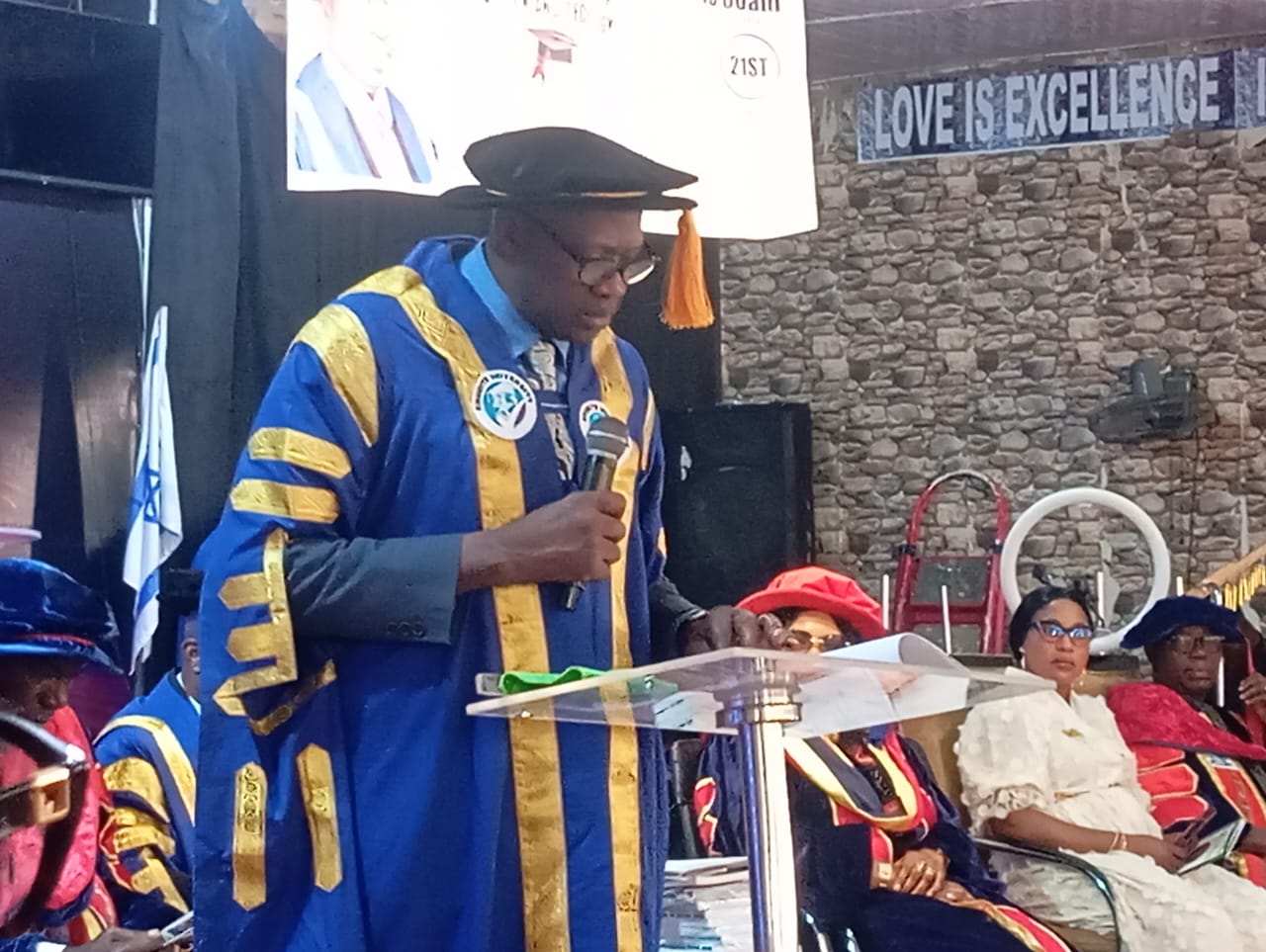
The Registrar of Pathfinder Theological Seminary, Professor Bulus Chollom Rawhol, has said that poverty remains one of the major challenges confronting religious leaders in Nigeria, limiting their capacity to meet the spiritual, social and economic needs of their congregations and communities.
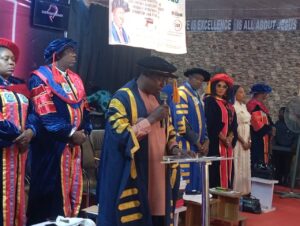
He made the assumption during his presentation on the theme Empowering Ministers in the 21st century, Overcoming Poverty through Entrepreneurship, Innovation and Technology” at the inaugural lecture and conferment of doctoral and professional awards of the Seminary in collaboration with Erudite Open University an affiliate of American Heritage University of Southern California held in Bauchi.
Bulus Chollom noted that for many ministers, the responsibility of providing spiritual guidance, supporting vulnerable members, funding church activities and participating in community development often comes with significant financial pressure.
According to him, “This challenge is particularly pronounced in rural and underserved communities, where limited economic opportunities, inadequate infrastructure and dependence on congregational contributions make sustainable ministry difficult”.
The Registrar stressed that embracing entrepreneurship, innovation and technology has become increasingly important in empowering ministers to overcome poverty and build financially sustainable ministries.
He added that ministers must move beyond traditional approaches to ministry by developing entrepreneurial mindsets, identifying their talents and exploring innovative opportunities that can generate income while advancing their spiritual calling.
“Financial insecurity affects ministers beyond their personal welfare. It can undermine their capacity to lead, inspire, develop their ministries and respond effectively to the needs of their congregations,” he added.
Bulus Chollom further said ministers are often expected to provide assistance in areas such as education, healthcare, food security, financial support and other social services. However, those experiencing financial difficulties may find it challenging to meet these expectations.
He further stressed, “Limited financial resources also affect the ability of religious leaders to maintain places of worship, organise outreach programmes, undertake community development projects and pursue further education or professional development”.
The situation, he noted is compounded by the absence of structured financial support systems, inadequate financial literacy, overdependence on tithes and offerings, cultural and theological misconceptions about wealth creation, and limited institutional support for ministerial welfare.
He stated that addressing poverty among ministers requires deliberate efforts to promote economic empowerment, financial independence and sustainable sources of income.
The Don added, “Entrepreneurship offers ministers practical opportunities to generate income, create employment and achieve greater financial independence.In the context of ministry, entrepreneurship goes beyond profit-making. It involves identifying opportunities, developing solutions and establishing sustainable ventures that create value for both religious institutions and society.
He urged ministers to explore opportunities in education, agriculture, vocational training, healthcare, publishing, consultancy and other viable businesses based on their skills and available resources.
Establishing schools, clinics, agricultural ventures and vocational training centres can serve the dual purpose of generating income and addressing community needs he added.
“However, many ministers lack the entrepreneurial knowledge, financial management skills and confidence required to establish and manage such ventures thus entrepreneurial orientation, business development training and financial literacy programmes are essential for religious leaders,” he said.
He encouraged churches and religious organisations to establish welfare schemes, cooperative societies, microcredit initiatives and entrepreneurial training programmes to support ministers and their families.
According to him, ” Entrepreneurship, innovation and technology should be viewed not merely as optional tools but as important instruments for strengthening ministry in the 21st century”.
The Pathfinder Theological Seminary offers academic programmes in child evangelism, Biblical studies, Christian administration,church administration, political theology and development studies among others.