By: Monday Danladi, Bauchi
Monitoring and Evaluation Officers, Nutrition Focal Persons as well as Logistics Officers from the 20 LGAs of Bauchi State, have been urged to use their respective offices in preventing the misappropriation and diversion of Ready-to-use-therapeutic-food (RUTF), used in the treatment of severe acute malnutrition in children Under-5 children.
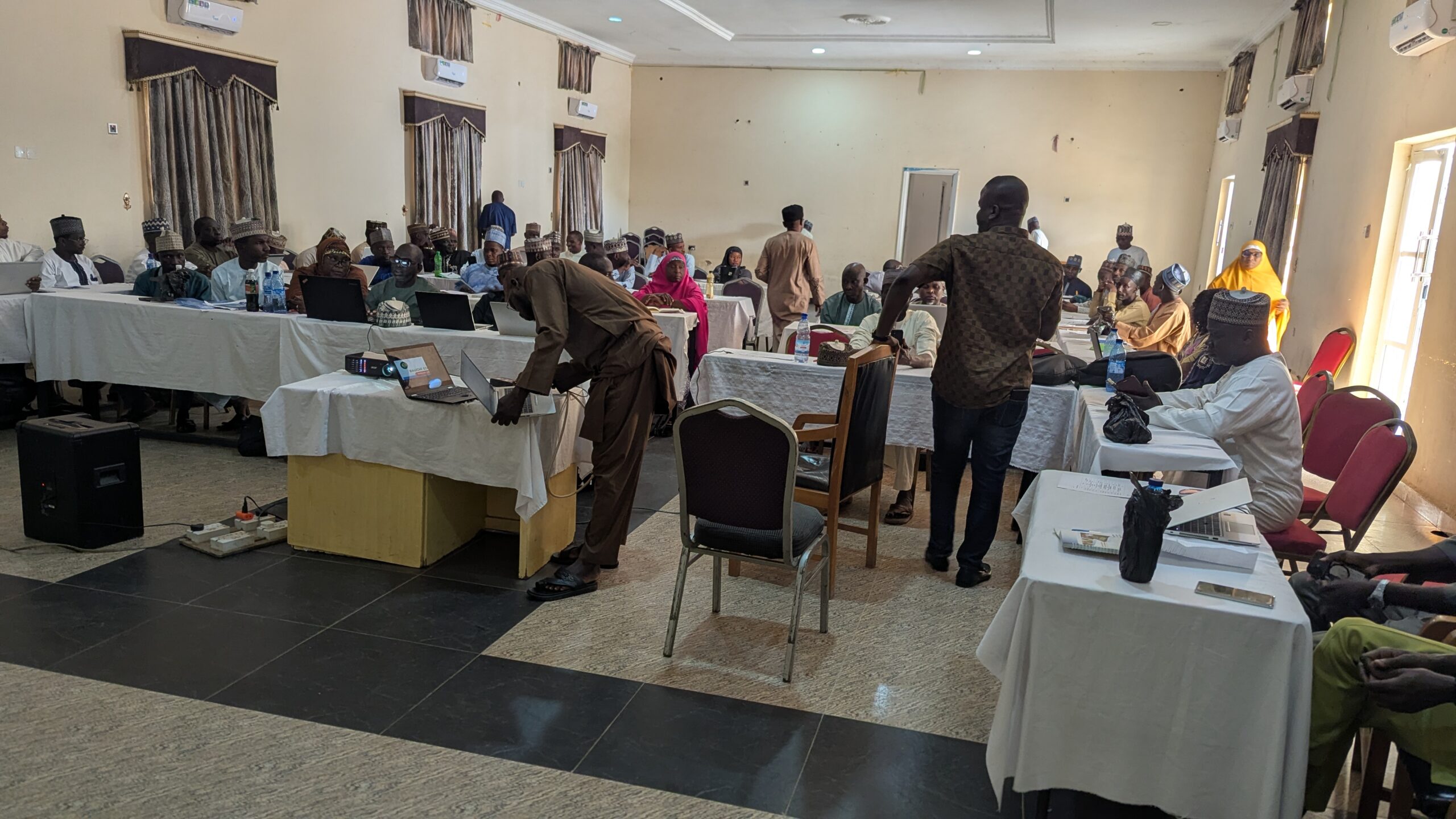
The call was made during a 2-day training of Monitoring and Evaluation Officers, Nutrition Focal Persons and Logistics Officers from the 20 LGAs of Bauchi State on Nigeria Health Logistics Management Information System (NHLMIS).
Speaking at the training, Adamu Musa Bara, the Monitoring and Evaluation Officer. Bauchi State Primary Healthcare Development Board, said that, “We are currently participating in a training for Monitoring and Evaluation focal persons, particularly in the area of nutrition.”.
According to him, “The essence of this training is to build the capacity and reorient programme officers at the Local Government Area level on the importance of reporting reliable and accurate data on monitoring and evaluation on Nutrition Data and Commodity Management.”
He added that,”Whenever services are provided at a health facility, the facility must ensure that the information collected is accurate and properly captured. Such data must then be entered into the Demographic Health Information Survey (DHIS), which is the nationally approved platform for reporting health services provided at facility level.”
He stressed that the training will also contribute to the effective management of nutrition commodities in the state.
He disclosed that there are several nutrition interventions supported by UNICEF, including Multiple Micronutrient Supplements (MMS), Small-Quantity Lipid-Based Nutrient Supplements (SQ-LNS), and Ready-to-Use Therapeutic Food (RUTF).
He expressed confidence that through the training, “we want to ensure that the nutrition commodities supplied to health facilities are appropriately utilized and properly accounted for. This will enable us to triangulate service-delivery data with logistics data and determine whether the commodities supplied are reaching the intended beneficiaries.”
He concluded that,”Ultimately, the objective is to strengthen data quality, improve accountability, and ensure that nutrition commodities are effectively managed and reach the people who need them most.”
He said that, “One diverted RUTF pack is a death sentence for one child that is suffering from severe acute malnutrition (SAM) because he needs it to stay alive. It is very important to the survival of the child.”
Also speaking, a Nutrition Officer with UNICEF, Jackson Martins, said that UNICEF, with support from the United States Government, is supporting the training of Programme Officers drawn from the State and LGA levels, including Monitoring and Evaluation (M&E), LMCU Officers, and Nutrition Focal Persons, on DHIS2 and the Nigerian Health Logistics Management Information System (NHLMIS) to strengthen the management of health commodities and improve the quality of logistics data used for decision-making.
He explained that the key objectives include improving the participants’ understanding of NHLMIS tools and processes, Strengthening logistics data management skills, Enable participants to accurately collect, record, compile, analyze, and report logistics data.
It is also to equip participants with skills to estimate commodity needs based on consumption and morbidity data and promote timely, complete, and accurate submission of logistics reports for health commodities.
Jackson Martin further said that the training is to enable health managers to use logistics data for planning, procurement, distribution, and resource allocation and reduce stock-outs and wastage.
It will also Strengthen stock monitoring to ensure continuous availability of essential medicines, nutrition commodities, vaccines, and other health supplies and increase availability of essential health and nutrition commodities for beneficiaries.
Some of the participants expressed delight for being part of the training which they said has increased their knowledge on effective and efficient data management for improving services delivery on fighting malnutrition in U-5 children.