By Abubakar Rabilu, Gombe
The National Hydroelectric Power Producing Areas Development Commission (N-HYPPADEC) has approved six additional boreholes for Dukku Local Government Area of Gombe State to address the town’s persistent water shortage.
The intervention followed complaints by residents during a visit to the community by the Managing Director of N-HYPPADEC, Abubakar Sadiq Yalwa, in February.
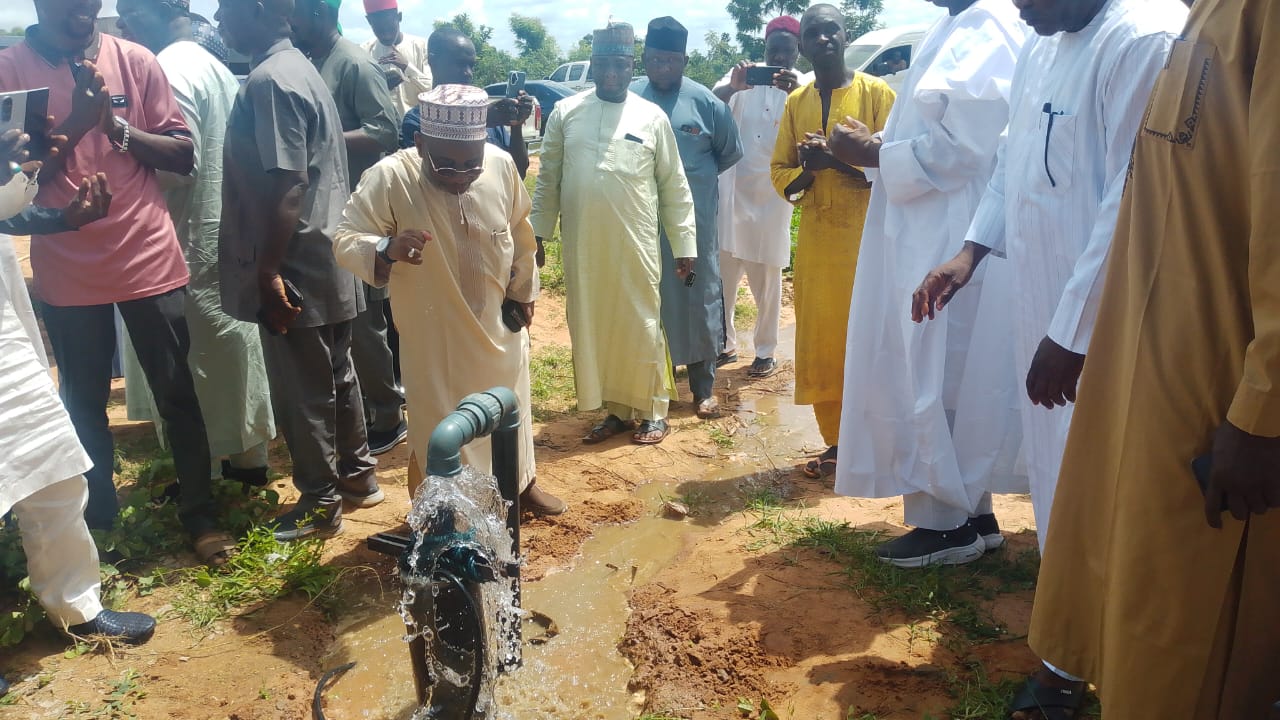
Yalwa disclosed this yesterday while inspecting the ongoing water project in Dukku, saying the commission had initially awarded a contract for four industrial boreholes to boost water production and improve the capacity of the existing water scheme.
He said after assessing the performance of the four boreholes, N-HYPPADEC approved six more to increase water output and ensure adequate supply to storage tanks for distribution across the town.
“With the existing four boreholes and the additional six, we expect to achieve the required water output and ensure that sufficient water is supplied to the storage tanks for distribution throughout the town,” he said.
Yalwa described the contractor’s performance as satisfactory, adding that N-HYPPADEC engineers, in collaboration with the Gombe State Ministry of Water Resources, would continue to monitor the project.
He also said water samples had been collected for quality assessment.
Former Gombe State Commissioner for Water Resources, Bala Adams, commended N-HYPPADEC for the intervention, saying the four boreholes had been integrated into the existing water scheme and powered by solar energy.
According to him, two boreholes were newly drilled while two existing ones were rehabilitated, with depths ranging from 100 to 120 metres.
The Emir of Dukku, Alhaji Abdulkadir Haruna Rashid, expressed appreciation for the intervention, urging residents to protect the facilities from vandalism and ensure proper maintenance.
The council chairman, Abubakar Adamu, said the project would help address the longstanding water challenge in the area.
The contractor, Salisu Magaji, said drilling in some locations was difficult because of the depth required to reach underground water, with some points reaching about 160 metres.
The Project Manager, Engr. Muhammad Turaki, said the project was about 90 per cent complete, adding that solar-powered pumps and panels had been installed to provide a more sustainable water supply.