By Lizzy Carr
A Non-Governmental Organisation, Faith to Action Network, has called for stronger community leadership, advocacy and collective responsibility in the fight against Gender-Based Violence (GBV).
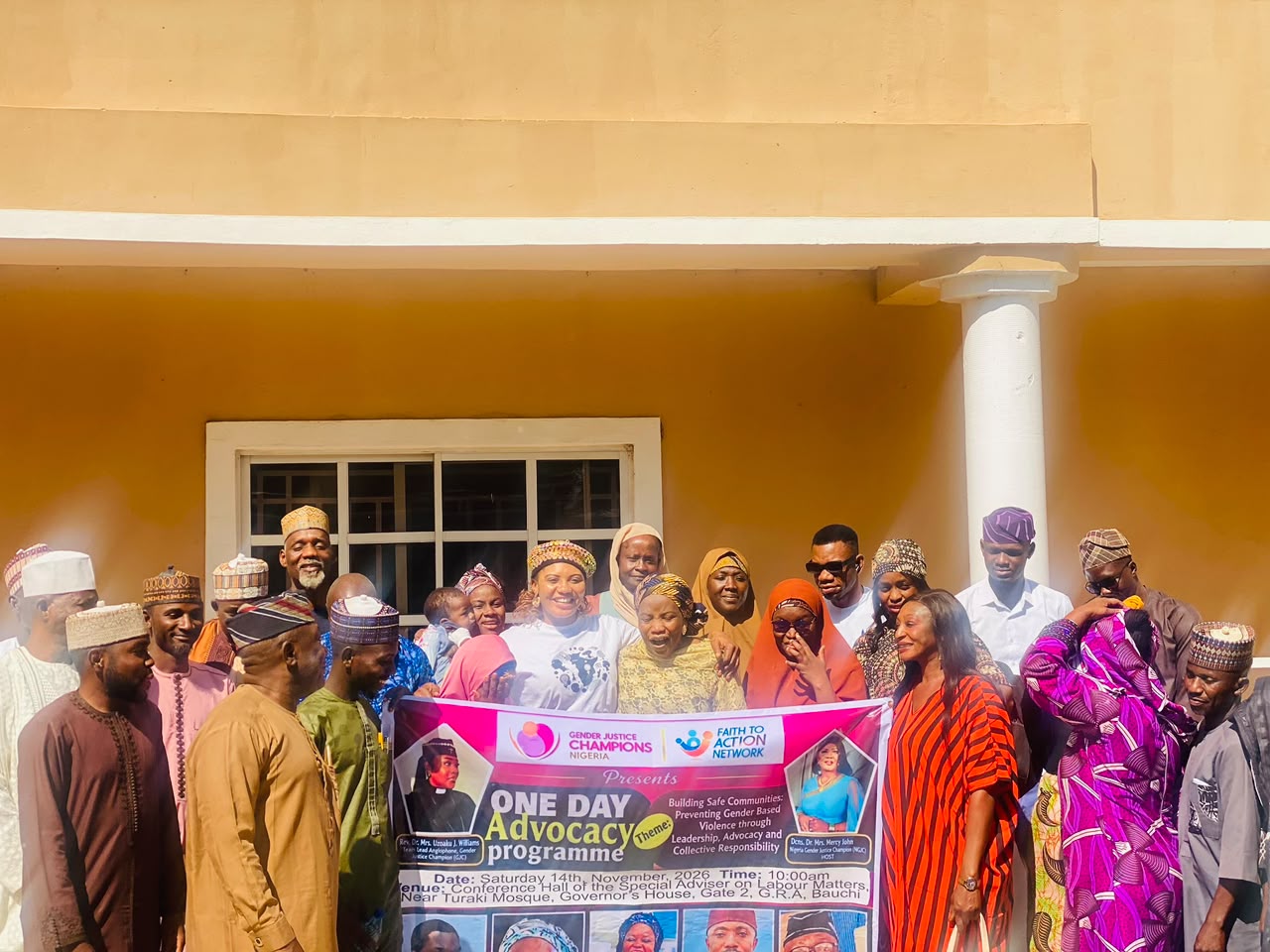
The call was made during a one-day advocacy programme held in Bauchi, with the theme: “Building Safe Communities: Preventing Gender-Based Violence Through Leadership, Advocacy, and Collective Responsibility.”
The event brought together religious and community leaders, government representatives, civil society organisations, youth groups, women and Persons With Disabilities to discuss strategies for preventing GBV and protecting vulnerable members of society.
In her welcome address, Gender and Justice Champion Nigeria, Dr. Mercy John, described Gender-Based Violence as a serious societal concern that requires the active involvement of all stakeholders.
She identified domestic violence, sexual abuse, child marriage, harmful traditional practices and emotional abuse as some of the forms of GBV, noting that they undermine human rights, family stability and community development.
Dr. John stressed that preventing GBV should not be left to government and advocacy organis
Dr. John stressed that preventing GBV should not be left to government and advocacy organisations alone, urging traditional and religious leaders, parents, youths and other stakeholders to speak out against harmful practices, support survivors and promote accountability.
Also speaking, the Special Adviser to Governor Bala Mohammed, on the Nigeria for Women Project Halima Ibrahim Dimis, emphasised that preventing Gender-Based Violence must be a collective responsibility
The Executive Director of Journalists for Public Health and Development Initiative (J4PD) Elizabeth kah said building safe communities requires the involvement of every segment of society.
She urged community leaders to speak out against GBV and ensure that reported cases are properly referred to relevant authorities rather than settled within traditional institutions, stressing that such informal settlements often leave survivors devastated and without justice.
She also called on religious leaders to use their pulpits to educate their followers on the dangers and consequences of Gender-Based Violence.
Other speakers urged families to teach children mutual respect, listen to their concerns and avoid concealing cases of abuse, while religious institutions were encouraged to provide safe spaces where survivors could speak out and seek help.
The participants reaffirmed the need for stronger collaboration among community leaders, religious institutions, government agencies and civil society organisations to build safer communities free from Gender-Based Violence.