By: Monday Danladi, Bauchi
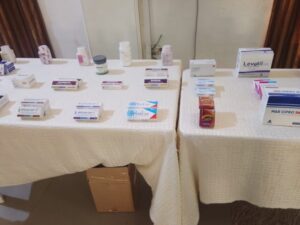
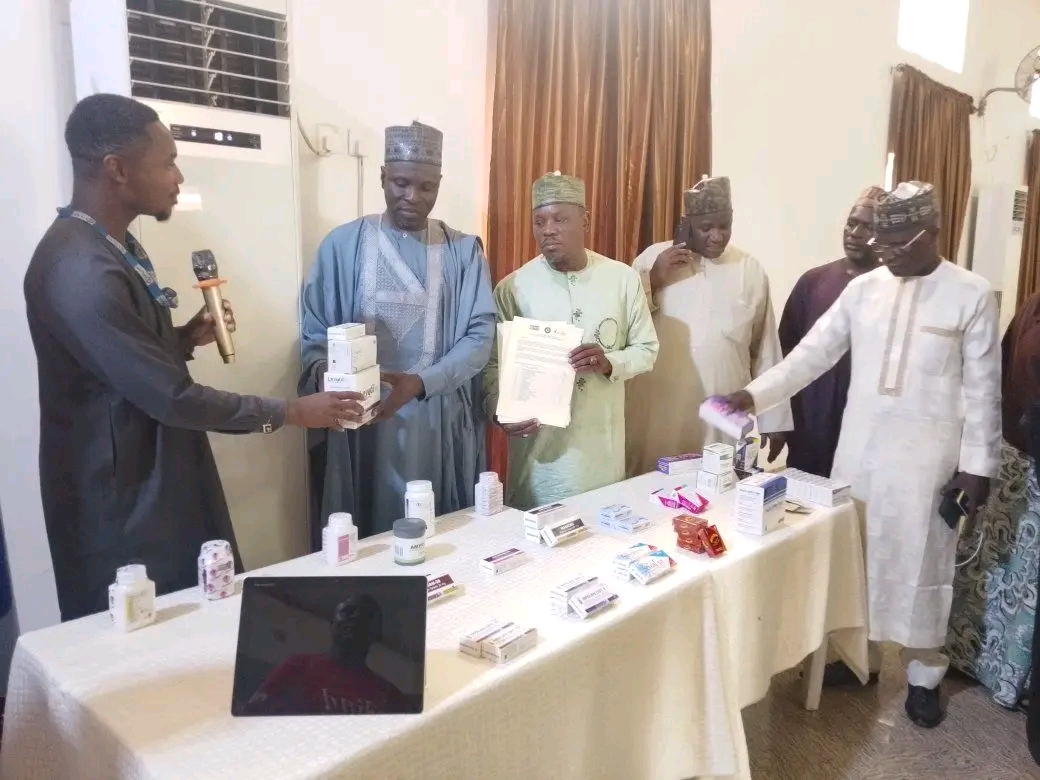
Plan International Nigeria, under the Adolescent Sexual and Reproductive Health in Nigeria (ASPIRE) project, funded by Global Affairs Canada, on Saturday, handover essential health commodities which are particularly significant to Bauchi State Government in the fight against mental health issues moving beyond conversation to action.
The exercise was to commemorate World Mental Health Day 2026 and recognise the International Day of the Girl, while also marking an important step towards strengthening access to essential health services for adolescents, young women and other people who require care across Bauchi and Sokoto States.
The Country Director of Plan International Nigeria, Dr Charles Usie made the donation as represented by Damaris Philemon, Gender Equality and Inclusion Officer for Plan International Nigeria.
According to him, “For mental health, awareness matters. Advocacy matters. Challenging stigma matters. But these efforts must ultimately be matched by accessibl services, appropriate treatment, trained providers and the availability of the medicines people need when they seek care. That is what today represents.”

He explained that,”Plan International is an independent development and humanitarian organisation that ‘dvances children’s rights and equality for girls. Across our work, we recognise that the ability of lescents and young people, particularly girls, to exercise thei. rights is closely connected to their access to quality healthcare, information, supportive systems and opportunities to make informed decisions about their lives.”
He added,”This commitment is strongly reflected in the ASPIRE project, implemented in Bauchi and Sokoto States. With support from Global Affairs Canada, ASPIRE works alongside government and communities to address interconnected barriers affecting adolescent girls and young women, including Sexual and Reproductive Health and Righis, gender inequality, harmful social norms, economic exclusion, and mental health and psychosocial wellbeing.”
“Through routine quality-of-care and supportive-supervision activities conducted with relevant government ministries and agencies, gaps were identified in the availability of selected family planning commodities, medicines for the management of sexually transmitted infe ons and psychotropic medications within supported health facilities. These gaps have imptions for continuity of care and for the ability of people to acess timely and appropriate services when they need them,”.
According to him,”In response, and in support of ongoing government efforts, the ASPIRE project has procured essential family planning commodities, STI medicines and psychotropic medications for handover to the State Ministries of Health in Bauchi and Sokoto States. These include medicines supporting the management of a range of mental health conditions, alongside commodities that strengthen access to Sexual and Reproductive Health and Righ is services.”
The Country Director said, “This is not simply a donation of commodities. It is an investment in stronger and more responsive health systems. The commodities will be integrated into existing government storage, distribution and monitoring structures, including relevant Drug Revolving Fund mechanisms. This approach is important because sustainable health interventions must strengthen the systems that already serve communities rather than establish parallel structures that disappear when a project ends.”
He further said, “It also reinforces an important principle: mental health is an integral part of overall health. Mental health services should not sit at the margins of our health systems or be treated as an isolated intervention. People requiring mental health support should be able to access appropriate, quality and stigma-free care within systems that are equipped to respond to their needs.”
“For adolescents and young women, this is equally important. Access to responsive, onfidential and appropriate SRHR services can have a signific ant impact on their health, wellbeing dignity and ability to make informed decisions about their lives,” he added.
Charles Usie stressed,”Our responsibility, therefore, goes beyond ensuring that these commodities reach state stores.
Their true value will be realised when they reach the facilities where they are needed and, ultimately, the people who require them.”
According to him, “We therefore look to our government partners to continue strengthening effective inventory management, responsible distribution, stock monitoring and utilisation reporting; to ensure that commodities reach designated facilities and the people who need them; and to use the evidence generated to inform future forecasting, procurement planning, budgeting and resource mobilisation.”
He however stressed that sustainability must remain at the heart of the partnership, saying,”The long-term goal is not simply to address an immediate commodity gap, but to strengthen systems capable of anticipating needs. allocating resources and sustaining access to essential services beyond the lifespan of any individual project.”
“We deeply appreciate the leadership of the Governments of Bauchi and Sokoto States and the commitment of the State Ministries of Health, Drur,s and Medical Consumables Management Agencies, Hospital Management Boards, State Primary Health Care Development Boards and other government partners working to strengthen health service delivery,” he added.
He added that, “We also extend our sincere appreciation to Global Affairs Canada. Through its investment in the ASPIRE project, Plan International Nigeria is able to work with government, commities and other partners to translate commitments to adolescent health, gender equality wellbeing into practical action.”
“To our media partners and other stakeholders here today, you also have an important role to play. The way we talk about mental health can either reinforce stigma or help dismantle it. The stories we tell can help people understand that seeking support is not something to be ashamed of and that access to quality mental healthcare is an essential part of a functioning health system,” he added.
The Country Director added,”As we commemorate World Mental Health Day, let’s therefore remember that awareness must lead somewhere. It must lead to better services. It must lead to stronger systems. It must lead to sustained investment. And most importantly, it must lead to people being able to access the care they need h dignity, compassion and continuity.”
He concluded, “Together, through government leadership, sustained partnership and continued investment, we can build health systems where mental health is treated as an essential part of health, where adolescents and young women can access responsive services, and where no one is denied appropriate care because the medicines, systems or support they need are unavailable.”
The ceremony was attended by State Commissioner of Health, Hospital Management Boards, State Primary Health Care Development Board, Drugs and Medical Consumables Management Agency, Development Partners, Civil Society Organisations , members of the media.