By: Monday Danladi, Bauchi
In a state like Bauchi, where the battle against child malnutrition begins long before a child can walk, one of the most important interventions may sometimes be a trusted neighbour who knows the warning signs, understands where to seek help and refuses to look away.
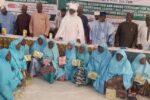
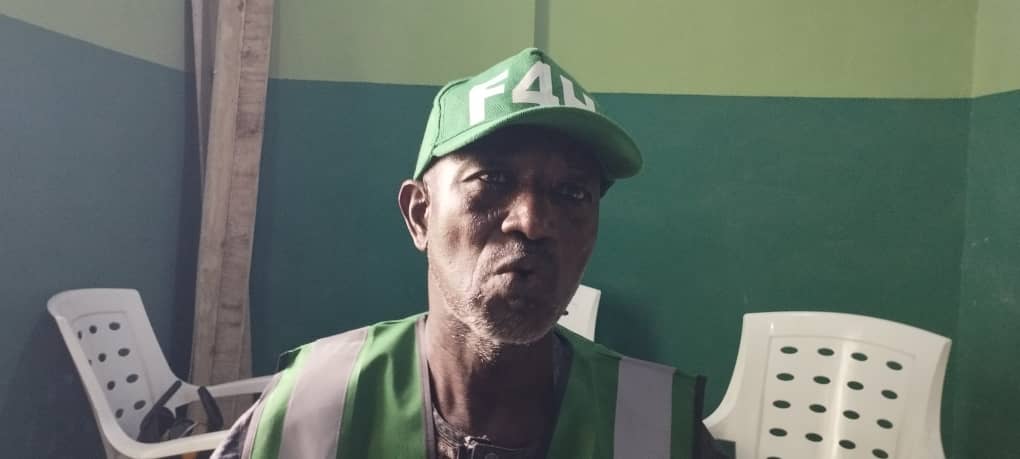
Such a neighbor could be a member of the healthcare support group of Mama2Mama or Fathers-for-Good-Health (F4F) that have taken upon themselves the responsibilities of Mobilization, enlightenment and education of pregnant women to attend ante-natal and post-natal services at designated health facilities across the state.
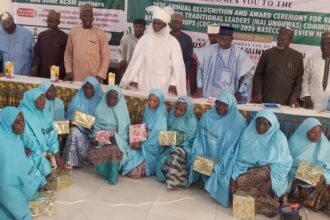
Members of the Mama2Mama and Fathers-for-Good-Health are volunteers who are rendering services in the communities having been trained by United Nations Children’s Fund (UNICEF) through funding from the US Government.
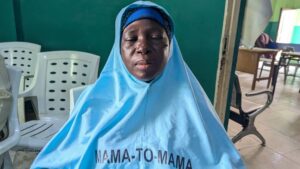
A visit to Jama’are LGA, revealed how Adama Dauda Abdullahi, a 50-year old woman goes about her volunteerism duties carrying no medical tools other than her God given ability to talk.
Speaking, She said, “I am involved in community-based work, particularly supporting mothers and families. We received training in April 2026 from UNICEF on how to go about our work of volunteerism. We work closely with mother’s and pregnant women in the community. Whenever there is a need, they call me and I go to the affected person or family to provide assistance.”
She added that,”Sometimes, I do not attend to them at home, I go to where they are, and we work together to address the problem. I ensure that they go to the nearest health Centre for skilled attention. There are also some materials and services that are provided to support them.
Through this work, I have gained a lot of experience. Whenever we visit communities, we educate people about important health issues—what they should do, what they should avoid, and the services available to them.”
Adama Dauda Abdullahi added that, “We explain the benefits of these services and introduce people to information that can help them improve their health. The important thing is to ensure that people receive the appropriate care and remain healthy. When we identify a woman or a child who needs attention, we assess the situation and provide the necessary support. Where medication is required, we make sure the person receives it. If the condition requires further medical attention, we encourage or refer the person to a health facility.”
According to her, “When we return to the community, we continue to talk to people about these issues and explain what they need to know. It is not just about treating one person; we also educate the family and the wider community.”
She added that, “Once people begin to understand and use the services available to them, we can see the improvement. When a child or mother has a problem, we do our best to support them and, when necessary, ensure that they receive care at a hospital or health facility.
Our main concern is to help people understand their health needs, access appropriate services and ensure that mothers and children receive the care they need.”
She stressed that, “We received training on how to move around our community from house to house to sensitise our fellow women and to help them identify signs of malnutrition in children for proper action.”
It is a simple intervention, repeated across communities in Bauchi State, but one with potentially life-changing consequences for children during the most critical period of their development.
Another Mama2Mama member is Kande Dokaji, She said, “The level of acceptance by the community is overwhelming. As a result, cases of malnutrition have drastically reduced in our community.”
She spends her time helping mothers understand what malnutrition can look like before it becomes severe.
The signs, she explains, may include poor growth, failure to gain height or weight, loss of appetite and unhealthy changes to a child’s skin.
Kande Dokaji added, “When they notice such signs, they should take the child to the health centre. And once the child is diagnosed with malnutrition, they will place the child on RUTF,” a Ready-to-Use Therapeutic Food used in the management of severe acute malnutrition.
She says the volunteers also encourage mothers to seek professional care early and help families connect with nearby health facilities, saying, “We made them to know that it is after three months of birth that a child may show symptoms of malnutrition. Where mothers do not fully understand, we fix appointments for them at the nearest health facility.”
Yusuf Hafizu is a member of the Fathers-for-Good-Health in Jama’are LGA, he said, “Honestly, the training has been very helpful to us. Before the training, I did not know much about some of these issues. But after participating, I gained a better understanding of how to keep children healthy and ensure that they received the care and nutrition they need.”
According to him,”During the training, we were taught about the different types of food that children need and how we can provide nutritious meals for them, both at home and within the community. We also learned about the importance of proper feeding practices and what mothers and caregivers should do to ensure that children receive adequate nutrition.”
He further said, “Another important thing we learned was how to protect children from diseases. We were shown the appropriate practices for preventing illness and what to do when a child becomes sick. For example, we learned what to do when a child develops diarrhoea or another illness, including when it is necessary to seek medical attention.”
He further said, “We were also taught about breastfeeding and what happens when a child reaches six months of age. At that point, complementary foods should be introduced, while breastfeeding should continue. We learned about the appropriate foods to give children at that stage. The training has really made a difference because it has increased our understanding of these issues.”
Yusuf Hafizu stressed that, “After the training, we went into the community and shared what we had learned with other people. We spoke with families about the foods they eat and the foods that are appropriate for children. We explained the importance of proper nutrition and encouraged them to follow the appropriate feeding practices.”
“We also emphasized the things parents and caregivers should do to keep their children healthy, including giving them the right food and seeking appropriate care when a child becomes sick. Overall, the training has helped us understand what children need, what foods we should give them, and the steps we can take to protect their health and ensure that they grow well,” he concluded.
The result is a gradual change in behaviour, as Mothers who once kept sick or undernourished children at home are increasingly seeking help through the volunteers and health facilities. The grassroots network has become an important community-level component of Bauchi’s response to child malnutrition, bringing basic nutrition awareness and early identification closer to families.
However, the challenge extends beyond identifying malnutrition, as
Bauchi State faces a significant gap between antenatal care attendance and institutional delivery. While almost 70 to 80 per cent of mothers attend antenatal care, only about 35 to 40 per cent deliver in health facilities.
According to Dr. Rilwanu Muhammad, Executive Chairman of the Bauchi State Primary Health Care Development Board, the consequences of home deliveries can include increased risks associated with poor infant feeding practices, infections and early childhood malnutrition.
To address these challenges, Bauchi State, with support from UNICEF and the United States Government, is focusing on the first 1,000 days of life — from conception through a child’s second birthday.
According to Philomena Irene, Nutrition Specialist with the UNICEF Bauchi Field Office, the U.S. Government grant is particularly focused on preventing malnutrition before it becomes severe.
“The U.S. Government support to Bauchi State through the grant has enabled us to provide support to over 40,000 children aged 6 to 23 months with Small Quantity Lipid-based Nutrient Supplements, SQ-LNS, for the prevention of malnutrition,” she says.
The intervention, however, goes beyond nutritional supplements, as more than 6,000 Mama2Mama and Fathers for Good Health support group members have been trained to deliver nutrition messages focused on the first 1,000 days of life, while more than 50 health workers have received training on the management of acute malnutrition at health-facility level.
The programme also seeks to strengthen the systems required to keep nutrition interventions functioning. The grant has supported improvements to the Logistics Management Information System and the District Health Information System for tracking nutrition supplies. It has also helped revitalise Local Government Food and Nutrition Committees and encouraged local governments to release funds for Ready-to-Use Therapeutic Food and Multiple Micronutrient Supplements for pregnant women.
While strengthening the supply chain, Dr Rilwanu Muhammad said maintaining adequate supplies remains critical to sustaining the intervention.
According to him, the state has distributed about 480,000 cartons of RUTF and approved N500 million for the fresh procurement of RUTF and Multiple Micronutrient Supplements, with UNICEF expected to provide another N500 million as a matching grant.
“We are waiting for the release of the money so that UNICEF will also pay another N500 million as matching grant to procure these items. That is why we are trying to close the gap,” he said, adding that SQ-LNS is being distributed gradually to ensure that it reaches “the right child in the right ward.”
For nutrition specialists, the focus on the first 1,000 days is not accidental, as Philomena Irene stress that, “This is the period where 75 percent of brain development takes place, including the muscular system, skeletal system and vital organs.”
“If we miss this period, children may not fit among their peers, may not compete in the digital world, and may be prone to diseases like cancer, obesity and other non-communicable diseases,” she added.