By: Monday Danladi, Bauchi
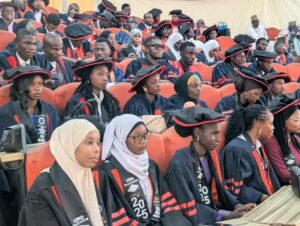
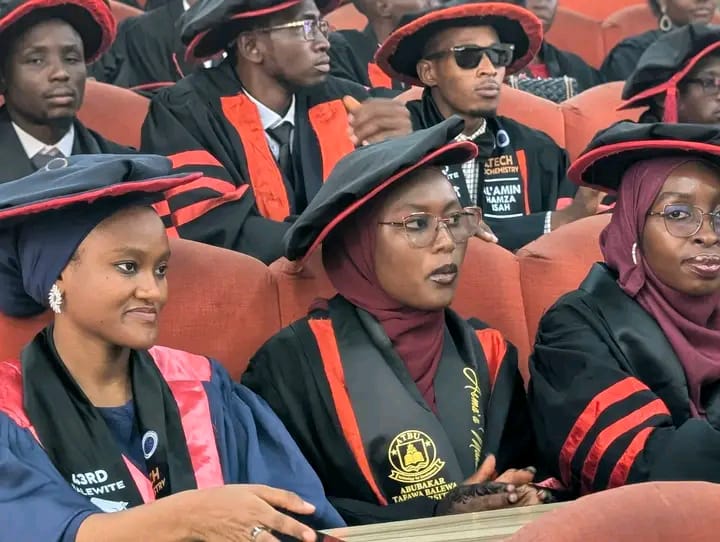
A total of 230 graduates of Biochemistry Department, of Abubakar Tafawa Balewa University (ATBU), Bauchi, have been inducted for the second time, into the Nigerian Society of Biochemistry and Molecular Biology (NSBMB) as Graduate Members.
The induction ceremony was conducted under the approved conference theme: “The Fate Inheritance Research in Africa: The Contribution of Biochemistry in Diseases, Medicine Development and Public Health in the World.”
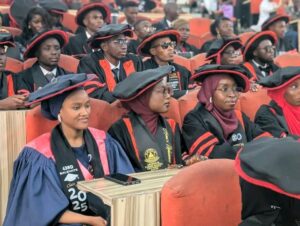
This special occasion marked an important milestone for the inductees, celebrating their dedication to learning and their potential to contribute to scientific research and better health.
Speaking at the ceremony, the Vice-Chancellor of the University, Prof. Ibrahim Garba, urged the inductees to deploy their knowledge and skills to address societal challenges and challenge outdated assumptions in their respective workplaces.
Ibrahim Garba also urged the newly inducted Biochemistry to become catalysts for positive change, regardless of the sectors they found themselves in, including healthcare, industry, agriculture, technology and entrepreneurship.
He said, “As you step into the wider scientific world, hold fast to these enduring principles. Be the catalyst in every domain you enter, whether healthcare, industry, technology, agriculture, public policy or entrepreneurship.”
According to him, “Remember that catalysts do not force reactions; they make them happen. Challenge inefficient systems, question outdated assumptions and lower the activation energy required for positive change.”
The Vice-Chancellor also urged the graduates to cultivate resilience, collaboration, professional integrity and continuous learning, stressing that scientific breakthroughs could not be achieved in isolation.
“No biological system functions in isolation, and no transformational breakthrough is achieved alone. Build strong interdisciplinary bridges, cross-sectoral partnerships and enduring professional and personal bonds,” he added.
He further advised them to uphold scientific integrity, accuracy and honesty, noting that their professional reputation would remain more valuable than any achievement obtained through unethical practices.
In his keynote address, titled “The Genomic Future of Africa: How African Biochemists Transform Disease Research, Drug Discovery and Global Health,” Prof. Ishaya Yohana challenged the inductees to identify societal problems within their areas of specialisation and develop practical solutions.
Ishaya Yohana explained that genomics, which studies the genetic material and makeup of organisms, had become critical to understanding diseases, developing effective treatments and improving global healthcare.
He said understanding the genetic makeup of individuals could help scientists determine how diseases develop and how patients respond to treatment.
According to him, understanding the genomes of disease-causing organisms could also assist researchers in developing more effective drugs.
“Biochemists have been contributing to this because genomics began with biochemistry and molecular biology. Biochemists are pioneers in this field,” he added.
“We isolate genomes, sequence them, study them, understand the markers and pathways, and can mitigate whatever challenges pathogens may present,” he further said.
The keynote speaker urged the newly inducted graduates to apply the principles of biochemistry beyond laboratories and academic environments, saying the discipline offered opportunities to address challenges affecting different aspects of human life.
He stressed,, “I encourage these inductees and others to look out for problems worthy of their training and find solutions to them because biochemistry studies life, the very foundation of life.”
“They should go out there and be the change agents they call themselves in society,” he added.
Earlier, the National President of the Nigerian Society of Biochemistry and Molecular Biology, O. M. Wegwu, represented by his Vice-President, Mohammed Adamu Milala, commended ATBU for sustaining the induction programme.
He disclosed that the society was making efforts to establish an Institute of Biochemistry in Nigeria, adding that the proposal had passed through the National Assembly and was awaiting presidential assent.
O. M Wegwu also said the society had secured a plot of land on the outskirts of Abuja for the construction of a N15m complex to promote research, innovation and professional activities.
He encouraged the inductees to remain committed to professional excellence and contribute to advancing biochemistry in Nigeria and beyond.
Speaking on behalf of the inductees, the ATBU branch’s pioneer and outgoing President of the Nigerian Society of Biochemistry and Molecular Biology, Shittu Salih, expressed appreciation to the university’s management and lecturers for their contributions to the students’ academic journey.
He described their training as demanding but rewarding, noting that the graduates had overcome several academic challenges to emerge stronger and better prepared for professional responsibilities.
Shittu Salih said, “We did not merely survive the journey; we grew through each challenge. We have emerged stronger, more knowledgeable, more resilient and determined to leave our footprints in the sands of our department’s history.”
He also acknowledged the efforts of their lecturers in helping them discover the value and practical relevance of biochemistry.