
By: Monday Danladi, Bauchi
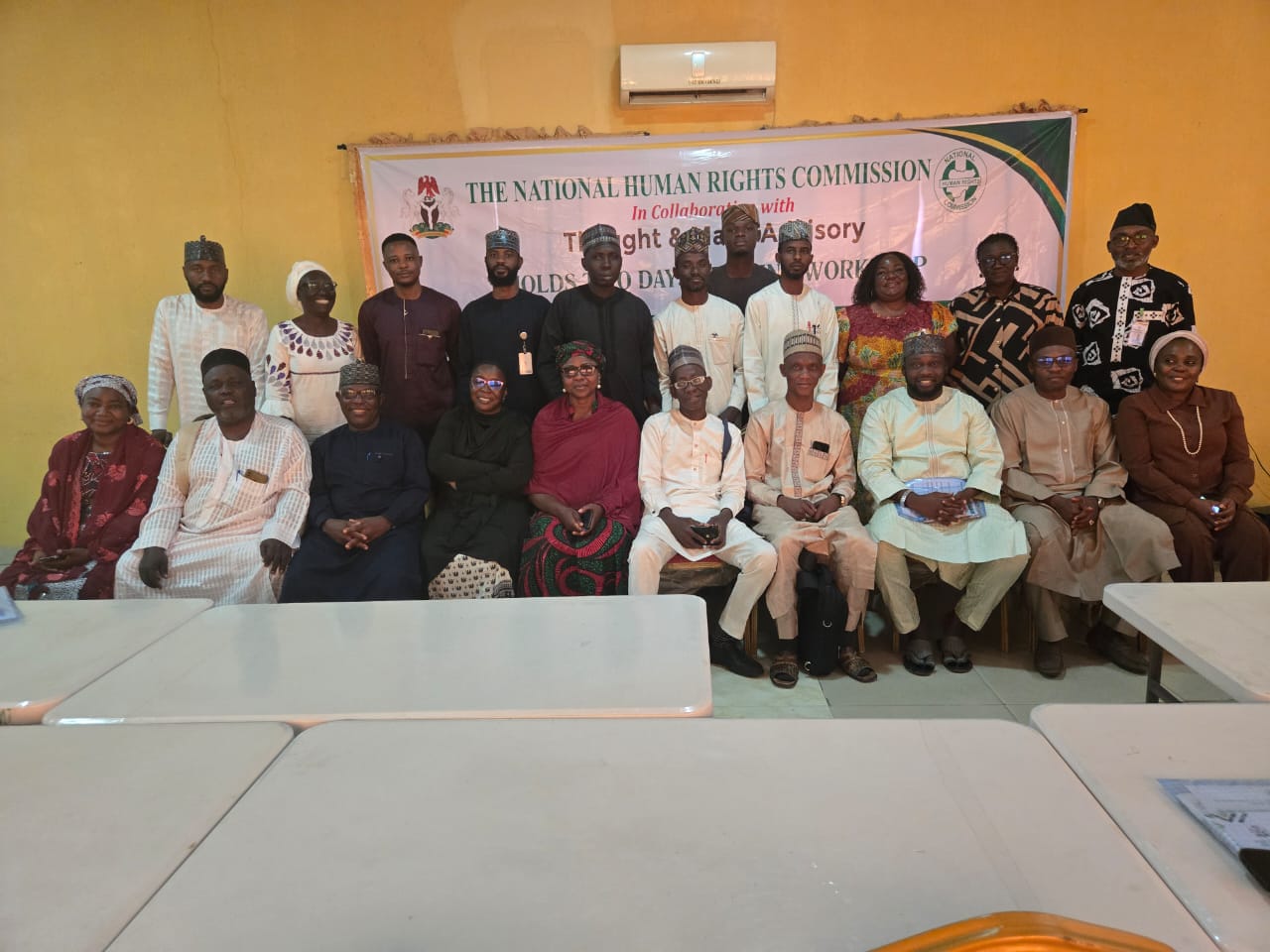
The National Human Rights Commission (NHRC), in collaboration with Thought & Mace Advisory, has organized a 2-day training workshop on the National Action Plan on Business and Human Rights at a time when the relationship between business activities, sustainable development and human rights protection has assumed increasing national and global significance.
It is on the implementation of the State Action Plan on Business and Human Rights (SAPBHR) and the inauguration of the State Working Group on Business and Human Rights (SWGBHR).
In his address at the opening of the workshop in Bauchi, Executive Secretary of the National Human Rights Commission (NHRC), Tony Ojukwu, SAN, said that, “Businesses are critical drivers of economic growth, employment generation, technological advancement and national development.”
Represented by the Bauchi State Coordinator of the Commission, Barr. Yatchit Dala, the ES said, “However, economic development must not come at the expense of human dignity, fundamental freedoms, environmental sustainability and the rights of individuals and communities.”
According to him, “The reality is that business activities can have significant human rights implications, particularly in areas such as labour rights, environmental protection, land acquisition, displacement of communities, access to health, consumer protection, privacy, and the rights of women, children and other vulnerable groups.”
Tony Ojukwu added, “Consequently, the promotion and protection of human rights must remain an integral consideration in the formulation and implementation of government policies, regulatory frameworks and business operations.”
He stressed that the United Nations Guiding Principles on Business and Human Rights provide the internationally recognised framework for addressing the relationship between business and human rights.
According to him,”The framework is anchored on three fundamental pillars: the State duty to protect human rights; the corporate responsibility to respect human rights; and access to effective remedy for victims of business-related human rights abuses.”
“As government institutions, Ministries, Departments and Agencies have a particularly important responsibility in translating these principles into practical actions. Beyond their regulatory and oversight functions, MDAs must ensure that government policies, public procurement processes, licensing arrangements, investment decisions and development programmes are consistent with human rights standards,” he added.
The NHRC ES further said, “Government must also ensure that businesses operating within its jurisdiction do not engage in activities that result in human rights violations or undermine the rights and livelihoods of affected communities.”
He then explained that the National Action Plan on Business and Human Rights provides an important framework for strengthening Nigeria’s institutional and regulatory response to business-related human rights strengthening Nigeria s institutional and regulatory response to business related human rights challenges.
He stressed, “Its effective implementation requires a coordinated, inclusive and multi-sectoral approach involving government institutions, the private sector, civil society organisations, communities and other relevant stakeholders.”
He added, “It is therefore important that MDAs understand their respective roles and responsibilities under the National Action Plan and identify practical ways of integrating business and human rights considerations into their sectoral policies, programmes and administrative procedures.”
According to him, “This should include strengthening human rights due diligence, ensuring effective monitoring of business activities, promoting corporate accountability, establishing accessible grievance mechanisms and facilitating effective remedies for individuals and communities whose rights may be adversely affected by business operations.”
He therefore encouraged that the training should go beyond the acquisition of theoretical knowledge,”It should provide an opportunity for critical engagement, experience sharing and the identification of concrete institutional measures that will facilitate the implementation of the National Action Plan.”
According to him, “Each participating MDA must recognise that business and human rights is not the exclusive responsibility of the National Human Rights Commission or institutions directly responsible for regulating businesses. It is a collective government responsibility that requires mainstreaming human rights into all relevant sectors of governance.”
The ES assured that,”The National Human Rights Commission remains committed to working with relevant government institutions and other stakeholders to strengthen human rights accountability, promote responsible business conduct and ensure that economic development in Nigeria is anchored on respect for human dignity and the rule of law.”
He therefore urged all participants to take full advantage of the workshop, engage actively with the resource persons and develop practical commitments that will translate the objectives of the National Action Plan into measurable institutional outcomes.
He appreciated all the participating Ministries, Departments and Agencies for responding to the important capacity-building initiative and commended the Commission’s officers and partners who have contributed to organising this workshop.
“It is my sincere hope that the deliberations will strengthen institutional understanding, improve interagency collaboration and accelerate the effective implementation of the National Action Plan on Business and Human Rights in Nigeria. It is now my pleasure to formally declare this training workshop open,” he concluded.