


By Abubakar Al-Sadique
In every society, the true measure of leadership is often reflected in how it responds to the needs of its most vulnerable members. Across communities in Bauchi State, widows, divorcees, and other disadvantaged women frequently bear the heaviest burdens of economic hardship, social exclusion, and family responsibility.
In recent years, however, a growing number of humanitarian interventions associated with Dr. Bala Maijama Wunti have begun to reshape the conversation about leadership, compassion, and inclusive development in the state.
Now through the activities of the Bala Wunti Support Organisation (BWSO), a pattern has emerged — one that places particular attention on supporting women who face the daily struggle of providing for their families under difficult circumstances.
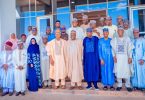
A recent intervention in Bauchi State illustrates this commitment. During the holy month of Ramadan, the organisation donated 150 bags of rice to widows and divorcees in the Unguwar Kur Wayar Makafi community of Bauchi metropolis. The gesture followed a heartfelt appeal circulated online, where members of the group expressed the challenges they faced in securing food to sustain their families during the fasting period.
Moved by the video and the difficult conditions described by the women, Dr. Bala Wunti directed that assistance be immediately provided.
Presenting the relief items on behalf of the organisation, the State Coordinator of BWSO, Alhaji Sha’abdin Bello Zalanga, explained that the intervention was driven by concern for the wellbeing of the beneficiaries.
“Dr Wunti was concerned about the condition of these women and directed that this modest support be extended to them because the situation requires intervention, especially during this sacred period when compassion and charity are most needed,”
Zalanga said.
For many of the women, the support represented more than food relief; it was a recognition of their struggles and a reassurance that their voices had been heard.
Speaking on behalf of the beneficiaries, their leader, Maryam Baban Sarki, expressed gratitude for the intervention, describing it as a timely gesture that brought relief to households facing severe economic pressures.
“At a time when many of us are struggling to provide meals for our families during Ramadan, this support has brought relief and hope to our homes,” she said.
Across Bauchi State, similar humanitarian efforts have continued to expand, reinforcing the impression that Dr. Wunti’s approach to leadership extends beyond politics into practical service to communities.
In recent weeks alone, the Bala Wunti Support Organisation has implemented a statewide food distribution programme that has reached more than 1,250 families across several towns, including Jama’are, Ningi, Dass, Misau, Azare, and Bauchi metropolis. These interventions have particularly benefited vulnerable households, many of which are headed by women who must shoulder the dual responsibilities of caregiving and economic survival.
Observers note that widows and divorcees often face structural disadvantages in many communities. Limited access to stable income, restricted opportunities for education or vocational training, and cultural barriers can leave many women struggling to provide basic necessities for their children.
It is within this context that Dr. Wunti’s humanitarian initiatives are increasingly being interpreted as part of a broader social vision—one that seeks to strengthen support systems for women and ensure that they are not left behind in the development process.
Officials within BWSO emphasise that the current interventions represent only the beginning of a more comprehensive strategy. Plans are being developed to introduce vocational training and economic empowerment programmes aimed at equipping women with skills that can improve their livelihoods and financial independence.
Such initiatives are expected to include small-scale enterprise support, vocational training opportunities, and programmes designed to enable women to become economically self-reliant. By shifting from short-term relief to long-term empowerment, the approach seeks to address the root causes of poverty affecting vulnerable families.
Advocates of this model argue that empowering women has a multiplier effect across communities.
When women have access to income opportunities and social support, families become more stable, children are more likely to remain in school, and communities benefit from stronger economic participation.
For many residents of Bauchi State, the significance of these interventions lies not only in the immediate assistance provided, but also in the leadership philosophy they represent.
Beyond food distribution, BWSO has also extended humanitarian assistance to other vulnerable groups, including persons living with disabilities and families displaced by insecurity. In Kashere, for example, the organisation distributed 100 bags of rice to internally displaced persons who fled bandit attacks in neighbouring communities.
While these efforts span different segments of society, the consistent thread remains a focus on human dignity and social inclusion.
As political discussions gradually gather momentum toward the 2027 gubernatorial election in Bauchi State, the emphasis on compassion-driven service is increasingly shaping public perception about the kind of leadership citizens hope to see.
For widows and divorcees who often find themselves on the margins of economic opportunity, initiatives like those undertaken by the Bala Wunti Support Organisation signal the possibility of a different future — one in which their challenges are acknowledged and their potential supported.
Ultimately, the message emerging from these humanitarian interventions is simple but powerful: leadership is not merely about occupying positions of authority, but about demonstrating responsibility toward the wellbeing of society.
For many vulnerable women across Bauchi State, that message is already translating into renewed hope that their struggles are being seen — and that meaningful solutions may be on the horizon.





Leave a Comment