


By: Monday Danladi, Bauchi
Bauchi State Governor, Sen Bala Abdulkadir Mohammed, has been commended by the United Nations Children’s Fund (UNICEF), for being a Champion of Exclusive breastfeeding through the various support his administration is giving particularly the approval of the Six months maternity leave to women after child delivery.
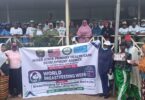
The commendation was given by the Chief of Field (CFO), UNICEF, Bauchi Field Office (BFO), Dr Nuzhat Raffique, on Monday during the flag-off of the 2026 World Breastfeeding Week in Bauchi with a briefing to Journalists at the Emergency Operation Centre (EOC).
According to her, the approval of the Six months maternity leave by the Governor, was a demonstration of his support to exclusive breastfeeding in order to promote child health and improving mother to child intimacy.
According to her, “The six months maternity leave is a major milestone that would enable mothers to exclusively breastfeed their babies.”
Nuzhat Rafique, described breastfeeding as a proven, life-saving practice and urged mothers to adopt optimal breastfeeding practices for the healthy growth and survival of their children.
She also said that this year’s World Breastfeeding Week with theme, ”Breastfeeding for a Sustainable Start in Life: Strengthen What Works,” emphasises the need to build on proven interventions that improve child nutrition.
She also praised the state government for allocating N500m as counterpart funding for the Child Nutrition Fund, expressing optimism that the funds would be released promptly to procure nutrition supplies.
According to her, although more than Nine in every Ten mothers in Bauchi State breastfeed their children, optimal breastfeeding practices remain low.
“As I said, breastfeeding remains a valued practice with more than nine in 10 mothers breastfeeding their children, but unfortunately the optimal practices are not there,” she said.
Nuzhat Rafique disclosed that only 12 per cent of newborns in Bauchi are breastfed within the first hour of birth, while only 26 per cent of infants are exclusively breastfed for the first six months of life.
She explained that babies should be breastfed within the first hour after birth and given colostrum, the first breast milk, which she described as the child’s first vaccination because of the immunity it provides.
“The child should have breast milk immediately after birth without being given water, honey or any local drinks. Those practices introduce germs and expose children to diarrhoea and other infections,” she added.
The UNICEF official noted that poor breastfeeding practices contribute significantly to diarrhoea, respiratory infections and malnutrition, creating a vicious cycle that weakens children and increases the risk of death.
She urged mothers to exclusively breastfeed their babies for the first six months, continue breastfeeding alongside complementary feeding for two years, and maintain adequate birth spacing.
According to her, breastfeeding should not be left to mothers alone, stressing that fathers, families, employers and government institutions all have roles to play in supporting nursing mothers.
She added that family-friendly workplace policies, including the implementation of the state’s six-month paid maternity leave and the establishment of crèches in workplaces, would improve breastfeeding practices and child survival.
In his remarks, Executive Chairman of Bauchi State Primary Healthcare Board, Dr Rilwanu Mohammed, warned women against denying their babies breast milk because of the misconception that breastfeeding causes breasts to sag, stressing that breast sagging occurs naturally with age.
Rilwanu Mohammed, expressed concern that some mothers deliberately deny their children breast milk because they believe breastfeeding makes them look older by causing their breasts to sag.
He warned that denying children breast milk, particularly exclusive breastfeeding, exposes them to malnutrition and other childhood illnesses.
“Breastfeeding is not what makes your breasts fall. Your breasts naturally fall with age whether you give it to your children or not,” Rilwanu Mohammed said.
He noted that exclusive breastfeeding remains one of the most effective ways of protecting children from malnutrition and preventable diseases.




Leave a Comment