By: Monday Danladi, Bauchi
The Bauchi State Project Management Unit (SPMU) of the Agro-Climatic Resilience in Semi-Arid Landscapes (ACReSAL) Project has commenced the downscaling of the community-level sensitization and validation of the 20 Strategic Catchment Management Plans (SCMPs) developed under the project.
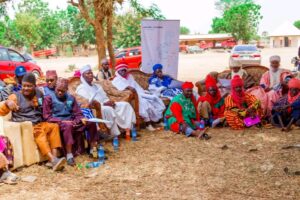
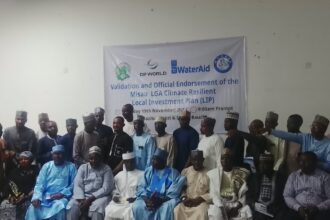
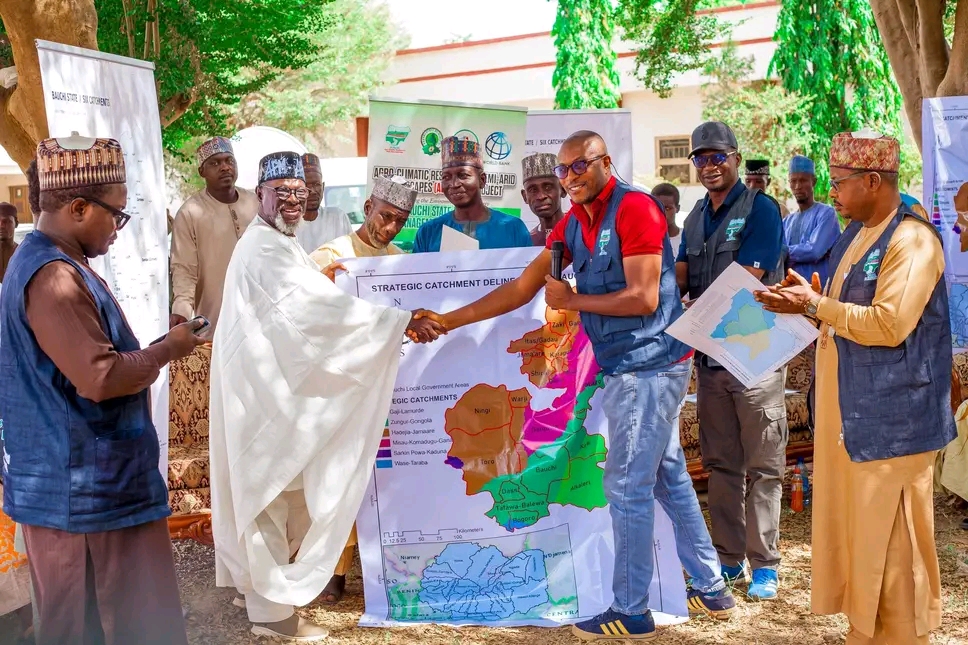
The exercise, held in Kirfi Local Government Area, brought together stakeholders from three local government areas of Alkaleri, Bauchi and Kirfi which fall within the Gaji-Lamurde Catchment.
Speaking at the event, the State Project Coordinator, Dr. Ibrahim Kabir, represented by the Project’s Forestry Officer, Nasiru Audu Umar, welcomed participants and expressed delight at the impressive turnout.
He described the people of the three LGAs as supportive of developmental initiatives and commended the Local Government Chairman and traditional leaders for honouring the invitation.
He encouraged participants to contribute actively to the discussions to ensure the successful validation of the plans.
Dr. Kehinde Ogunmola, representing the National Project Coordinator and the Federal Project Management Unit (FPMU), explained that the engagement was organised to interact directly with stakeholders at the community level, verify information and validate the work carried out by the consultant engaged by the FPMU in developing catchment management plans covering the 19 northern states and the Federal Capital Territory.
He also commended the leadership of the council and traditional institutions for their support, urging participants to take full advantage of the engagement by providing relevant information and making necessary corrections.
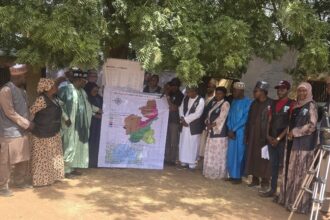
In their presentations on the Strategic Catchment Management Plans, the Project Engineer, Mukhtar Yerima Giade, and GIS Officer, Muazu Aminu Aliyu, explained that the existing catchment boundaries originated from the River Basin Development Agencies established in the 1970s, which ACReSAL has further reviewed and developed into 20 strategic catchment management plans.
They also highlighted the six catchments within which Bauchi State falls: Gaji-Lamurde, Zungur-Gongola, Hadejia-Jama’are, Sarkin-Pawa-Kaduna, Wase-Taraba and Misau–Komadugu Gana.
Focusing on the Gaji-Lamurde Catchment, the officers provided detailed explanations to help participants understand what a catchment is, its geographical coverage and the importance of managing natural resources across communities within the same catchment.
The engagement generated active participation, with stakeholders providing additional information, correcting community names, identifying environmental challenges and suggesting interventions that could address the specific needs of their communities.
The community members expressed happiness and appreciation for the opportunity to understand what a catchment means and how the Strategic Catchment Management Plans relate to their daily lives.
They welcomed the initiative and expressed readiness to support its implementation, recognising its potential to address environmental challenges, protect natural resources and improve their livelihoods.
In his closing remarks, the Chairman of Kirfi Local Government Area, Alhaji Garba Musa Bara, commended His Excellency, Governor Bala Abdulkadir Mohammed, and the World Bank for bringing impactful development initiatives such as the ACReSAL Project to the state.
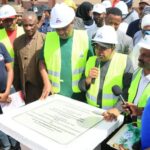
He also appreciated the FPMU and Bauchi SPMU for extending the engagement to the grassroots, highlighting some of the interventions already delivered by the project in the local government area.
The Chairman described the exercise as important in addressing challenges affecting the lives and livelihoods of the people.
He noted that involving stakeholders at the grassroots would help tackle deforestation, soil erosion and flooding, while reaffirming his council’s commitment to taking ownership of the validated plans and supporting their implementation.
Similarly, the District Head of Badara, Alhaji Yusuf Aliyu who spoke on behalf of the district heads, expressed gratitude for including traditional institutions in the discussions, assuring the project of their continued guidance, cooperation and support towards the successful implementation of ACReSAL interventions across the state.
The engagement marks another important step towards strengthening community participation and ownership of the Strategic Catchment Management Plans, ensuring that the people who depend directly on the environment are actively involved in decisions aimed at protecting it and securing sustainable livelihoods.