By Ibrahim Sani
Bauchi State has recorded a more than threefold increase in the use of self-injectable contraception, signaling growing access to family planning services and renewed efforts to prevent unintended and high-risk pregnancies as the state prepares to sustain the gains beyond partner support.
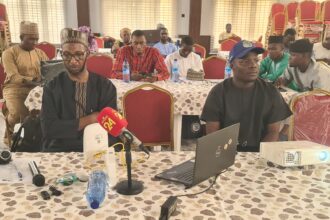
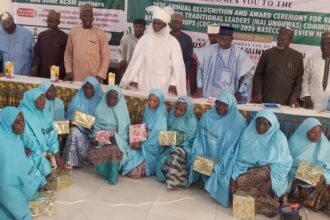
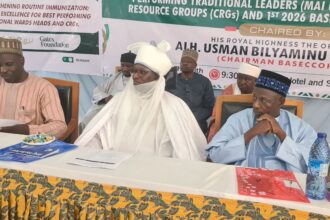
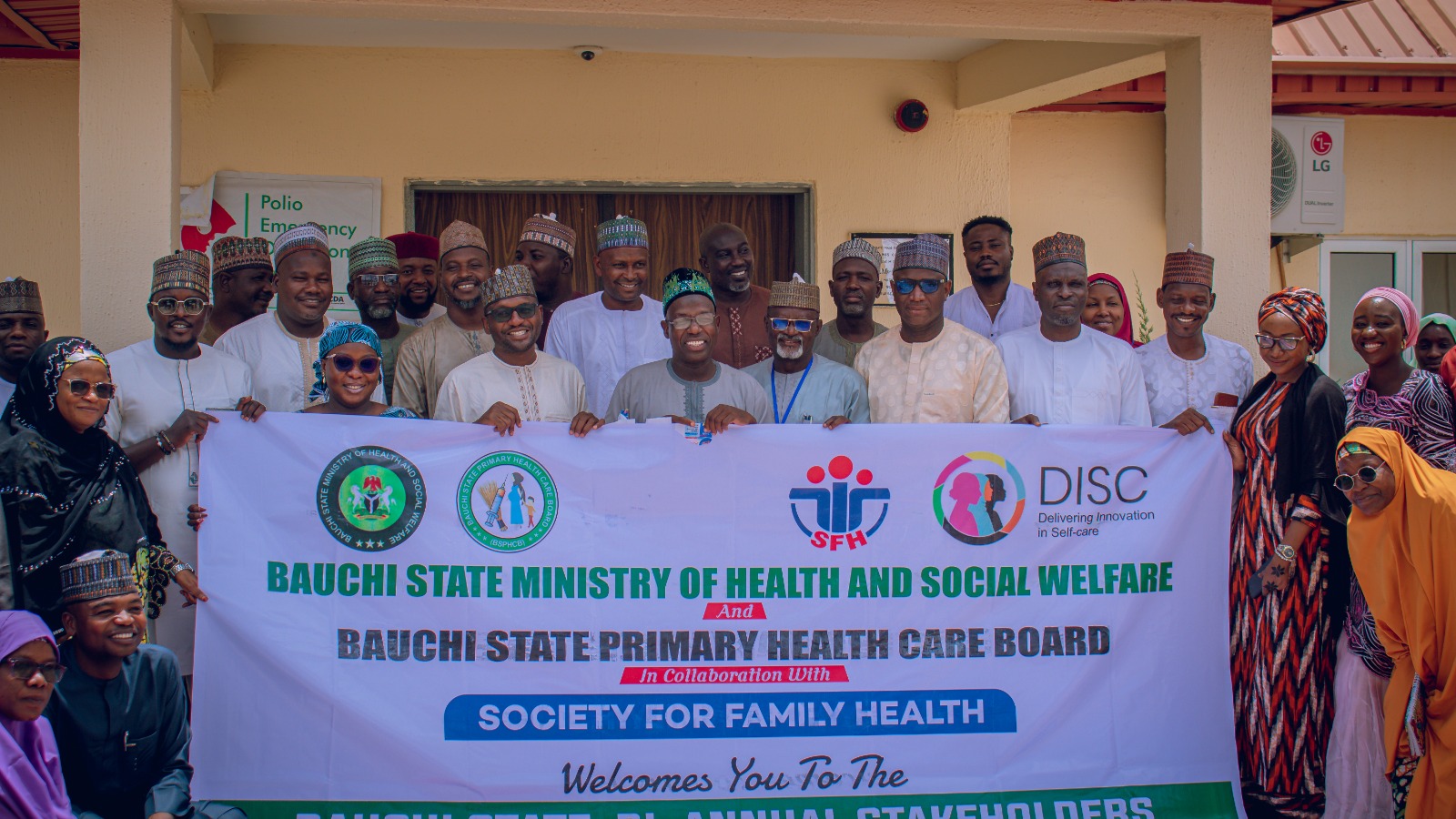
The achievement was highlighted at a Biannual Review and Coordination Meeting organized by the Society for Family Health (SFH) under the Delivering Innovation in Self-Care (DISC) 2.0 Project and Pharmacist Alhamdu Nufin Allah at the Emergency Operations Centre (EOC), Bauchi.
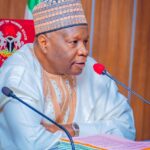
In his opening remarks, Commissioner for Health and Social Welfare Dr Sani Mohammed Dambam who was represented by his permanent Secretary Alhaji Dauda Yakubu Mahmood pledged the state’s commitment to strengthening family planning as a critical component of maternal health and sustaining interventions that contribute to reducing preventable maternal deaths.
Earlier in his welcome remarks, the Executive Chairman of BSPHCB, Dr Rilwanu Mohammed represented by the Permanent Secretary of the Board, Mr Samaila Irmiya Liman welcomed participants and commended partners for their contribution to improving access to family planning and self-care services across the state.
Presenting the project’s performance, Pharmacist Alhamdu Nufin Allah disclosed that the use of self-injectable DMPA-SC increased from 9,556 doses in the third quarter of 2024 to 31,048 doses in the second quarter of 2026, with 26,417 of the latest doses administered through self-injection.
He attributed the progress to strengthened demand generation, improved service delivery through primary healthcare facilities, better data reporting and increased availability of family planning commodities.
He stated that, the DISC 2.0 Project, implemented by SFH with funding from the Children’s Investment Fund Foundation (CIFF) and technical support from Population Services International (PSI), covers all 20 LGAs and 590 health facilities in Bauchi State.
Alhamdu explained that the project promotes self-care contraception as part of building resilient health systems and advancing Universal Health Coverage, while giving women greater convenience and choice in accessing family planning services. With partner support approaching its transition phase, the meeting shifted from celebrating performance to addressing the more critical question of how Bauchi will sustain the gains.
Alhamdu presented the findings of a Transition Readiness Assessment conducted across the state’s 20 LGAs, covering 11 domains including commodity stockout prevention, supportive supervision and mentorship, financing commitment, leadership and oversight, supply systems, continuity without SFH-DISC support, systems integration, data quality, HMIS/HLMIS reporting and training systems.
The assessment identified both areas of strength and gaps requiring action to ensure continued availability of commodities, equipment, skilled personnel, and programme oversight after the project ends.
A major highlight was a panel discussion on family planning indices with Commissioner of Health, SWAp, EC BSPHCB, reps from Budget and planning, FP coordinator, and they discussed on state’s readiness to assume full responsibility for financing and sustaining family planning services.
Stakeholders deliberated on the need for deliberate budgetary allocation for family planning commodities, stronger domestic financing and improved coordination between government institutions and partners.
They further emphasized the integration of family planning data and indicators into RMNCH planning and reporting, the Sector-Wide Approach (SWAp) and the Maternal Mortality Reduction Innovation Initiative (MAMII), noting that family planning must remain central to maternal mortality reduction rather than being treated as a stand-alone program.
Goodwill messages from the BSPHCB, Ministry of Budget and Economic Planning, MSI Nigeria and Lafiya Sisters Nigeria reinforced the call for government ownership, financing, and effective coordination at state, LGA and facility levels.
The stakeholders ultimately agreed that the real measure of the DISC 2.0 success will be whether the gains achieved can continue after external support ends. They therefore committed to strengthening government financing, ensuring uninterrupted commodity availability, improving data use, integrating family planning into routine RMNCH and SWAp structures, aligning it with MAMII priorities and strengthening coordination at all levels.
With DMPA-SC utilization rising from 9,556 to 31,048 doses, the meeting underscored a clear transition for Bauchi: from demonstrating that family planning can work at scale to ensuring that the state has the financing, systems and ownership required to keep saving lives.
The meeting brought together the Honorable Commissioner for Health and Social Welfare, Permanent Secretaries, Executive Chairman BSPHCB, representatives of the Ministry of Budget and Economic Planning, Office of the First Lady, Senior Special Adviser on Health, Chairman House Committee on Health, DPRSs, other directors and program officers from the MoH and BSPHCB, and development partners supporting reproductive health.