


By: Monday Danladi, Bauchi
Four days, Monday to Thursday, 9th to 12th of February, 2026, Bauchi State played host to a delegation from the Global Affairs Canada (GAC) of the Canadian Embassy in Nigeria as well as the Country Office of the United Nations Children’s Fund (UNICEF). The aim was simply to see the various investments and interventions undertaken in the State through various organisations.
From Bauchi to Dass, to Darazo, Konkiyel, Durum and other locations where these investments and projects are located, the people felt the positivity of the visit, as the delegation practically walked around to see things and appreciated the development.
The team paid courtesy visits to traditional rulers, government establishments that have direct links to the activities and programmes of Global Affairs Canada (GAC), either directly or through the collaboration of the United Nations Children’s Fund (UNICEF). Such icluded MEDA, PLAN International and ASHH Foundation.
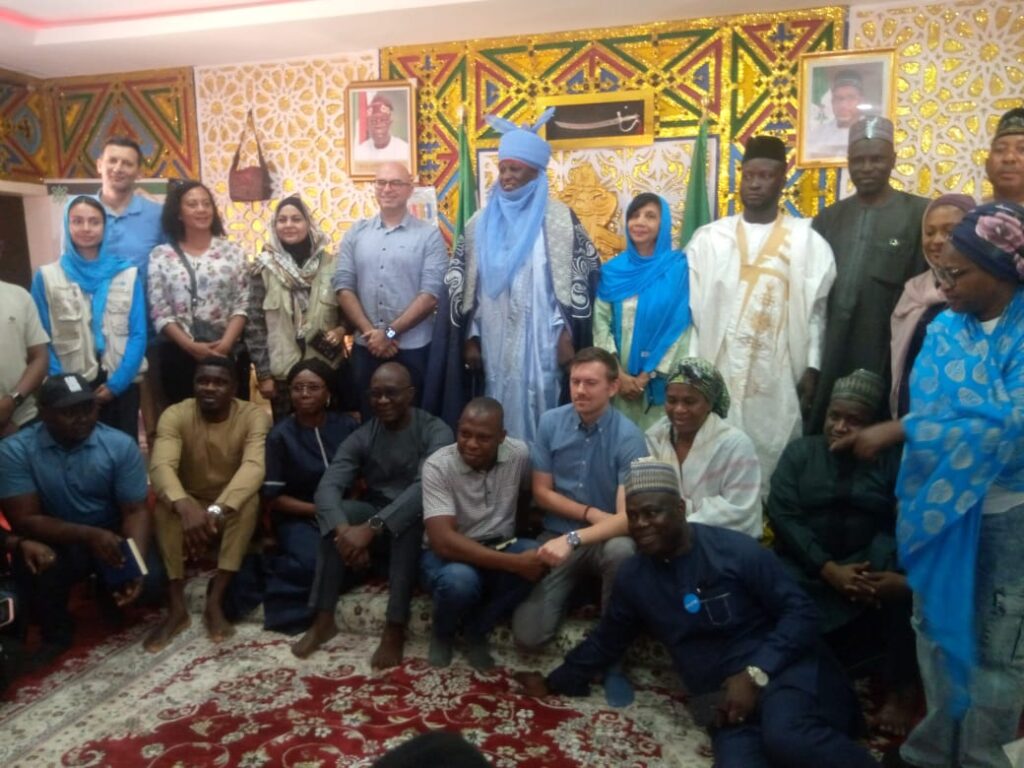
Group photograph at the Palace of Emir of Dass
Team Lead, Arash Irantalab Tehrani, Head of Development Cooperation at the High Commission of Canada in Abuja, Nigeria, stated that, “As you know, Bauchi is a very strong partner for us. We have big investments here. As you know, as part of the Africa strategy, recently we have announced new investments in the state, and we are here to oversee those investments and also thank the government for being such a strong partner to us and also taking ownership of all these investments here in the state.”
He added that,”After this, as you know, with the international development projects, these are long-term projects, these are long-term investments. We are hoping that by the end of these projects, that the needs that we were trying to target are completely met and it would become a very sustainable sort of process, natural to the government, so that it would benefit the people of the state.”
According to him,”In Bauchi, no. All of Bauchi interests us because it’s such an important state within the whole concept of Nigeria, within the other 36 states. But for us, as you’ve heard, we’re going to Dass tomorrow. We have some investments there. And then for the continuing days, we are looking towards going around the Bauchi city itself, and also we will have our partners forum here in Bauchi. Thank you. Thank you so much.”
Also speaking, Rownak Khan, the Deputy Representative for UNICEF Nigeria, while explaining what the initiative in the GAC investments are, said,”Well, UNICEF, as you know, works for women and children, and especially for the most vulnerable women and children. So for this investment, we are very grateful to the Canadian High Commission, but to the Global Affairs of Canada for receiving this investment, which will basically improve the system in the primary healthcare at the LGA level.”
According to her,”But one of the elements of this investment is to work on the adolescent health, which is quite new in Nigeria. So Bauchi is one of the states that is a trailblazer that will show us how to invest in adolescent health. But then at the end of the day, we are also grateful to the government, to the Ministry of Health at the federal level, but also at the state level, to the PHCDA, that they are the one who are actually implementing.”
“We are providing some technical support, but they are the one who are going to move this forward. And also, based on this experience, I’m so encouraged to know that the state has allocated 15% of their budget for health. So this definitely is a very positive indication that the investment that are being made by the Canadian government will be sustained through government efforts and their support. Thank you,” She concluded.
Dr. Sani Mohammed Dambam, the Honourable Commissioner of Health and Social Welfare for Bauchi State, in his remarks, stated that,”Yes, they are one of our major donor partners, and they have been supporting the state in many sectors, like such as the health sector, education, the women and children, and of course the some sort of Youths and sports are also benefiting from some of their interventions.”


According to him,”But the major intervention is that of health, and they are here to see for themselves the investment and the support they have been receiving from the state government. So which we are very hopeful, with them, we are very hopeful that when they see the support and the investment, they will be really impressed and that will also lead to further increase in the partnership and the collaboration.”
The Commissioner stressed that, “There are a lot of supports that the state government has been putting. Generally, as you know that His Excellency, the executive governor of the state, Senator Muhammad has been given so much priority to the health sector. So he has been keeping supporting the health sector. And of course, one of the major areas of support is the nutrition, whereby the Bauchi state government is going to donate N500 million as matching grants for the nutritional support in the state. So this is just one of the support that in the state government and there are many of them. Thank you.”
Just as was said earlier, the first stop for the visiting team was not a rural village or health facility. It was the conference rooms of the government — where policies are shaped and budgets decided. Commissioners from health, education, and humanitarian sectors gathered to welcome the delegation. They spoke of maternal mortality rates, school enrollment figures, immunization coverage, adolescent empowerment, and gender-based violence mitigation. They referenced village savings groups, menstrual hygiene management, water and sanitation initiatives.
Behind the technical language was a central message: Bauchi State, under Governor Bala Mohammed, has made development partnership a strategic priority.
For donors, political will matters as much as funding. A programme cannot outlive a government’s commitment to it. The Commissioners were keen to emphasize that external interventions are not operating in isolation; they are embedded within state systems. It was a necessary starting point — because sustainable change begins at policy level.
At the Government House, Bauchi State Government, through the Governor, Sen Bala Abdulkadir Mohammed, reiterated its commitment to continue partnering with development partners, including Global Affairs Canada (GAC), to improve the living standards of women, children and vulnerable people in the state.
Represented by his Deputy, Rt. Hon. Auwal Jatau, the Governor stressed the importance of partnership in implementing projects and programmes that have direct impact on the lives of women and children, which he described as a measure of development.
The Governor stated that, “I am pleased to receive the UNICEF Country Office, and members of the delegation from Global Affairs Canada (GAC), to the Government House on this courtesy visit. On behalf of the Government and people of Bauchi State, I welcome you to Bauchi.”
He added that, “Bauchi State, Global Affairs Canada (GAC) and UNICEF have had a strong partnership aimed at promoting economic growth, sustainable livelihood and nutrition for sustainable poverty reduction, especially among children, women and youths who constitute a larger part of our population.”
“I want to greatly appreciate Global Affairs Canada (GAC) and UNICEF for the support you have extended to the State over the years. I want to specially express my gratitude to Global Affairs Canada for the numerous interventions, which, among others, include: the Youth Entrepreneurship and Women’s Empowerment in Northern Nigeria (Nigeria WAY), implemented with MEDA in seven LGAs, Bauchi, Dass, Toro, Ganjuwa, Warji, Katagum and Jama’are, which supported a targeted population of over 16,000, mainly comprising women and youth-led small-scale businesses and entrepreneurs,” he added.
According to him, “The project had enhanced business performance in agricultural value chains, improved the overall business environment, developed a culture of savings for women and youth and, in the process, strengthened dialogue in communities and families about risks surrounding early and forced marriages.”
He added that, “The Livelihoods and Nutritional Empowerment (LINE) project provided technical support towards improved livelihoods, targeting a population of 10,000 (60% women) rural farmer households through increased farm productivity, enhanced market access, better nutrition for vulnerable households and an improved enabling environment for agricultural business development.”
Bala Mohammed added that, “The project promoted the development of Village Savings and Loans Associations (VSLA), Business Incubation Centres and Gender Action Learning Systems.”
He also mentioned the Bauchi Opportunities for Responsive Neonatal and Maternal Health (BORN), a gender-transformative project that, through support for the healthcare system, contributed to reducing maternal and neonatal mortality among vulnerable women and newborns in the state by improving the quality, availability, utilisation and accountability of essential maternal and neonatal services.
He stressed that, “This visit is yet another testament of the trust that development partners have built in our government based on its commitment to improving the lives of women and children. Your support has complemented our efforts towards reducing both maternal and childhood morbidity and mortality in the state.”
The Governor assured that, “The State Government under my leadership will remain committed to the Abuja Declaration by allocating not less than 15% of the State’s budget to the health sector. I also wish to reiterate my commitment to fulfilling all government obligations, including the payment of counterpart funds under the Primary Health Care Memorandum of Understanding (MoU) contributions and other non-MoU counterpart funds.”
According to him, “Last year alone, we released over N872 million as the State’s counterpart into the PHC MoU basket fund account operated by Bauchi State Primary Health Care Board, Gates Foundation, Aliko Dangote Foundation, USAID, UNICEF and GAC. Similarly, the sum of N300 million was released to UNICEF as Child Nutrition Matching Grant. There are plans to release an additional N500 million this year.”
“Furthermore, we have released the sum of N50 million to UNFPA for the procurement of family planning commodities. This is in addition to N500 million released for the scale-up of the Drug Revolving Fund across our PHCs, as well as over N132 million released as the State’s contribution to the Basic Healthcare Provision Fund.”
Bala Mohammed added that, “In terms of infrastructure, we have constructed and/or renovated over 130 PHCs and constructed two additional general hospitals. Government has directed the provision of free antenatal care and delivery by skilled birth attendants in our facilities to improve the provision of quality healthcare services to pregnant mothers and children. The upgrading and equipping of the State Specialist Hospital is currently ongoing.”
“In order to provide protection to our vulnerable women, we have signed into law the Violence Against Persons Prohibition Act and, through the Office of the First Lady, established Gender-Based Violence (GBV) Prohibition Offices in 10 LGAs. The Child Rights Law has also been passed and signed,” he added.
He also stated that, “We have established gender units in all Ministries, Departments and LGAs through UNICEF’s GAC project in order to mainstream gender into our governance structure. We have also strengthened community empowerment and engagement through training and skills acquisition programmes for community health workers. This support has undoubtedly enhanced the capacity of many young girls and women, prevented diseases and generally improved both the mental and socioeconomic health of the people of Bauchi State.”
The Governor concluded by saying, “Let me at this juncture, on behalf of the government and good people of Bauchi State, extend our profound appreciation to the Canadian Government, UNICEF and all our development partners for your continuous support and partnership. Let me also assure you of our commitment towards meeting our obligations in all arrangements that we have made with our partners. We look forward to a more strengthened partnership and collaboration in the future.”
Speaking earlier, Arash Irantalab Tehrani, Head of Development Cooperation at the High Commission of Canada in Nigeria, told the Governor that the delegation was in the state to monitor its investments to ensure they are being implemented in line with the MoU.
Arash Irantalab Tehrani, who leads Canada’s development portfolio and strategic partnerships across key sectors, disclosed that GAC, working with other implementing partners including UNICEF Nigeria, has numerous investments in education, health and social services in Bauchi State.
He stressed that the work focuses on advancing inclusive development, gender equality and resilient livelihoods through strong collaboration with government, multilateral institutions and civil society.
According to him, “I am happy to recall Canada’s building climate resilience as well as Federal and State priorities to make a difference and affordable progress happen, and state governments take ownership and leadership as Bauchi has demonstrated.”
The Team Lead added, “We commend Bauchi’s efforts to strengthen broader perspectives and improve economic and health outcomes, such as poverty alleviation, and to realise their potential not only for human development but also for long-term economic growth and stability.”
According to him, “Gender equality will be part of Canada’s approach. We welcome the state’s efforts to expand opportunities for women and girls, better education, economic participation, and greater inclusion in the decision-making process.”
Arash Irantalab stressed that, “Empowering women and girls is not only the right thing to do, it is one of the most efficient investments a society can make. We also recognise the growing impact of climate change on agriculture, livelihoods and food security. Canada will continue supporting initiatives that build resilience, promote climate-smart solutions and create economic opportunities, particularly for youths and women.”
He disclosed that, “As Canada advances its Africa strategy, we are increasingly intentional about linking development programming with longer-term economic resilience and shared prosperity.”
He stressed that, “And as part of the newly announced Africa strategy last May, we also announced six new projects for Nigeria totalling $64 million. I’m happy to say that out of the six projects announced, four of them are targeting Bauchi in several areas.”
“We look forward to continuing dialogue with Bauchi State on how Canadian expertise and partnership can complement the work that you do and the priorities that you are setting. Your Excellency, we value this partnership and we look forward to strengthening our collaboration in the years ahead. Thank you so much,” he concluded.
The UNICEF Nigeria delegation was led by the Deputy Representative, Rownak Khan.
If the conference rooms provided assurances, the communities would provide evidence.The delegation travelled to Dass and Darazo Local Government Areas of Bauchi State, where the real test of development lies — not in strategy documents, but in behaviour change.
In Dass, the visit began at the palace of the Emir, His Royal Highness Alhaji Usman Bilyaminu Othman. The symbolism was unmistakable. In Northern Nigeria, traditional rulers remain powerful custodians of social norms. No development intervention can thrive without their endorsement.
From the palace, the GAC and partners delegation moved to Bundot community. There, adolescent girls sat in a semi-circle, speaking with a confidence that belied their rural setting. Supported by Plan International under GAC funding, these young advocates are trained to challenge gender-based violence and promote sexual and reproductive health rights.
A few years ago, conversations about reproductive health in such spaces might have been whispered — if held at all. Now, teenage girls articulate them publicly.
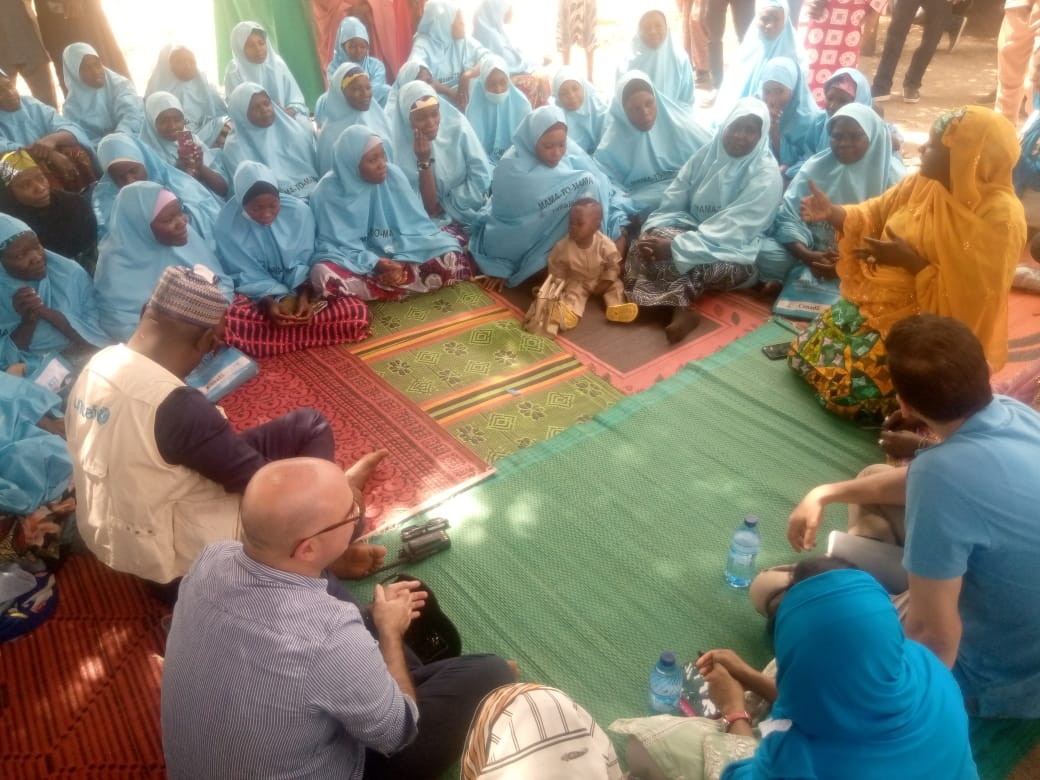
In Dot community of the same Dass LGA, another story unfolded. Under a tree shaded gathering space, members of the “Mama2Mama” group demonstrated how they carry out awareness campaigns and promotion of access to maternal and child care at healthcare facilities. These women-led community resource groups advocate for antenatal care attendance, immunization uptake, facility deliveries, hygiene practices and gender-based violence prevention.
The GAC team also interfaced with yet another adolescents boys and girls groups that were trained by UNICEF Nigeria Bauchi Field Office (BFO) on how produce reusable sanitary pads — stitched carefully, layered with absorbent fabric, designed to be both affordable and dignified.
Supported technically by UNICEF and funded by GAC, these community resource group’s activities extends beyond awareness campaigns.
The skills they have acquired generate income. The income strengthens their bargaining power within households.
The strengthened voices influence community norms.
One member of the Adolescent group explained that the pads not only improve menstrual hygiene management but also create economic opportunity. It is a reminder that development interventions are most effective when they address multiple vulnerabilities at once — health, income, dignity.
The Mama2Mama and Adolescent SRHR group model reflects a shift in global development thinking. Beneficiaries are no longer passive recipients; they are actors and entrepreneurs within their own communities.
In Konkyel community of Darazo LGA, the narrative shifted again. Here, the delegation met members of the “Fathers4Health” initiative — male caregivers championing maternal and child health.
In many rural communities, men control financial resources and make key household decisions. Convincing a mother to attend antenatal care is not enough if her husband withholds permission or transport fare.
Fathers4Health addresses this reality directly. Established by the Bauchi State Primary Health Care Development Board in collaboration with UNICEF and supported by GAC, the initiative encourages men to become advocates for immunization, hygiene and healthcare access.
During the interaction, some fathers described how they now accompany their wives to health facilities — a subtle but powerful departure from tradition.
The itinerary also included a stop at a technology incubation centre in Bauchi metropolis. Inside, the air carried the scent of processed grains and roasted peanuts. Women and youth entrepreneurs showcased products from rice, peanut and soybean value chains — part of an intervention implemented with MEDA and funded by GAC.
Agriculture remains Bauchi’s economic backbone. Improving processing capacity and market access strengthens not just incomes but food security. Nutrition, after all, is not solely a health sector issue. It is deeply tied to livelihoods.
By investing in agribusiness and supporting small-scale enterprises, the programme addresses structural poverty drivers. It recognizes that resilient households are healthier households.
What distinguished this visit was not the scale of funding announced or the number of communities toured. It was the layered nature of engagement.
The delegation moved seamlessly from policy conversations to palace courtyards, from adolescent circles to incubation hubs.
They listened as much as they spoke. Development, at its best, is relational. It is built on trust between governments and donors, between institutions and communities, between women and men, between young advocates and traditional authorities. Bauchi’s experience reflects this interplay.
Challenges remain — maternal mortality rates, poverty levels, climate vulnerability, educational access. No four-day visit can resolve these complexities. But it can reinforce alignment. It can signal that international investment is tied to local ownership. It can remind stakeholders that sustainability is not an afterthought — it is the goal.
In Dass, there is the nerving story of a woman who survived death due to post-natal complications after delivering her baby at home in Dot Village, She has now become a leading advocate against unsafe home births.
Malama Atika Yau, Chairperson of the Mama2Mama Group in Dot District, recounted how she lost consciousness due to excessive bleeding after giving birth at home to one of her children.
The experience, she said, nearly cost her life due to unconsciousness because of heavy bleeding, described it as a painful lesson, describing home delivery without skilled care as a dangerous practice that puts both mother and child at risk.
Determined to prevent other families from facing similar tragedies, Malama Atika pledged to campaign against home delivery and promote safer alternatives.
Malama Yau said, her resolve found direction when UNICEF introduced the Mama2Mama initiative in the area, with support from Global Affairs Canada.
The programme mobilizes women to advocate for improved maternal and child health practices, including hospital delivery under the supervision of trained health professionals.
Atika Yau Chairperson Mama2Mama Group, Dot
As a group leader, Malama Atika now champions antenatal care attendance, facility-based delivery, exclusive breastfeeding, immunization, and child spacing.
She emphasizes that skilled health workers are better equipped to detect and manage complications such as prolonged labour, postpartum hemorrhage, and eclampsia.
According to her, the initiative has significantly improved the health-seeking behavior of pregnant women and nursing mothers in Dot District.
She said, more women now attend antenatal clinics regularly and choose to give birth in health facilities, contributing to a reduction in maternal mortality and child morbidity in the area.
Malama Atika expressed gratitude to the Canadian government, through UNICEF, for supporting lifesaving interventions in Bauchi State.
She also called on the government to sustain and expand the programme, noting that although Mama2Mama members serve voluntarily, their work has proven effective in changing negative health practices in both rural and urban communities.
According to her, “This initiative has changed my life and the lives of many women,” she said. “No woman should lose her life while giving life.”
Timely Post News
Timely Post News
Home » Emir of Dass reiterates traditional, community leaders commitment to improved MNCH, adolescents health services
Health
Emir of Dass reiterates traditional, community leaders commitment to improved MNCH, adolescents health services
4 days ago
Emir of Dass, Alh Usman Bilyaminu Othman with GAC Team Lead Arash Irantalah
Written by Timely Post News
By: Monday Danladi, Bauchi
Traditional and Community leaders in Bauchi State has expressed determination to ensure that Maternal, Newborn and Child Health (MNCH) as well as adolescent health services are well promoted in order to achieve for improved outcomes.
The assertion was made by the Emir of Dass and Co-Chair of the State Taskforce on Primary Healthcare, Alhaji Usman Bilyamu,
while receiving a delegation from the Global Affairs Canada (GAC), of Canadian Embassy in Nigeria, on Saturday in his Palace in Dass.
The Emir who a member of Northern Traditional Rulers on Health, also reiterated the commitment of the community leaders to promoting access to healthcare in Dass Local Government Area.
Bilyamu Othman said that the Emirate had intensified supervision to ensure increased uptake of healthcare services and strengthened health promotion activities across communities with particular attention on women and children.
The Emir added that the traditional institution in ensuring enhanced communication channels from the grassroots to the Emirate Council to ensure timely information on healthcare issues in order to have swift interventions.
According to him, the efforts have helped reversed the trend of non-compliance with routine immunisation and improved awareness of the dangers associated with poor access to healthcare services.
He further said that residents had increasingly embraced reproductive and sexual health services due to the commitment of traditional leaders, who serve as custodians of culture and community values.
Bilyamu Othman then commended the Canadian Government for its interventions through the Global Affairs Canada (GAC), noting that the support had significantly improved the health and wellbeing of residents in the area.
Speaking earlier, Team of the mission and Head of Development Cooperation at the Canadian High Commission in Nigeria, Arash Irantalah, said that Global Affairs Canada had launched the African Strategic Partnership to support women and adolescent girls in Bauchi State.
According to him, the aim is to promote gender rights and ensure that no one is discriminated against because of gender inequality stressing that everyone has the right to life.
Also speaking, Deputy Country Representative of UNICEF, Nigeria, Rownak Khan, said that women under the Mama2Mama mobilisation group were playing active roles in promoting maternal and child survival in Dass LGA.
She added that UNICEF had trained 20 adolescent girls from various wards in the LGA on the production of reusable sanitary pads to promote menstrual hygiene.
Rownak Khan expressed satisfaction over the learning process and impact of the Bauchi State Government for consistently the Mama2Mama group on accessing care that would address maternal and child heakth issues.
The Canadian delegation also engaged women on Interpersonal Growth Therapy and the Champions of Change initiative implemented by Plan International amd MEDA.
The delegation expressed satisfaction with the way and manner the project was implemented considering the positive outcomes recorded.
When the vehicles eventually departed Bauchi, they left behind more than press statements.They left renewed commitments.They left community groups emboldened by recognition.They left policymakers aware that accountability travels both ways.
And perhaps most importantly, they left a subtle affirmation: that development, when anchored in partnership and driven by community ownership, can outlast funding cycles.
For Bauchi State, the visit was not merely about monitoring investments. It was about demonstrating that transformation is possible when global commitment meets local resolve — and when four days of engagement are backed by years of sustained collaboration.
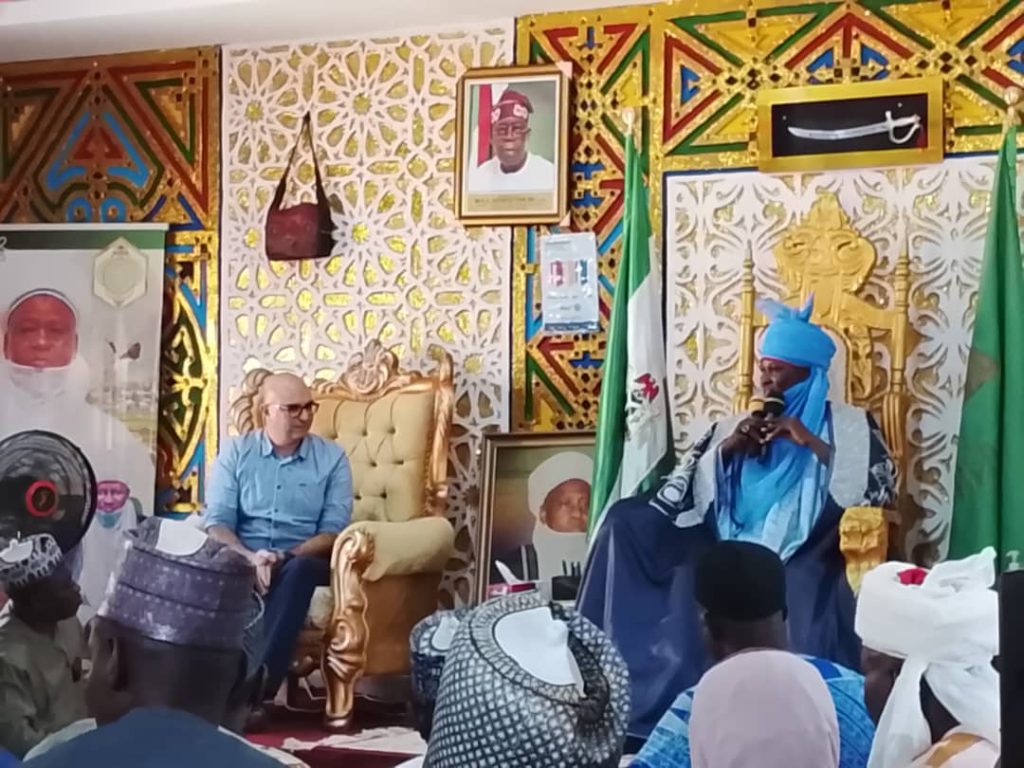
At the palace of the Emir of Dass





Leave a Comment