

By: Adelowo Oladipo, Minna
The Niger State Ministry of Health has unveiled the new Basic Health Care Provision Fund (BHCPF) 2.0 guidelines as part of efforts to deepen healthcare service delivery, strengthen accountability and improve access to quality primary healthcare across the state.
This is contained in a statement issued by the Public Relations Officer of the Ministry, Jibrin Usman Kodo and made available to Journalists on Friday in Minna
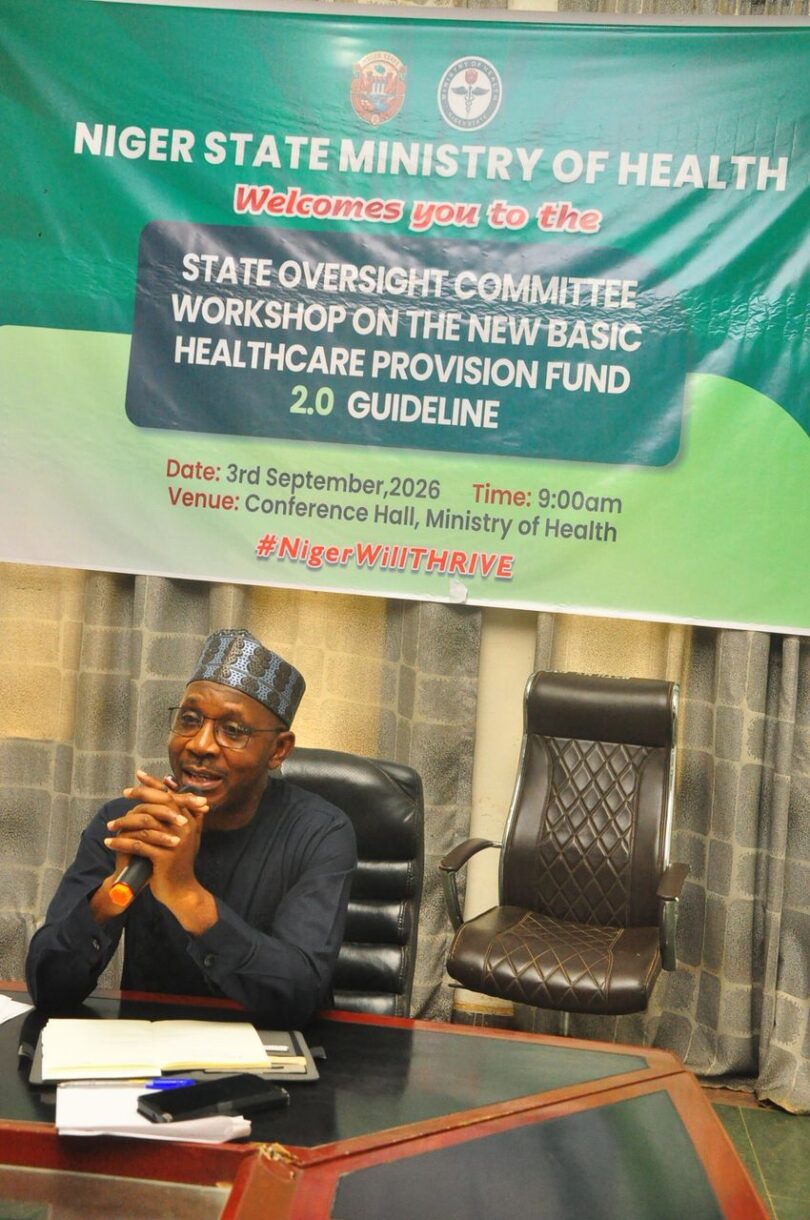
According to the statement,the new guidelines were unveiled during a one-day the State Oversight Committee (SOC) workshop on the new BHCPF 2.0 at the conference hall of the Ministry of Health on Thursday.
It added that the workshop underscored the commitment of the state government, under the leadership of Governor Mohammed Umaru Bago, to enhancing transparency, accountability and effective utilisation of funds in the primary healthcare sector.
Declaring the workshop open, the State Commissioner for Health, Dr. Murtala Muhammad Bagana, described the BHCPF 2.0 reforms as a pivotal opportunity to strengthen governance, optimise fund utilisation and expand access to essential health services for residents.
The Commissioner, who was represented by the Permanent Secretary of the Ministry, Dr. Abdullahi Usman Imam, commended development partners and other stakeholders for their contributions towards improving healthcare delivery in the state.
He charged members of the State Oversight Committee to discharge their statutory responsibilities diligently, stressing that effective oversight was essential to curbing financial leakages, ensuring value for money and sustaining public confidence in the primary healthcare system.
The workshop brought together Directors of Health Planning, Research and Statistics (DHPRS) from the Ministry and agencies under it, representatives of the State Primary Health Care Development Agency (SPHCDA), Niger State Health Insurance Agency (NiCare), as well as civil society organisations.
The gathering provided stakeholders with an opportunity to examine the new guidelines, clarify institutional responsibilities and establish how the reforms would operate across the various BHCPF gateways.
Presentations were delivered by representatives of the Ministry’s DHPRS, SPHCDA and NiCare on the overview of the BHCPF 2.0 reforms, including the revised structure, fund-flow mechanisms, key policy changes, governance framework, eligible expenditures and disbursement protocols.
Participants also examined the revised eligibility criteria for healthcare facilities and Local Government Areas, as well as the interface between the BHCPF and the National Health Insurance Authority (NHIA) framework.
The workshop further highlighted the need to accelerate enrolment into the state’s health insurance scheme, particularly among vulnerable populations.
According to the Ministry, recent enrolment drives in Niger State have targeted an additional 65,000 vulnerable residents for health insurance coverage under the NiCare BHCPF framework.
The Ministry expressed optimism that the implementation of the BHCPF 2.0 reforms would translate into stronger primary healthcare institutions, improved availability of essential medicines, better accountability in fund management and more affordable healthcare for residents.
Meanwhile, the reforms are expected to place greater emphasis on clearly defined responsibilities, stronger oversight mechanisms and improved data management to ensure that healthcare resources reach the facilities and communities where they are most needed.






Leave a Comment