


By: Adelowo Oladipo, Minna
The National Emergency Management Agency (NEMA) in Niger State, had convened a stakeholders meeting to assess preparedness status and equipment holdings of Ministries, Departments and Agencies (MDAs) for rapid response to the 2026 flood season and other related emergencies.
The meeting was organised by NEMA in collaboration with the Niger State Emergency Management Agency (NSEMA).
In his opening remarks, the Head of Operations, NEMA Minna Operations Office that covers Niger and Kwara States, Mr. Hussaini Isah,said the meeting was aimed at reviewing the readiness of response agencies and strengthening collaboration among stakeholders ahead of the anticipated flood season.
He stated that forecasts contained in the 2026 Seasonal Climate Prediction (SCP) by the Nigerian Meteorological Agency (NiMet) and the Annual Flood Outlook (AFO) by the Nigeria Hydrological Services Agency (NIHSA) had indicated the likelihood of flooding and other climate-related hazards in several parts of the country.
According to him, the forecasts underscore the need for proactive measures, effective coordination and adequate preparedness among all relevant agencies.
Isah noted that NEMA, in collaboration with Niger State Emergency Management Agency( NSEMA) security agencies, federal and state fire services and other stakeholders, had activated the State Emergency Operations Centre (SEOC) to coordinate emergency response activities across the state.
“The centre provides a platform for information sharing, resource mobilisation, situation monitoring and decision-making to ensure timely and efficient response to disasters and other emergencies.
“Our collective preparedness today will determine our capacity to protect lives, livelihoods and critical infrastructure tomorrow,” he said.
He explained that the meeting was also designed to review the readiness of response agencies, assess the availability and operational status of emergency equipment, identify gaps and improve inter-agency collaboration.
During a presentation on the State Emergency Operations Centre, Isah further explained that the EOC serves as a central command and control centre for emergency management.
He said the centre was structured into command and control, planning, operations, logistics and finance units, and would facilitate real-time information gathering, resource deployment and public communication during emergencies.
“The EOC does not participate directly in rescue missions or procure relief materials, but provides critical information and coordination support to relevant authorities for informed decision-making,” he said.
Speaking during an interactive session on equipment readiness and resource gaps, Alhaji Garba Salihu, Director, Planning and Special Duties at NSEMA, said the agency’s strength lay in coordination and resource mobilisation rather than ownership of equipment.
Also speaking, Mr Tor Daniel, Area Manager, Metro, from the Nigerian Police as well as representatives of the state Fire and Federal Fire Service, also outlined their preparedness and available assets for emergency response.
The police said patrol and special operation vehicles had been strategically deployed across the state, while the State Fire Service reported having 17 fire trucks, 11 of which were functional, alongside rescue tankers, ambulances and utility vehicles to respond to emergencies.
It would be recalled that NEMA had earlier identified Agaie, Bida, Borgu, Edati, Gbako, Katcha, Lapai, Lavun, Magama, Mashegu and Mokwa local government areas as high flood-risk zones ahead of the 2026 rainy season.
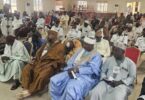
Stakeholders at the meeting included representatives of Federal Road Safety Corps (FRSC), Nigeria Security and Civil Defence Corps (NSCDC), Disaster Response Units of 313 Artillery Brigade and 013 Quick Response of Nigerian Air Force.
Other stakeholders are NURTW, UNICEF, NESREA, NiMET, Nigerian Red Cross Society, National Inland Waterways Authority (NIWA), NiMet and the National Orientation Agency (NOA), among others.


Leave a Comment