

By: Monday Danladi, Bauchi
The United Nations Children’s Fund (UNICEF), has commended Bauchi State House of Assembly for its commitment to ensuring legislation that have positive impacts on effective and efficient service delivery in the health sector.
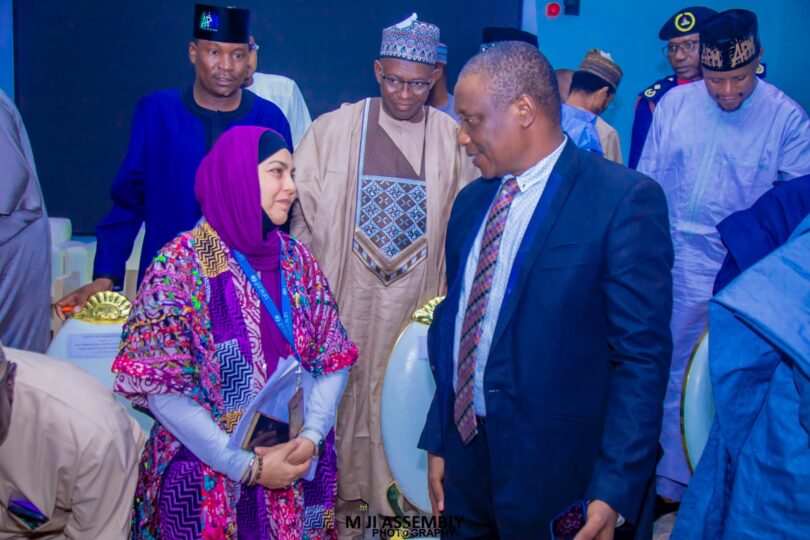
The commendation was made by Chief of Field Office (CFO), UNICEF Bauchi Field Office (BFO), Dr Nuzhat Rafique, during a public hearing organized by the House Committee on Health and Human Services, on the Bill seeking to prohibit unsafe childbirth practices, provide for the management of pregnancy emergencies and complications, regulate blood transfusion services and address other matters connected with maternal and newborn healthcare in the State sponsored by the Speaker, Rt Hon Abubakar Y Suleiman.
Nuzhat Rafique highlighted the important role of men in the implementation of measures aimed at improving maternal healthcare.
She commended the Speaker, Rt. Hon. Abubakar Y. Suleiman, for sponsoring the Bill, saying the initiative demonstrated legislative commitment to addressing gaps contributing to maternal and newborn deaths.
According to her, Bauchi State had taken a significant step in legislative action aimed at preventing avoidable loss of lives and reducing the painful experiences associated with unsafe pregnancy and childbirth
Also speaking, a Health Officer at UNICEF, Dr. Oluseyi Olusunde, commended the Assembly for its determination to improve the safety of women and children in Bauchi State.
He called for comprehensive reporting of maternal, newborn and child mortality and identified the high number of unregistered health facilities and facilities operating with under-qualified personnel as major challenges.
He also advocated emergency support mechanisms, adherence to the Minimum Service Package for health facilities and stronger technical collaboration with development partners.
In his lead address, the Speaker and sponsor of the Bill, Rt. Hon. Abubakar Y. Suleiman, said the public hearing represented an important step in the Assembly’s commitment to protecting the lives, health and dignity of women, newborns and families across Bauchi State.
He said the hearing was not merely a legislative requirement but an opportunity for citizens, professionals, institutions and communities to contribute directly to the making of a law that would affect their lives.
According to the Speaker, the Bill is founded on three essential pillars: Prevention, Preparedness and Protection.
He explained that the prevention component seeks to prohibit harmful and unsafe childbirth practices, while the preparedness component would establish clear and enforceable standards for early identification, referral and timely management of pregnancy emergencies and complications.
The protection component, he said, would ensure that blood is voluntarily and appropriately donated, professionally screened, safely stored and administered only by qualified personnel in approved facilities.
Abubakar Suleiman stressed that the Bill was not an attack on Traditional Birth Attendants, traditional institutions or healthcare workers, but rather an effort to establish a clear legal framework that promotes safety, dignity, professional responsibility and accountability.
He said Traditional Birth Attendants could continue to contribute through community mobilisation, health education, identification of danger signs and timely referral to appropriate healthcare facilities, while practices capable of endangering mothers and babies must be discontinued.
The Speaker further warned that the passage of the Bill alone would not solve the state’s maternal health challenges without adequate funding, functional referral systems, reliable blood-bank services, qualified healthcare personnel, continuous public enlightenment, monitoring and accountability.
He commended the State Governor, Sen Bala Abdulkadir Mohammed for his administration’s investments in primary healthcare, hospital infrastructure, medical equipment and human resources, describing the proposed legislation as an effort to complement and strengthen those investments.
He also acknowledged the contributions of development partners, civil society organisations, professional medical bodies, traditional and religious institutions and community leaders, urging stakeholders to identify areas of the Bill that required improvement.
Abubakar Suleiman said the final legislation must be culturally sensitive, medically sound, legally enforceable and responsive to the realities of the people, while ensuring patients’ rights, respectful maternity care and clear responsibilities.
He urged the Committee on Health and Human Services to give serious consideration to every memorandum and oral submission presented at the hearing.
The Speaker reiterated that behind every maternal or newborn mortality figure is a mother, a child, a family and a future, stressing that preventable deaths must no longer be regarded as inevitable.
He urged all stakeholders to place the lives and wellbeing of mothers and children above every other consideration, saying the ultimate objective of the Bill was to create a healthcare environment where pregnancy and childbirth are occasions of hope and joy rather than fear and preventable tragedy.
Also speaking, the Commissioner of Health and Social Welfare, Dr. Sani Muhammad Dambam, said Bauchi had grown beyond its traditional metropolitan status into an expanding city, making it necessary to review conventional approaches to healthcare delivery.
He identified implementation as one of the major challenges confronting health legislation and called for appropriate institutional mechanisms capable of enforcing the proposed law.
He also advocated flexibility in the legislation to ensure that it remains responsive to changing circumstances and emerging healthcare needs.
In his keynote address, the Chairman of the House Committee on Health and Human Services, Hon. Dauda Lawal (Sade), said the Bill would complement existing healthcare services and address critical gaps in the management of pregnancy emergencies.
He said the proposed law would establish clearer protocols for responding to obstetric emergencies and regulating blood transfusion, stressing that families continue to suffer the consequences of negligence, delayed referrals and inadequate emergency response.
Hon. Dauda Lawal said the Assembly was particularly interested in receiving the views of women and other stakeholders, noting that their recommendations would be critical to producing a law capable of saving lives.
The Emir of Darazo, Alhaji Ibrahim Babayo Mohammed, who grace the Hearing described the Bill as a significant intervention in the fight against maternal mortality.
He said the menace of maternal deaths remained a serious concern and expressed confidence that the proposed law could substantially reduce preventable deaths.
The traditional ruler warned that childbirth attended by unqualified persons could result in complications, excessive financial costs and, most importantly, loss of life.
He called for the speedy passage of the Bill, saying history would remember the 10th Assembly for its determination to build a stronger society through responsive legislation.
The representative of the Commissioner of Police, ACP Yahya Abdulkadir, congratulated the Assembly, particularly the Speaker, for sponsoring the Bill.
He noted that similar legislation was absent in many states and described the initiative as an important step towards protecting mothers and newborns.
Representing the Chief Judge of Bauchi State, Hon. Justice Rabi Talatu Umar, the judicial representative said the subject matter of the Bill was a critical legislative intervention.
He commended the sponsor and stressed that laws must be clear, practical and capable of effective implementation.
The representative further conveyed the Chief Judge’s request for an extension of the period for public submissions. Following a motion laid before the Speaker, the Assembly granted an extension for further submissions until Monday, August 24, 2026.
The Chief Medical Director of State Specialist Hospital, Bauchi, Prof. Abdulkarim Garba Mairiga, highlighted several issues requiring attention under the proposed law, including financing, traditional birth attendance, antenatal care, unsafe blood transfusion outside recognised health facilities and protection of pregnant women.
He also raised concerns about situations where religious or family considerations could prevent women from receiving necessary blood transfusion or adequate care during pregnancy and childbirth.
Prof. Mairiga called for the protection of pregnant women’s rights, valid practice licences for health facilities and stronger regulation of childbirth-related services.
Representatives of Civil Society Organisations also described the Bill as timely but raised concern over the state’s blood-transfusion infrastructure.
They disclosed that only four of Bauchi State’s 27 General Hospitals have active blood banks, urging the Speaker and the Assembly to ensure that more hospitals are equipped with functional blood-bank services.
The stakeholders described access to safe blood as a critical pillar for successful implementation of the proposed law.
Muhammad Nasiru Abdullahi, representing JIBWIS Gwallaga, said the religious dimension of pregnancy termination and the treatment of pregnant women should be carefully considered.
He stressed the importance of protecting pregnant women from maltreatment and identified unlicensed health facilities and inadequate participation of women in healthcare decisions as some of the factors contributing to unsafe childbirth.
Other contributors called for a women-centred and data-driven approach to implementation of the proposed law.
The Nigerian Correctional Service, Bauchi State Command, represented by Hayatu Faruk Alhaji, also expressed full support for the Bill.
The Command disclosed that it has 26 female inmates across 14 custodial centres, some of whom are of reproductive age, pregnant or nursing mothers.
It noted that custodial clinics are primarily equipped for basic healthcare and lack sufficient capacity for safe childbirth, emergency obstetric care and blood transfusion.
The Command therefore proposed that correctional facilities be expressly recognised as vulnerable settings under the proposed law and be included in emergency referral arrangements, free emergency maternal healthcare, blood-supply networks and training programmes.
It further recommended that the Nigerian Correctional Service, Bauchi State Command, be recognised as a statutory stakeholder in the implementation structure of the law.
Among lawmakers present at the hearing were the Majority Leader, Hon. Auwal Hassan Yana (Shira); Minority Leader, Hon. Bala Abdu Rishi (Lame); Rt. Hon. Babayo Akuyam (Hardawa); Hon. Bld. Saidu Suleiman Darazo (Darazo); Hon. Dr. Nasiru Ahmad Ala (Madara/Chinade); Hon. Yaya Ahmad Maikudi (Ciroma); and Hon. Bello Abdullahi Jadori (Gamawa).
Other designated participants at the hearing included ACP Yahya Abdulkadir, representative of the Commissioner of Police; Ibrahim Tijjani, representative of the State Security Service; Nuhu Sulaiman, representative of the Nigeria Security and Civil Defence Corps; and Pastor Johnson E. Ekpena, Bauchi State CAN.
Also participating were Hassan Dauda, representing the Nigerian Medical Council; Alhaji Ibrahim Mohammed Babayo Bababa, Emir of Darazo; healthcare professionals, traditional birth attendants, religious leaders, civil society organisations, government representatives and development partners.
The Public Hearing has sparked positive drive for protection of mothers and child also reveals the need for collective responsibility, adequate funding, effective implementation and continuous public education to ensure that the proposed law translates into tangible improvements in maternal and newborn healthcare.
The Bill is sponsored by the Speaker of the House, Rt. Hon. Dr. Abubakar Y. Suleiman, and is aimed at strengthening the legal and institutional framework for preventing avoidable maternal and newborn deaths.
The Assembly had previously advanced the proposed legislation through its legislative stages, with the Speaker describing it as a direct response to preventable deaths associated with unsafe childbirth and unregulated blood transfusion, as contained in a statement signed
Zakariyya Aliyu Gwaram,
Information Officer II, BAHA.

Group photograph of participants at the public hearing




Leave a Comment