


By: Monday Danladi, Bauchi
Bauchi State Universal Basic Education Board (SUBEB), has announced that it has been able to reduce the number of out-of-school children from the 1.7m in 2019 at the inception of the present administration to 216,000 as at 18th December 2025.
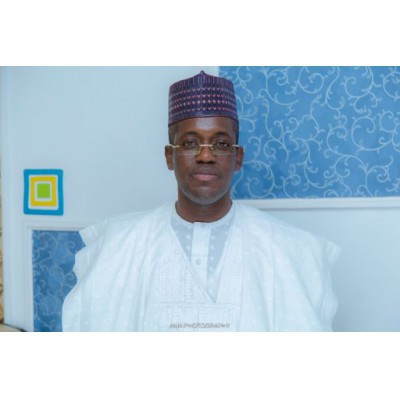
The disclosure was made by the Permanent Secretary, Abdulhamid Mohammed Jibrin, while briefing Journalists on the activities of the Board, at the Conference of SUBEB on Monday.
According to him, “For many years, Bauchi State faced a deeply rooted challenge of high numbers of Out-of-School Children. At its peak, this figure exceeded 1.7 million children, a situation driven by decades of systemic neglect, weak enforcement of compulsory education laws, limited institutional coordination, poverty-related pressures, and socio-cultural barriers.”
He stressed that,”Today, we are pleased to inform you that through deliberate leadership, coordinated reforms, and strong community ownership, the number of Out-of-School Children has been reduced to 216,000 as at 18th December 2025.”
The Permanent Secretary explained that,”This represents a reduction of over 85 percent from the inherited baseline and the restoration of the fundamental right to education for more than 1.2 million children across Bauchi State.”
He stresses that, “This achievement is historic, not only in scale, but also in impact. The 2025/2026 Statewide Enrolment Drive was designed as a comprehensive reform programme rather than a routine campaign. While the initial enrolment target was set at 220,000 children, actual enrolment exceeded expectations, reaching 284,000 learners, translating to a 129 percent performance rate.”
He further states that the success was made possible through a multi-sectoral, evidence-based, and data-driven approach, supported by attendance monitoring systems, early warning mechanisms, and coordinated stakeholder engagement across all levels.
He added that One of the most defining features of the reform was the deliberate strengthening of traditional and community governance structures as the administration recognized that sustainable education reform cannot be achieved from the center alone.
“Consequently, Emirate Councils, District Heads, Ward Heads, Village Heads, and Hamlet Heads were actively engaged as frontline partners in enrolment enforcement, learner attendance monitoring, child protection, community mobilization, and advocacy. This approach brought governance closer to the people, restored community accountability, and ensured that education became a shared responsibility,” he added.
Abdulhamid Jibrin further states that, “The effectiveness of this strategy is evident across the State, with Toro Local Government Area emerging as a flagship example. From an estimated 50,000 Out-of-School Children, over 35,000 children have been successfully Integrated into formal classrooms. This outcome clearly demonstrates the power of localized leadership, traditional authority engagement, and community ownership.”
He also states that special focus was also placed on equity and inclusion, particularly in addressing barriers to girls’ education pointing out that through targeted interventions such as the Adolescent Girls Initiative for Learning and Empowerment (AGILE) and the Conditional Cash Transfer (CCT) programmes, the State recorded significant gains in enrolment, retention, and transition for adolescent girls, especially at the Upper Basic and Senior Secondary levels.
“These interventions have substantially reduced gender-based disparities and strengthened equitable access to education across Bauchi State,” he added.
According to him, “In parallel, enrolment gains were supported by infrastructure and system-wide reforms. The Government invested in the construction of Mega Schools, Model Schools, and Smart Schools, carried out large-scale rehabilitation of existing facilities, and advanced the systematic integration of Tsangaya and Qur’anic schools into the formal basic education system. These efforts expanded access to quality learning spaces and provided safer, more inclusive, and more conducive environments for effective teaching and learning.”
He stressed,”However, we must also be frank. The enrolment of 284,000 newly admitted learners has placed additional pressure on existing infrastructure, learning resources, and teacher to pupil ratios in some high-enrolment areas. This reality reinforces the need for sustained investment in infrastructure expansion, teacher recruitment, capacity building, and instructional support.”
He assured that in order to consolidate the gains already achieved and ensure the full integration of the remaining 216,000 Out-of-School Children, the Government is advancing key next steps. T
“These include the formal institutionalization of traditional leaders within the State’s education accountability and reporting framework, accelerated implementation of the Bauchi State ICT Policy on Education to strengthen data management and service delivery, and the establishment of a Special Teacher Corps to serve rural, underserved, and high-enrolment cornmunities,”he added.
“It is important to state clearly that this achievement is a collective success. The Bauchi State Government provided the political will, policy direction, and sustained investment that made these reforms possible. The clarity of vision and commitment to education as a priority laid the foundation for the progress recorded,”The Permanent Secretary added.
He added,”We also deeply appreciate the people of Bauchi State, including parents, guardians, and community members, whose cooperation, trust, and active participation drove enrolment, attendance, and retention. Education thrives where communities believe in it, protect it, and take ownership of its outcomes.”
“Furthermore, we acknowledge the invaluable contributions of traditional rulers, religious leaders, local government authorities, development partners, school administrators, teachers, and education workers across the State. Their dedication and day-to-day engagement transformed policy decisions into tangible results for children at the grassroots,” he also stared.
According to him,”This shared ownership by government, citizens, and stakeholders remains one of the strongest assurances that the gains recorded will not only be sustained, but expanded in the years ahead.”
Abdulhamid Jibrin added that, “What we are presenting today goes beyond statistics. It represents a moral and social victory. Bauchi State has transitioned from an education system historically constrained by access deficits to one firmly anchored on enrolment, retention, smooth transition, completion, and deepened community ownership.”
He concluded that,”With strong institutional, traditional, and community-based frameworks now firmly in place, Bauchi State is positioned on an irreversible path toward sustainable educational transformation, human capital development, and inclusive growth.”




Leave a Comment