

By: Monday Danladi, Bauchi
People with Disabilities (PWDs) across the country, especially those in the rural areas, can now have access to vital medical services very close to them without having to go far away.
The development is following the official launching of the Intergrated rehabilitation services in Primary Healthcare Centres in Nigeria for people with special needs by Federal Government through a collaboration between Nigeria’s Ministry of Health and Social Welfare and Empowering Persons with Disabilities through Medical Rehabilitation, on Tuesday at the Primary Healthcare Centre, Doya, Bauchi LGA of Bauchi State.
The programme is under the rehabilitation services in Primary Healthcare in Nigeria which includes speciised medical outreach aimed at providing care to persons with disabilities (PWDs).
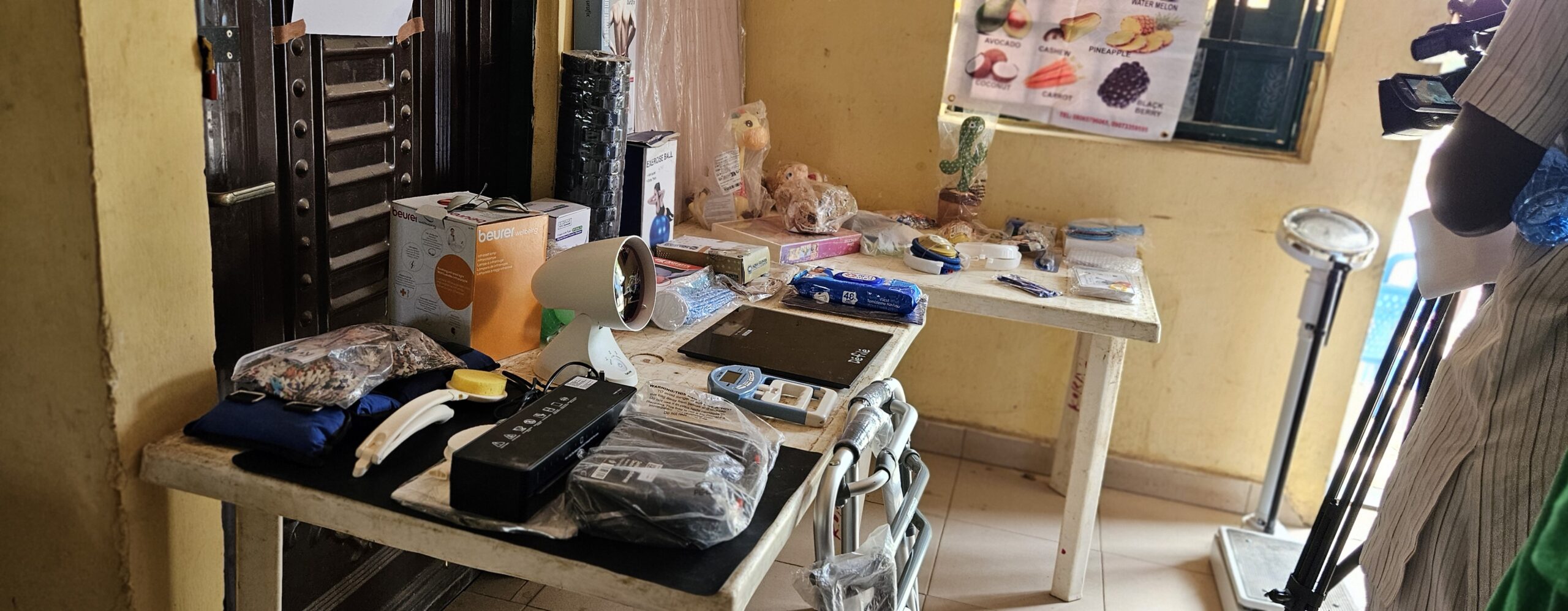
Some of rehabilitation equipment
The PWDs are expected to receive physiotherapy, occupational therapy, speech therapy, audiology and prosthetic as well as orthotics at the Primary Healthcare Centres nearest to them across the country.
In his speech at the programme, Coordinating Minister of Health and Social Welfare, Prof Mohammed Ali Pate, said that, “Today marks another significant milestone in our collective efforts to build a health system that is inclusive, resilient, equitable and responsive to the needs of every Nigerian.”
According to him, ‘It is also a defining moment in our determination to ensure that rehabilitation services become an integral component of Primary Health Care and are accessible to every citizen, particularly persons living with disabilities, older persons, survivors of trauma, people living with non-communicable diseases, and all those whose health conditions affect their ability to function and participate fully in society.”
The Coordinating Minister who was represented by Hon Baba Abubakar, explained that the initiative is firmly aligned with the Renewed Hope Agenda of the administration of President Bola Ahmed Tinubu, particularly its commitment to strengthening Primary Healthcare, expanding access to quality healthcare services, promoting social inclusion, protecting vulnerable populations and ensuring that no Nigerian is left behind in accessing essential health services.
“This programme also complements the Nigeria Health Sector Renewal Investment Initiative (NHSRII), through which the Federal Government is repositioning the health sector by strengthening governance, improving health infrastructure, expanding the health workforce and delivering quality healthcare closer to the people,” he added.
He also said that, “The integration of rehabilitation into Primary Healthcare is therefore not simply another programme of government; it is a strategic national investment in human capital development, Universal Health Coverage and sustainable national development.”
Furthermore, the Coordinating Minister said that,”Rehabilitation has become one of the defining priorities of global public health.
Recognising the growing burden of disability, injuries, ageing, non-
Recognising the growing burden of disability, injuries, ageing, non-
communicable diseases and other health conditions requiring long-term functional support, the World Health Organization launched the Rehabilitation
2030 Initiative in Geneva in February 2017 as a global call to action to address the enormous unmet needs for rehabilitation services.”
He stressed that, ‘The initiative challenged Member States to integrate rehabilitation into Universal Health Coverage and
recognise rehabilitation as an essential health service available at every level of healthcare.”
According to him, “This global commitment was reinforced during the Second Global Rehabilitation 2030 Meeting in 2019, while the Third Global Rehabilitation 2030 Meeting in
2023 witnessed the launch of the World Rehabilitation Alliance and the adoption of World Health Assembly Resolution WHA76.6, which calls upon countries
strengthen rehabilitation within their health systems.”
“For Africa, these global aspirations culminated in the adoption of the WHO
Regional Strategy to Strengthen Rehabilitation in Health Systems (2025–2035). The Strategy recognises that over 210 million Africans require rehabilitation services, while more than sixty-three per cent of those in need are unable to access them. It therefore calls upon Member States to integrate rehabilitation into all levels of healthcare, particularly Primary Healthcare, strengthen rehabilitation governance, financing, workforce development, information systems and emergency
preparedness.. Nigeria has embraced this vision with determination.,’ he added.
According to him, “Fowing the National Stakeholders’ Meeting held in 2023, stakeholders unanimously resolved that rehabilitation services should be integrated into Primary Healthcare as the most effective means of expanding access to millions of Nigerians who require these services.frequently,”
The Coordinating Minister of Health and Social Welfare added, “Consequeny, I approved the implementation of the WHO Rehabilitation 2030 Initiative in Nigeria and inaugurated the National Rehabilitation Technical Working Group in November 2024.
I am delighted that the Technical Working Group, working collaboratively with Federal Ministry of Health and Social Welfare, the Medical Rehabilitation Therapists Board of Nigeria, the World Health Organization and other key Stakeholders, has successfully completed a comprehensive National Rehabilitation Situation Assessment.”
He also said that,”The Group is also finalising the National Rehabilitation and Policy, National Strategic Plan and Monitoring and Evaluation Framework, which will provide a coherent roadmap for the sustainable integration of rehabilitation services into our health system.’
“Furthermore, I approved the National Minimum Benchmark Framework for the integration of rehabilitation services and workforce requirements into Primary Healthcare. This framework provides the operational standards that will guide implementation across the country and ensure quality, consistency and accountability’ he added.
He stressed that, “Today’s launch is therefore not the end of a process, it is the beginning of anational transformation. I wish to place on record my profound appreciation to the Medical Rehabilitation Therapists Board of Nigeria (MRTB). Your dedication to professional regulation, quality assurance and policy development has laid the
foundation for today’s historic achievement.”
According to him, “I equally commend the members of the National Rehabilitation Technical Working Group for their technical expertise and commitment in developing the necessary policy and implementation frameworks that have brought us to this important milestone.”
He added that,”Our sincere appreciation goes to the World Health Organization for its consistent technical leadership and support through the Rehabilitation 2030 Initiative and other collaborative interventions.”
“I also express the gratitude of the Federal Government to the Foundation for Empowering Persons with Disabilities through Medical Rehabilitation (FEPDMR) for its remarkable generosity in equipping the Doya Primary HealthCare Centre with rehabilitation equipment,” he added.
He explained that,”This intervention exemplifies the immense value of public-private partnerships in advancing national healthcare
delivery. We hope that this facility will serve as a model Primary Health Care Centre for integrated rehabilitation services and inspire similar initiatives across the country. I also acknowledge the invaluable contributions of the National Primary Health Care Development Agency, the Bauchi State Government, development partners,
professional regulatory councils, academic institutions, organisations of persons with disabilities, civil society organizations and every stakeholders whose collaboration has made today’s launch possible.”
Bauchi State Commissioner of Health and Social Welfare, Dr Sani Mohammed Dambam, said that the State is lucky to be the first to benefit in the programme having provided all necessary requirements for the takeoff.
The Commissioner assured that the State Government will support the programme by extending it to selected facilities across the State..
He added that, more health friendly programmes and interventions have been put in place by the administration for PWDs because according to him, they are part of the citizens of the State.
Speaking earlier, Executive Chairman of Bauchi State Primary HealthCare Board, Dr Rilwanu Mohammed, commended the Federal Government through the Ministry of Health and Social Welfare for the various interventions in the State’s health sector.
He commended the launching of the programme in Bauchi State lamenting that people with special needs have been sidelined and neglected for a while in the area of Healthcare services.
He assured that as the custodians of Primary Healthcare in the State, the Board will ensure that the facilities will be put to effective use for the targeted people, PWDs.
In his remarks, National Chairman,
Foundation for Empowering Persons with Disabilities through Medical Rehabilitation, Dr James Lado of commended the Federal Government through the Federal Ministry of Health and Social Welfare for thinking about making life more easier for people with special needs in the country.
He lamented that people with special needs have suffered neglect in terms of accessing Healthcare services due to stigma and other adverse issues.
According to him, “Every person has one form of disability or the other, we all need care and rehabilitation. This programme is coming at the right time as it will afford PWDs at the grassroots, unhindered access to Healthcare.”
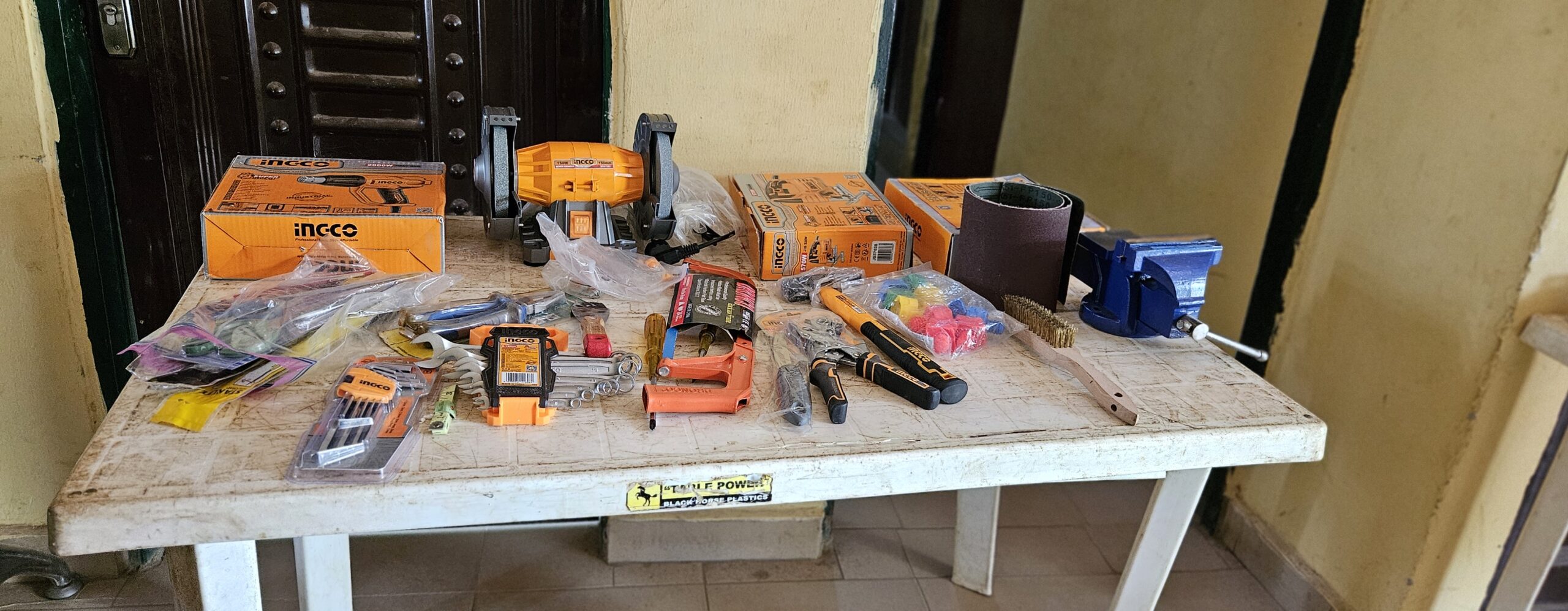
Some of rehabilitation equipment



Leave a Comment