

By: Monday Danladi, Bauchi
Bauchi State Government has approved and released the sum of N1.024b as compensation for 321 people affected by the erosion control project from Tsohon Kampani to Gwallagan-Mayaka in Bauchi been undertaken by the Agro-Climatic Resilience in Semi-Arid Landscapes (ACReSAL), a World Bank financed project.
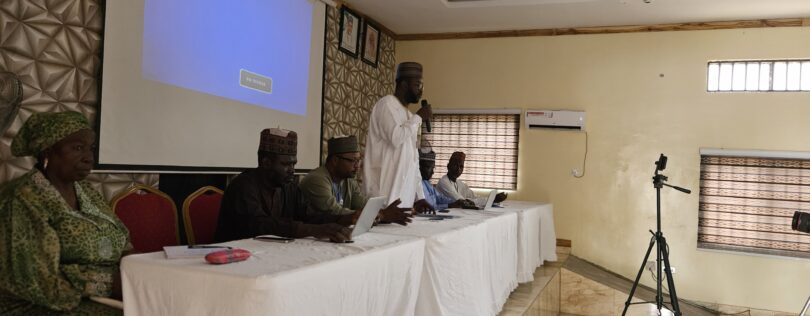
The disclosure was made by the State Project Coordinator (SPC) of ACReSAL in Bauchi State, Dr Ibrahim Kabir, on Monday, while opening a 3-day training of stakeholders on Resettlement Action Plan (RAP) implementation.
The engagement was orgamised by ACReSAL to ensure that stakeholders understand their roles and responsibilities for effective and compliant implementation of the RAP.
He said that, “We are here this morning to begin a three-day engagement with Project Affected Persons (PAPs) from Eight communities, grouped into three clusters, to discuss the implementation of the Resettlement Action Plan (RAP).”
He explained that, “The Bauchi State Government, in collaboration with the World Bank, initiated a major intervention to address gully and flood erosion from Tsohon Company to Gwallaga – Mayaka, covering Eight communities.’
He stressed,”In line with the World Bank’s Environmental and Social Standards, it is important that the implementation process is transparent, inclusive, and free of grievances. All Project Affected Persons must fully understand every stage of the process before compensation is paid.”
The SPC added that, “For the past three years, we have continuously engaged these communities, building their capacity and keeping them informed. Today’s meeting focuses on RAP implementation, particularly with PAPs from the Sulemana Adamu community. We are explaining the compensation procedures and updating our records where there have been changes in land ownership or property ownership since the RAP study was conducted. This will ensure that our database is accurate before compensation begins.”
According to him,”It is encouraging to see that those present today are the genuine PAPs. At this stage, they are already familiar with many of the procedures. What they are most interested in now is understanding how property valuations were determined, when compensation will be paid, and the additional livelihood restoration programmes that will accompany the project.”
Ibrahim Kabir added that, “Beyond erosion control, we are considering complementary interventions such as drilling community boreholes and implementing a “One Person, One Tree” initiative. These are some of the issues we will discuss with the communities during this engagement.*
While explaining the compensation process and the Governor’s approval of an additional percentage, he said that, “The valuation exercise was conducted last year. Our teams went from house to house and property to property to assess all affected assets. However, considering the current economic realities and inflation, we raised our concerns with His Excellency while presenting the valuation report. In response, His Excellency graciously approved an additional 20 percent on top of the assessed value.”
He said, “For example, if a property was valued at ₦1 million, the owner will receive ₦1.2 million. This demonstrates the Governor’s understanding of the economic situation and his commitment to ensuring fairness. The compensation payments will not be handled directly by our office. They will be carried out by the State Compensation Committee under the leadership of Alhaji Nuru Suleiman Adamu, now the Emir of Lere, which has the statutory responsibility for compensation payments.”
“Later today, we will meet with the committee to finalize operational arrangements so that immediately after this three-day training programme, compensation payments can commence,” he added.
On how many Project Affected Persons are involved, he said,
*So far, we have identified 321 Project Affected Persons (PAPs).
However, the overall project will directly and indirectly benefit more than 213,000 people. The project will create a flood control corridor capable of containing more than 40 million cubic metres of water, with an expected design lifespan of 50 years. This clearly demonstrates the long-term impact and sustainability of the intervention.”
The SPC added that, “Work has already commenced in sections of the project area because we divided the site into upstream and downstream segments.
The upstream section is located entirely on land owned by the Bauchi State Government, including the College of Agriculture and Abubakar Tatari Ali Polytechnic. Both institutions voluntarily granted access to their land through official letters issued earlier this year, allowing construction to begin without compensation.’.
He added, “As construction approaches community-owned lands, compensation will be fully paid before any work begins within those affected corridors. The total amount approved for compensation is ₦1.024 billion.
Although minor adjustments may arise due to engineering realignments, His Excellency, Senator Bala Abdulkadir Mohammed, has already released the full amount into the designated government account for compensation. We are committed to ensuring that every Kobo is used solely for compensating eligible PAPs. There will be no shortcuts or irregularities. Payments will be carried out transparently and on-site.”
According to him, “Officials will visit each affected property, verify ownership documents, confirm the beneficiary’s identity, issue the compensation cheque, and immediately record the payment. This process guarantees transparency and accountability.”
Kabiru Ibrahim appealed to the beneficiaries to take ownership of this project. One of the biggest challenges in infrastructure projects is the lack of community ownership. We are addressing this by ensuring that employment opportunities created by the project benefit local communities.*
According to him, “In line with our Memorandum of Understanding (MoU) with the contractor, Triacta Nigeria Limited, local youths along the project corridor will be given priority for available jobs. Young people with practical skills—such as carpentry, masonry, welding, and other construction trades—should prepare themselves because recruitment will continue as construction progresses.*
He however said that, “Although the contract duration is 24 months, the contractor has expressed its intention to complete the project within 12 months if conditions permit, which is very encouraging.”
“Finally, I urge community members to continue cooperating with the project team. Anyone with concerns or grievances should channel them through their community leaders, who will liaise with the project’s social, livelihood, and safeguards teams. This established communication mechanism will ensure that all genuine concerns are addressed promptly and appropriately. Together, we can ensure the successful implementation of this landmark project for the benefit of both present and future generations,” he concluded.
Speaking earlier, the Social and Livelihood Officer of ACReSAL, Khadija Muhammad Katagum, said that People affected by the Project (PAPs), “Are at the heart of this project, and we are delighted to have you here today.”
She told them, “Your presence reflects our commitment to transparency and inclusive participation, in line with the World Bank’s Environmental and Social Standard 5 (ESS5). It demonstrates that we are working closely with you through meaningful community engagement and collaboration.”
According to her, “The success of this project depends greatly on your cooperation, support, and active participation. We therefore encourage you to pay close attention to the presentations and discussions throughout this training.”
She added, “We have experienced and credible resource persons who will guide us through every aspect of the Resettlement Action Plan (RAP) implementation. By the end of this programme, we expect everyone to have a clear understanding of their respective roles and responsibilities, enabling us to implement the project effectively, efficiently, and successfully.”
Also speaking, Executive Director of the ACReSAL focal NGO, Savanah Institute for Sustainable Development (SISIDev) Titi Yakubu, commended the State Government for drawing the project to pass to light saying,”In fact, for quite a number of years, this particular place has caused a lot of havoc and challenges to the livelihood of our communities. We are grateful that His Excellency, in collaboration with the World Bank, has made this project to come alive, and already work is in progress.”
Titi Yakubu added that,”To us, who are beneficiaries in these communities, our responsibility is to ensure that we support the work of government to ease the challenges and to ensure we provide the support that will make the work to go faster and easier.”
.
“On that note, it is important for us, we are engaging you because we want to have your own perspective and to ensure that other people’s interests are not trampled over, and to ensure that you are being carried along in terms of this project to the successful completion,” She stressed.
According to her, “On behalf of SISIDev, our responsibility as people working with the community, is that we have a role and responsibility, not just for your own personal benefit, but to see to the sustainability and to see that the implementation goes hitch-free, and to ensure that assets or properties that are going to be left in this project location are adequately protected.”
The Community leader of Suleiman Adamu Community, Engr Nurudeen Yusuf Abubakar, commended the State Government and ACReSAL for embarking on the project which he said, has significant impact on the livelihoods of the People Affected by the Project (PAPs).
He assured that the PAPs are fully ready to cooperate with the Government and ACReSAL for the successful completion of the project which is for the benefit of all.
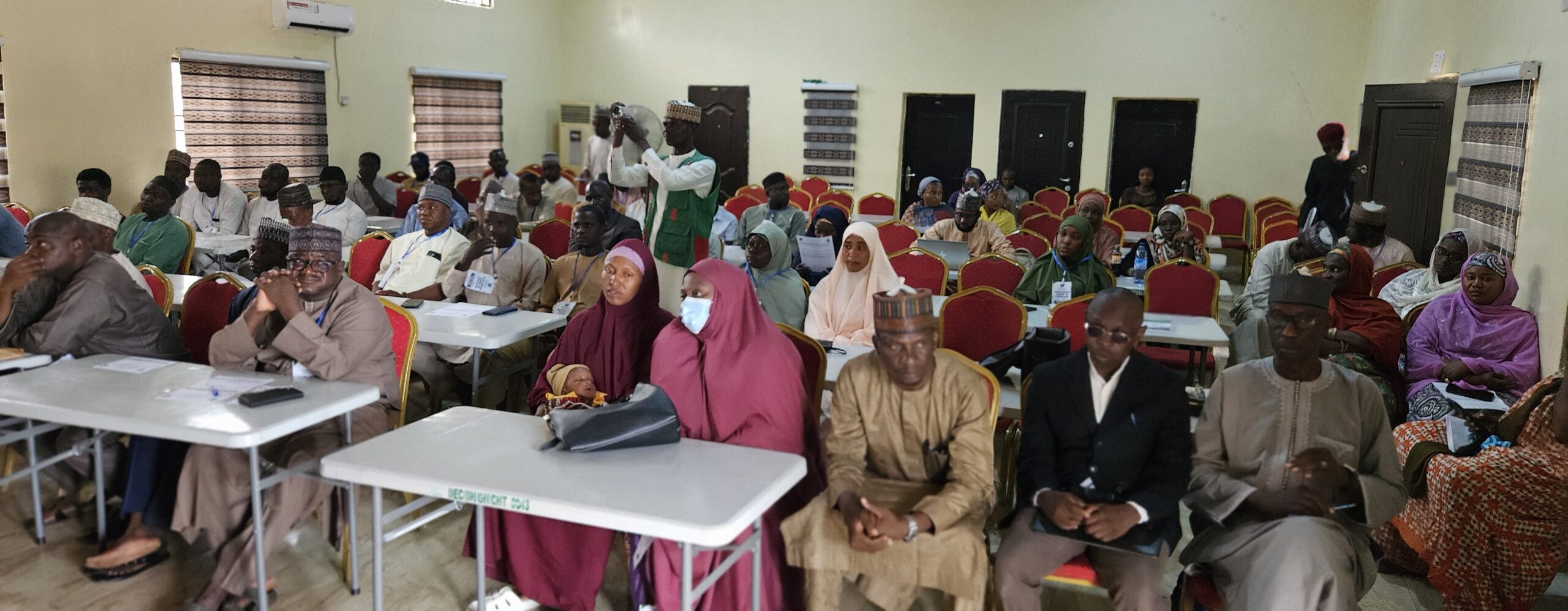
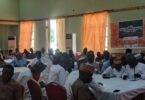
A cross section of the participants at the training


Leave a Comment