

By: Our Correspondent
The Bauchi State Government says it has trained more than 500 students in vocational and entrepreneurial skills to encourage productive engagement during school holidays.
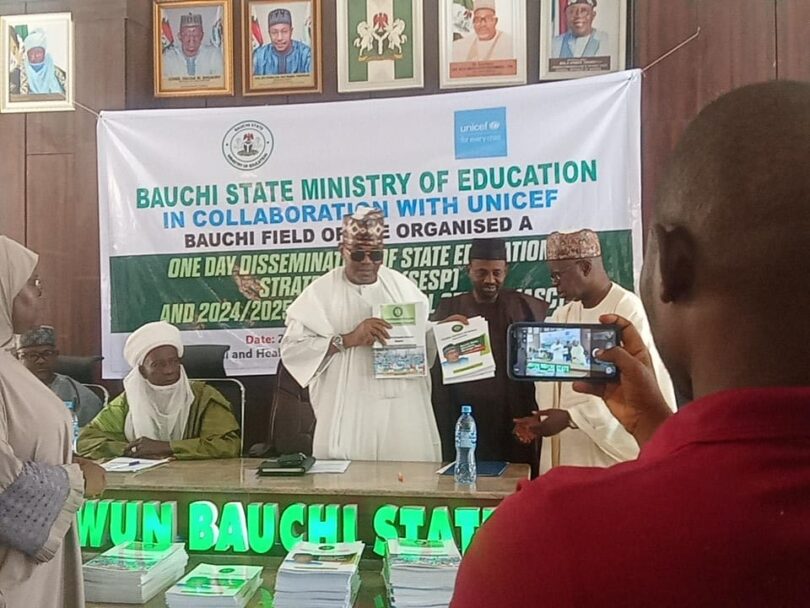
The Commissioner for Education, Alhaji Abdulkadir Ibrahim, disclosed this on Monday during the dissemination of the 2026 Annual School Census (ASC) and the State Education Strategic Plan (SESP) in Bauchi.
The programme was organised by the Ministry of Education in collaboration with the United Nations Children’s Fund (UNICEF).
According to the commissioner, the beneficiaries, drawn from conventional schools across the state, received training in bead making, garment production, bag and shoe making, satellite installation and carpentry.
He said the initiative was aimed at equipping students with practical skills, promoting self-reliance and reducing idleness during school breaks.
“We are not folding our arms and waiting for miracles in the education sector; we are taking action,” Ibrahim said.
The commissioner also said the ministry had constituted a committee to undertake minor repairs in schools to improve the teaching and learning environment.
He added that the state government had paid examination fees for students sitting the National Examinations Council (NECO), Joint Admissions and Matriculation Board (JAMB), National Board for Arabic and Islamic Studies (NBAIS) and National Business and Technical Examinations Board (NABTEB) examinations to ease the financial burden on parents.
He further disclosed that the government distributed teaching and learning materials to students with special needs, as well as 1,000 school bags and 1,000 pairs of shoes to support access to education.
Ibrahim commended Gov. Bala Mohammed for prioritising education through policies aimed at improving the sector.
The commissioner also warned that any private school that failed to provide accurate and reliable data for the 2024/2025 Annual School Census would face permanent closure.
He dismissed reports that schools submitting accurate information would be subjected to additional taxes, stressing that the census was solely intended to generate credible data for effective planning and policy implementation.
According to him, the Annual School Census remains a vital tool for collecting information on school enrolment, infrastructure, teachers and learning facilities, enabling the government to make informed decisions and improve service delivery.
He stressed that both public and private schools must participate fully in the exercise, adding that no school would be left behind.
Earlier, the Permanent Secretary of the ministry, Alhaji Ibrahim Ahmed, described the dissemination of the Annual School Census and the State Education Strategic Plan as another milestone in strengthening the education sector through evidence-based planning and improved service delivery.
He said the strategic plan would serve as a roadmap for improving access, equity, quality and efficiency in education while aligning with national and international development priorities.
In a presentation, the UNICEF Education Focal Officer, Hajiya Sa’adatu Usman, explained that the State Education Strategic Plan was designed to provide equal educational opportunities for boys and girls across the state.
She said the strategic plan and the Annual School Census would enable the government to make proactive decisions and sustain investments in education.
Usman added that the document would be shared with Education Secretaries across the state to facilitate implementation at the grassroots level.
Also speaking, the UBEC Zonal Director, Mallam Abdullahi Jarma, commended UNICEF and the Bauchi State Ministry of Education for their commitment to strengthening education in the state.
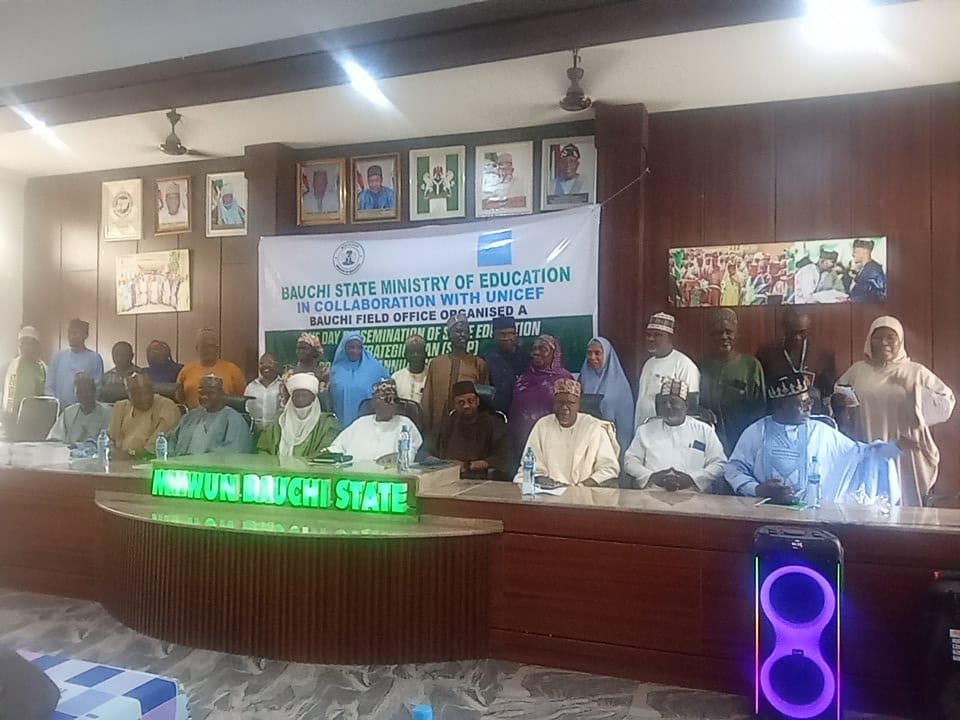
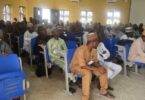
The stakeholders’ engagement brought together Education Secretaries, officials of the Bauchi State Agency for Mass Education (BASAME), State Universal Basic Education Board (SUBEB), Nomadic Education Office, Association of Private Schools and the Association of Modern Islamic Schools.

Leave a Comment