

By Hajara Usman
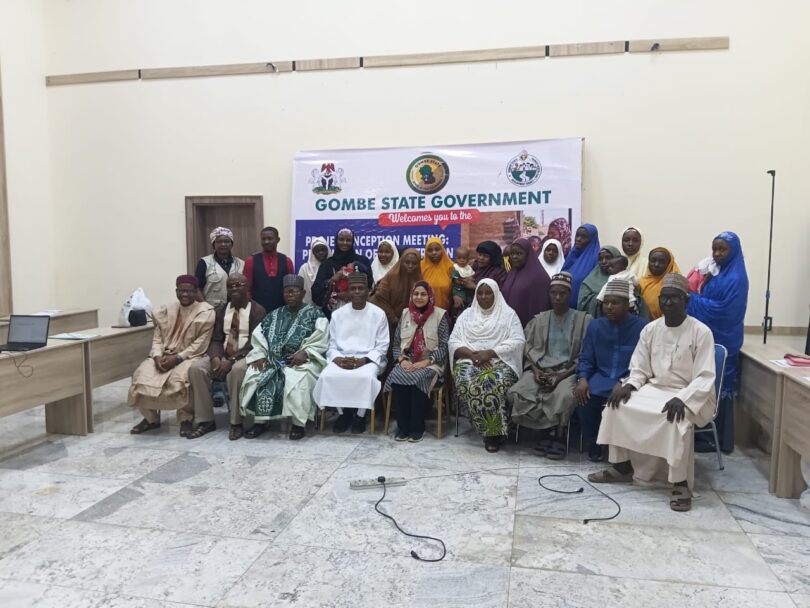
The Gombe State Government, in partnership with the United Nations Children’s Fund (UNICEF), has launched a new initiative aimed at reducing child malnutrition by focusing on nutrition interventions during the critical first 1,000 days of life.
Speaking at the event, the Executive Secretary of the Gombe State Primary Health Care Development Agency, Dr Abdul Rahman Shuaibu, said the project is aimed at addressing the challenges of malnutrition from the earliest stages of life, beginning with maternal health and care during pregnancy, safe delivery practices, infant care, exclusive breastfeeding, and appropriate complementary feeding for children.
Shuaibu emphasised that the initiative is important because preventing malnutrition requires early intervention and continuous support for mothers, caregivers, and communities.
He added that the programme will focus on intensifying awareness creation, sensitisation campaigns, and community engagement, particularly among women and families, to promote improved nutrition practices.
He noted that the current malnutrition figures remain a major concern, highlighting the urgent need for collective action among government institutions, development partners, healthcare workers, and community members.
“The initiative is expected to contribute significantly to reducing the burden of malnutrition among children and improving overall health outcomes in Gombe State.
“It will also strengthen collaboration among key stakeholders to ensure that mothers and children have access to the knowledge, support, and resources needed for a healthier future,” he explained.
He expressed the state government appreciation to UNICEF for the timely intervention and reaffirmed its commitment to working with partners to improve child nutrition and wellbeing across the state.
Also speaking, UNICEF Chief of the Bauchi Field Office, Dr. Nuzhat Rafique, said the one-year project seeks to strengthen nutrition services and improve the health outcomes of children during their first 1,000 days—a period regarded as the foundation for lifelong growth and development.
Rafique expressed concern over the persistent burden of child malnutrition, poor hygiene practices and open defecation, noting that many families still lack access to nutritious and diverse diets.
She said strengthening health systems, improving nutrition services and adopting evidence-based planning across all local government areas would be essential to reducing malnutrition rates.
Rafique also emphasised the need for behavioural change at the community level, warning that children who become malnourished often suffer irreversible consequences, including reduced cognitive ability, diminished physical capacity and lower productivity later in life.
She explained that although many malnourished children recover after treatment, some of the developmental losses cannot be fully restored, creating long-term social and economic challenges for the country.
Nutrition Specialist with UNICEF’s Bauchi Field Office, Philomena Irene, highlighted the importance of investing in the first 1,000 days,from pregnancy through a child’s second birthday,describing it as the most effective period to promote healthy brain development and break the cycle of malnutrition, poverty and inequality.
She explained that the first 1,000 days comprise approximately 270 days of pregnancy, 180 days of infancy and 550 days of toddlerhood.
She urged families and communities to embrace preventive nutrition practices, saying early intervention not only saves lives but also reduces healthcare costs and helps children reach their full potential.
The programme, titled “Preventing Malnutrition in the First 1000 Days,” is funded by The Church of Jesus Christ of Latter-day Saints and is designed to strengthen maternal and child nutrition through preventive interventions rather than treatment.


Leave a Comment